Opinion
The development of Bio-Fortified Rice in Guyana: Enhancing food security and promoting agricultural growth


By Ryan Elcock
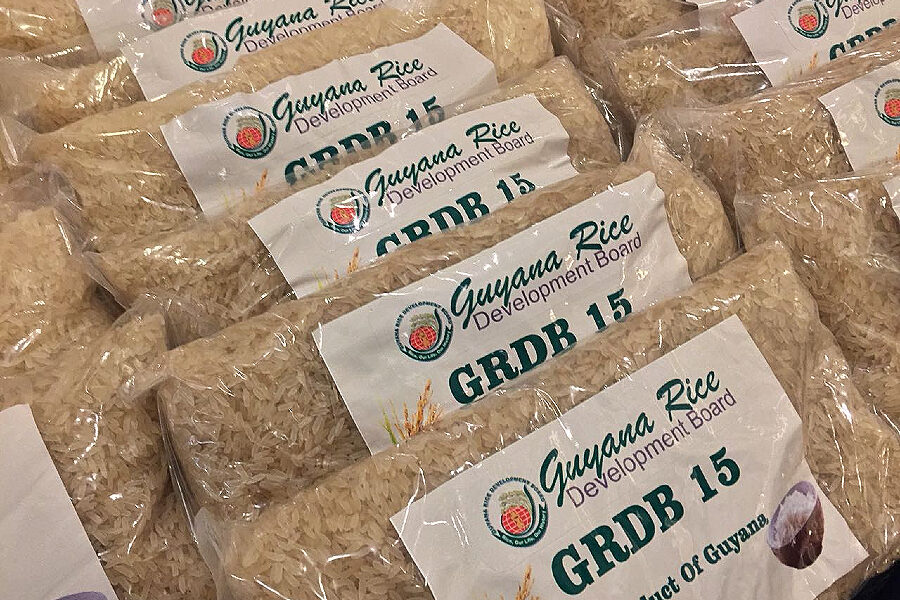
In recent years, the agricultural sector in Guyana has experienced significant growth and development. As part of the country’s efforts to enhance food security and promote agricultural growth, the Guyana Rice Development Board (GRDB) has partnered with the Inter-American Institute for Cooperation on Agriculture (IICA) to develop a bio-fortified rice variety with enhanced levels of zinc. This innovative project aims to provide farmers and the nation with enormous relief while addressing the nutritional needs of the population. This article explores the significance of bio-fortified rice in Guyana, the partnership between the GRDB and IICA, and the potential impact on the country’s economy and food security.
The significance of Bio-Fortified Rice in Guyana
Rice is considered a versatile staple in Guyana and the wider Caribbean region. It plays a crucial role in the diet of Guyanese citizens and contributes to the country’s food security. Recognizing the importance of promoting healthy food choices, the Ministry of Agriculture’s Rice Research Station has embarked on an ambitious project to develop a bio-fortified rice variety with enhanced levels of zinc.
Zinc is a vital mineral that is recommended by medical experts to boost the immune system and combat infectious diseases such as COVID-19. By incorporating higher levels of zinc into the rice variety, the aim is to improve the nutritional value of this staple food and enhance the overall health of the population.
The partnership between GRDB and IICA
The development of the bio-fortified rice variety in Guyana is made possible through a collaborative effort between the GRDB and IICA. The GRDB, along with other key stakeholders such as the Caribbean Community (CARICOM), has been instrumental in supporting this project. The partnership leverages the expertise and resources of both organizations to ensure the successful development and implementation of the bio-fortified rice variety. The IICA, as a regional agricultural organization, provides financial and technical support to the GRDB’s research efforts, demonstrating the commitment to enhancing agricultural innovation and food security in Guyana and the wider Caribbean region.
The research and development process
The development of the bio-fortified rice variety involves an extensive research and development process. Under the supervision of the GRDB’s Chief Scientist, Dr. Mahendra Persaud, breeding trials are being conducted to identify strains with higher levels of zinc. These trials are conducted over multiple seasons to assess the performance and suitability of different strains. Currently, there are 17 promising entries being tested at four trial locations. The selection process involves rigorous analysis and evaluation to determine which strains will ultimately be released as a variety for farmers. The research and development process, although at an initial stage, has shown promising results over the past 5 years.
The potential impact on farmers and the economy
The introduction of the bio-fortified rice variety is expected to have a significant impact on farmers and the economy of Guyana. Minister of Agriculture, Zulfikar Mustapha, highlighted the various opportunities this rice variety will provide for farmers. Its nutritional value surpasses that of conventional rice, making it an attractive option for both local and international markets. Mustapha emphasized that the bio-fortified rice variety will not only improve food security but also contribute to the economic growth of the country. With preferential prices and increased market value, farmers can expect better returns on their investments. This, in turn, will stimulate the agricultural sector and boost the overall economy of Guyana.
Addressing climate change challenges
In addition to enhancing food security and economic growth, the bio-fortified rice variety also addresses the challenges posed by climate change. Minister Mustapha highlighted the importance of developing rice strains with stronger tolerance to climatic conditions, given the ongoing effects of climate change on the agricultural industry. By cultivating rice varieties that are more resilient to changing weather patterns, farmers will be better equipped to adapt to the challenges posed by climate change. This proactive approach not only ensures the sustainability of the agricultural sector but also contributes to the overall resilience of the nation.
Collaboration with CARICOM and regional impact
The partnership between the GRDB, IICA, and CARICOM underscores the collective effort to improve food security and agricultural development in the wider Caribbean region. Shaun Baugh, the Programme Manager for Agricultural and Agro-Industrial Development at CARICOM, emphasized the importance of addressing food security and nutrition as shared regional concerns. The bio-fortified rice project is one of many ongoing initiatives aimed at strengthening regional cooperation in agriculture. Once the bio-fortified rice variety is released, it will be the first of its kind in the Caribbean, making Guyana a pioneer in this innovative agricultural approach. The benefits of this project are expected to extend beyond Guyana’s borders, positively impacting the region as a whole.
Final thoughts and insights
The development of the bio-fortified rice variety in Guyana represents a significant step towards enhancing food security, promoting agricultural growth, and addressing nutritional needs. Through the partnership between the GRDB and IICA, Guyana is leading the way in the Caribbean region with its innovative approach to rice cultivation. The bio-fortified rice variety, with enhanced levels of zinc, not only provides health benefits but also opens up new opportunities for farmers and the economy. With its potential to attract higher market value and contribute to the overall well-being of the population, the bio-fortified rice variety is poised to play a vital role in shaping the future of agriculture in Guyana and the wider Caribbean community.