Owusu on Africa
The Church and Politics in Africa: Influence, Authority, and Responsibility


By Fidel Amakye Owusu
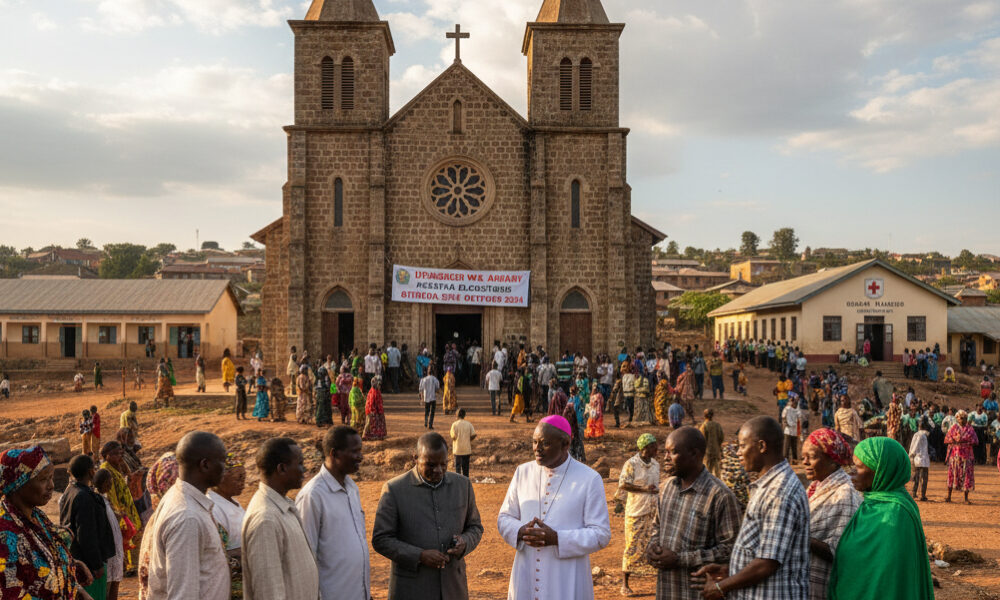
It is tempting to downplay the role of the Church in African politics, but such a view overlooks one of the continent’s most enduring institutions. Across many African states, the Church is not merely a bystander in the nation-building process.
It has historically shaped political discourse – and continues to do so today. From the Democratic Republic of Congo (DR Congo) to Ivory Coast, Ghana, and Tanzania, the Church has often stepped into political debates at critical turning points.
A Colonial Legacy with Lasting Influence
The Church’s authority in African societies is deeply rooted in history. Long before independence, its presence extended into rural areas where colonial administrations barely existed.
Driven by the mission to win converts, the Church reached communities that political authorities neglected. Crucially, it also filled glaring voids left by colonial governments by building schools, hospitals, clinics, and children’s homes.
In Ghana and across much of sub-Saharan Africa, the earliest schools were founded by missionary churches. Many Africans, including myself, were educated in institutions established well before independence – in my case, a senior high school founded by Anglican missionaries in 1910.
These institutions laid the foundation for knowledge, leadership, and professionalism in emerging nations.
Moral Authority in Public Life
Unlike many legacy institutions, the Church did not retreat after independence. It continued to provide critical social infrastructure and remains one of the most influential networks on the continent.
With such reach and trust among millions of believers, the Church holds significant moral authority. Its endorsement, criticism, or silence can carry immense political weight.
This influence has been evident in moments of national crisis. The Catholic Church in DR Congo, for instance, played a pivotal role in challenging Joseph Kabila’s attempts to extend his stay in power.
By mobilizing its followers and speaking out against manipulation, the Church reshaped the political landscape. Similar stories exist elsewhere – from mediating civil conflicts to guiding societies through periods of instability.
Tanzania: A Case Study in Restraint
The Tanzanian elections this October underscore how critical – and sensitive – this role remains. Opposition candidates have faced formidable legal and administrative barriers.
Until recently, no strong challenger to the incumbent had successfully navigated the system to appear on the ballot. Such conditions raise fears of electoral tensions, unrest, and possible clashes.
In these circumstances, the Church cannot remain silent. Yet Tanzania’s rich religious diversity adds a layer of complexity.
Any political statement by religious leaders must be measured, mindful of unity, and conscious of not fracturing the delicate social fabric that underpins one of Africa’s most stable democracies.
A Stakeholder for the Future
The enduring story of the Church in Africa is not just about evangelism but also about its role as a custodian of education, healthcare, and morality. In societies where trust in political institutions wavers, the Church remains a voice that many still listen to.
Whether speaking against authoritarian tendencies or urging calm during volatile moments, it remains too powerful – and too deeply embedded – to ignore.
Far from being a relic of colonial history, the Church continues to be a living, breathing stakeholder in Africa’s political and social evolution. Its role will remain critical as the continent navigates the difficult, ongoing balance between faith, politics, and democracy.
Fidel Amakye Owusu is an International Relations and Security Analyst. He is an Associate at the Conflict Research Consortium for Africa and has previously hosted an International Affairs program with the Ghana Broadcasting Corporation (GBC). He is passionate about Diplomacy and realizing Africa’s global potential and how the continent should be viewed as part of the global collective.