Opinion
The Census Illusion: Why Africa’s Population Numbers Are Built on Guesswork
Nobody knows how many people live in the DR Congo. That is a bigger problem than it sounds.


By Caleb Maru
The Democratic Republic of Congo is home to 112 million people, or so the estimates say. No one has actually counted them. The country’s last true census took place in 1984, and every figure since is a projection built on a foundation that is now 42 years old.
That is more than a statistical embarrassment. Everything else is built on the guess. When a larger population means more money and more political clout, a headcount stops being a measurement and becomes a bargaining chip. In Nigeria, oil revenues were long shared among states partly according to population, so a higher count meant a bigger payout and a flattering story of growth. Once you notice the incentive, you see it everywhere:
- Nigeria puts its population at 242 million, a figure projected from a census held in 2006.
- Chad leans on estimates because conflict around Lake Chad has cut off entire regions.
- Ethiopia cannot count whole zones where fighting is active, so the best anyone can do is guess.
Why is Counting so Hard?
Vested interests are only part of the answer. Counting people is genuinely difficult. DR Congo’s census, delayed for years, is only now getting under way. Enumerators armed with tablets and smartphones must map a country of 2.3 million square kilometers, and the operation is expected to need some 145,000 field staff.
The effort is worth it, because the population figure is the denominator in almost every statistic a country produces: GDP per capita, poverty rates, doctors per thousand people, vaccine doses, school places. Each is a real number divided by a number nobody actually knows.
The Cost of a Fictional Denominator
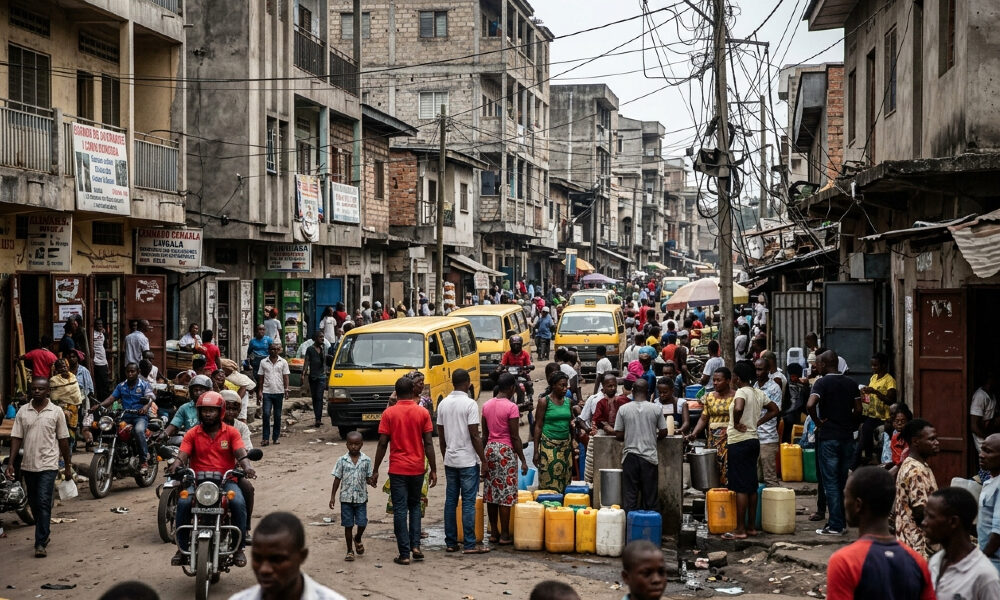
If the denominator is wrong, every ratio is wrong too. When the size of a problem is fictional, real solutions become impossible to build. No one can design a clinic for a town they cannot size, or plan a water system, a road or a power line for a population guessed at from a 40-year-old model.
This is why cities such as Lagos and Kinshasa struggle to deliver services to everyone who lives in them, and why disease outbreaks surface in places no one was watching. As Africa’s population grows, the problem only compounds.
The question is a simple one. If you cannot measure a problem, can you really solve it?
Caleb Maru is Founder and CEO of Tech Safari, Africa’s leading tech community and media company, specializing in tech innovation, market trends, and exclusive insights across the continent. Based in Nairobi, Kenya