Opinion
The Africa We Desire vs. The Africa We Deserve
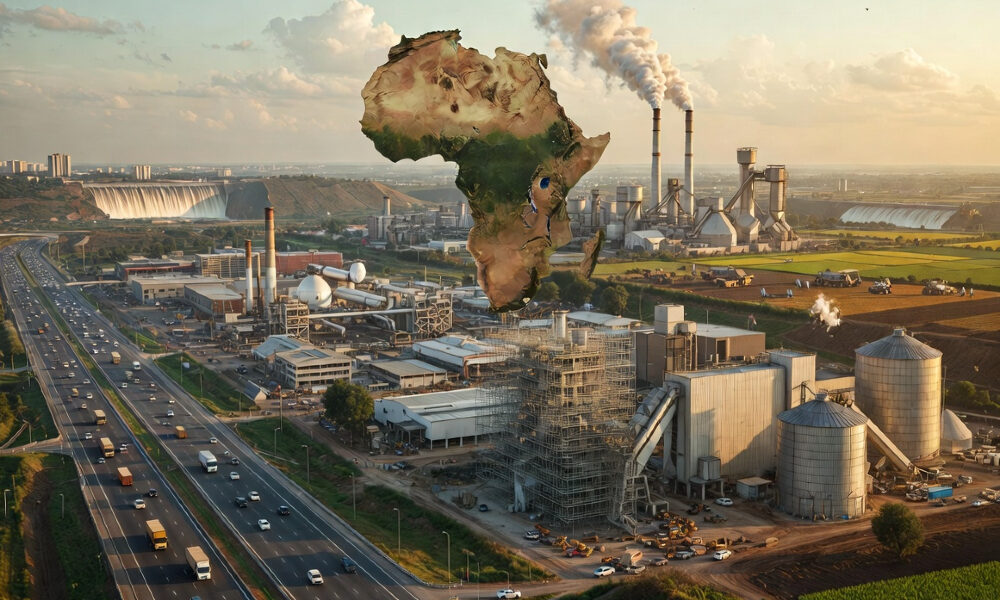
True independence is never handed over. It is engineered – through infrastructure, industrialization, discipline, and the political courage to act.


By Victory Azimih
There is an Africa we have long imagined. An Africa of abundance – of seamless travel, reliable institutions, uninterrupted power, and predictable opportunity.
An Africa where food is processed at home, cities function efficiently, tourism flourishes, and talent stays rather than flees.
But there is also the Africa we must confront with unflinching honesty. Because the prosperous, self-sufficient continent of that vision will not arrive by declaration. It will be built – deliberately, structurally, and at scale – or it will not come at all.
Demographic Time Bomb Nobody Wants to Discuss
Africa is the world’s youngest continent, and its leaders are right to celebrate that fact. A youthful population is a profound asset. But potential without planning does not become prosperity. It becomes pressure.
A young demographic dividend pays off only when economies expand fast enough to absorb it. When they do not, that same youthful population transforms from an asset into a structural liability – a restless, underemployed generation with legitimate grievances and dwindling patience.
The defining question for Africa’s future is not whether the continent has people. It is whether the continent has systems for its people: functional labor markets, scalable infrastructure, institutions that reward merit, and industries capable of generating meaningful employment at speed.
The Brutal Truth: Real Independence Must Be Engineered
Political independence was won decades ago. Economic independence remains unfinished business.
True sovereignty – the kind that actually changes living standards – is measured not by flags or anthems but by a nation’s capacity to feed its population, house its citizens, power its industries, employ its youth, and retain its best minds.
No country in history has crossed that threshold through speeches alone. Every nation that has achieved lasting prosperity did so through deliberate investment in productive capacity.
Africa’s gap is not one of ambition. It is one of infrastructure, industrialization, and the institutional discipline to execute policy across successive governments.
Food Imports: The Costly Contradiction
Perhaps no single statistic captures Africa’s economic paradox more starkly than this: the continent imports tens of billions of dollars in food annually. This is a staggering figure for a landmass that holds a significant share of the world’s arable land and freshwater resources.
Food imports are not merely an agricultural inefficiency. They are a macroeconomic wound.
Every dollar spent on imported food is a dollar that exports jobs, drains foreign exchange reserves, imports inflation, and deepens vulnerability to global supply shocks – as the COVID-19 pandemic and the war in Ukraine made devastatingly clear.
Agro-industrialization is not a rural development agenda. It is a macroeconomic stabilization strategy. Processing food locally keeps capital circulating domestically, creates value-chain employment, and builds the kind of productive industrial base that underpins real economic resilience. The land exists. The policy will must follow.
Tourism: The Untapped Economic Goldmine
Africa holds some of the world’s most extraordinary natural and cultural assets: ancient civilizations, unmatched biodiversity, coastlines of rare beauty, and a cultural richness that no other continent can replicate. Yet the continent captures a disproportionately small share of global tourism revenues.
This is not an aesthetic failure. It is an infrastructure, safety, and strategic coordination failure.
Tourism, when properly developed, is a powerful economic multiplier. It drives aviation growth, hospitality expansion, small and medium enterprise ecosystems, foreign exchange inflows, and cultural diplomacy – all simultaneously. It is an industry that is, in many respects, already waiting for Africa to show up with the right conditions.
The Brain Drain Question – and Its Opportunity
People do not leave thriving systems. They leave constrained ones. Africa’s persistent brain drain is, at its core, an indictment of the gap between what the continent’s people are capable of and what its current systems offer them. The solution is not restriction; it is opportunity creation.
Recent diplomatic discussions – including Nigerian President Bola Tinubu’s engagement with the United Kingdom on migration cooperation – reflect a growing recognition among African leaders that global migration pressures demand serious, structured responses. But this moment also carries a genuine opportunity that deserves equal attention.
African professionals embedded in global economies bring back more than memories when they return. They bring skills, international networks, investment capital, and entrepreneurial experience forged in highly competitive environments.
If African governments can create the conditions – legal, economic, and institutional – that make return both attractive and viable, reverse migration can be transformed from a policy aspiration into a genuine economic advantage.
Building the Africa We Deserve
The Africa we desire is not a fantasy. Its raw materials – human, natural, and geographic – are already present in extraordinary measure.
What remains is the harder work: the infrastructure investment, the industrial policy, the institutional reform, and the political courage to execute across election cycles and competing interests.
The continent does not need more eloquent diagnoses of its challenges. It needs engineered solutions, implemented with consistency and accountability.
The Africa we deserve is one we must choose, deliberately and collectively, to build. That work – unglamorous, technical, and long – is the only path from the Africa we imagine to the Africa we inhabit.
Victory Azimih is a visionary entrepreneur and global investment consultant specializing in Africa’s economic growth and industrial transformation. As the CEO and founder of Azeemi Global, he leads a pioneering firm dedicated to accelerating the continent’s development through cutting-edge technology and infrastructure solutions. Under his leadership, Azeemi Global focuses on harnessing the potential of artificial intelligence, blockchain, and smart infrastructure to unlock sustainable investment opportunities across Africa. Based in Lagos, Nigeria, Azimih is at the forefront of driving Africa’s future as a hub of innovation and industrialization.