Business
The $97 Billion Question: Why Most Investors Get Africa Wrong


By Lailla Mutajogera
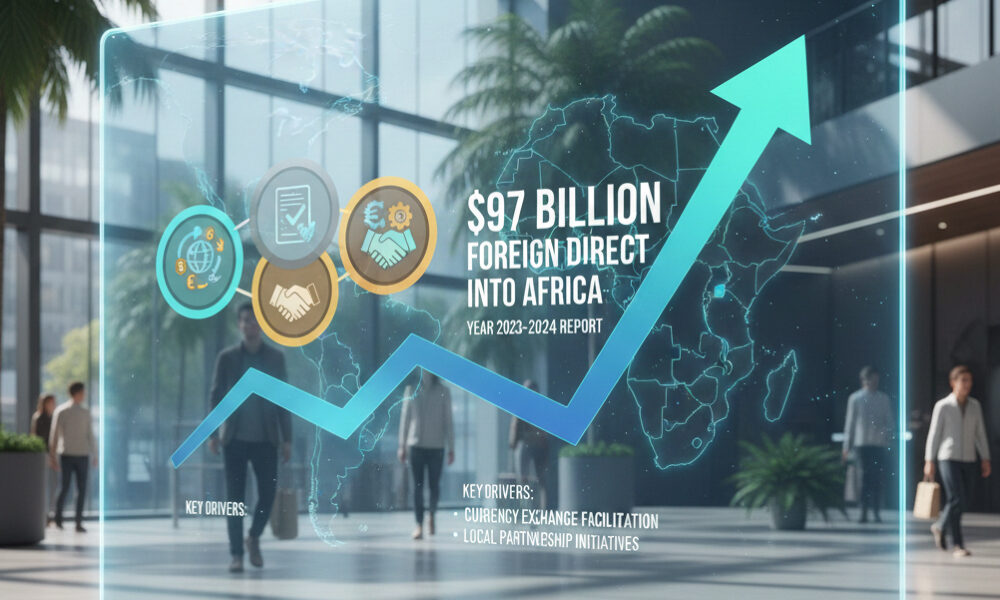
Last year, US$97 billion flowed into Africa – a staggering 75 percent surge that pushed the continent to 6 percent of global foreign direct investment. Yet beneath these impressive headlines lies an uncomfortable truth: most investors are leaving substantial returns on the table.
The culprit isn’t a lack of opportunity but rather a failure to ask the right questions before capital crosses borders.
Beyond the Investment Thesis
Africa’s investment narrative has shifted from cautious optimism to genuine momentum. Foreign direct investment has more than doubled since 2022, when it stood at a modest US$45 billion.
This recovery signals real opportunity, but aggregate figures mask critical variations that determine whether your investment thrives or merely survives.
The difference between success and disappointment often hinges on ten questions that savvy investors answer before committing capital – questions that address the gap between gross returns and what actually lands in your account.
The Tax Reality No One Discusses
Consider the tax landscape: Africa’s average tax-to-GDP ratio sits at 16.1 percent, but this figure obscures dramatic country-level disparities. Somalia collects just 2.9 percent while Tunisia reaches 34 percent.
For investors, this isn’t academic – your return on investment fundamentally depends on understanding these variations.
Corporate and withholding tax structures vary wildly across borders. A seemingly modest 5 percent differential can eliminate tens of thousands of dollars on a US$1 million investment.
Yet many investors focus exclusively on top-line growth projections, discovering the tax bite only when repatriating profits.
Some countries have recognized this friction and responded strategically. Tax holidays spanning five to ten years now exist in specific jurisdictions and sectors, dramatically reducing upfront costs and enhancing post-tax returns.
But accessing these incentives requires knowing they exist – and structuring investments accordingly.
Market Concentration and Sector Selection
While FDI has surged, growth remains concentrated in key markets and specific sectors. Energy, fintech, manufacturing, and agribusiness each present different risk-return profiles.
The rising tide isn’t lifting all boats equally, and sector selection aligned with both growth trajectories and political stability separates winners from those who simply participated.
The infrastructure reality further complicates execution. Unreliable electricity and inadequate transportation networks can add 5 percent to 15 percent to capital expenses – costs that erode margins and extend payback periods.
These aren’t insurmountable obstacles, but they demand acknowledgment in financial models rather than discovery during implementation.
The Currency and Repatriation Trap
Perhaps no factor destroys returns more quietly than currency risk. Exchange rate fluctuations in volatile markets can slash net returns by 10 percent to 20 percent, transforming a promising investment into a mediocre one.
Equally critical: understanding the regulatory framework governing profit repatriation. Capital that can’t leave a country effectively carries a forced holding period that may not align with your investment horizon.
The Impact Investment Dimension
Africa has captured approximately 12 percent of global impact investment flows, growing at 14 percent annually between 2017 and 2022. For investors seeking both returns and measurable social outcomes, this creates unique opportunities.
But impact capital isn’t interchangeable with traditional FDI – it flows to different sectors, accepts different risk profiles, and measures success through dual lenses.
The Local Knowledge Premium
The most consistent pattern separating successful African investments from disappointing ones involves local expertise. Engaging tax and legal advisors who understand on-the-ground realities – or partnering with established local operators – unlocks advantages that external analysis simply cannot provide.
These relationships facilitate tax negotiation, enable thorough due diligence, sometimes secure access to free land in designated zones, and ensure you benefit from available incentives.
The right local partner transforms your investment from working hard to working smart.
The Path Forward
Africa’s investment story is undeniably real. The US$97 billion that flowed into the continent last year represents genuine capital seeking genuine opportunities.
But aggregate enthusiasm means little to individual investors whose returns depend on granular decisions about where to invest, in which sectors, under what structure, and with which partners.
The investors who will capture Africa’s growth aren’t those who simply show up. They are the ones who ask uncomfortable questions upfront, who understand that returns after taxes, risk mitigation, and execution matter infinitely more than headline figures, and who recognize that the difference between mediocre and exceptional outcomes often emerges from details that never make the pitch deck.
The opportunity is real. The question is whether you’re asking the right questions to capture it.
Lailla Mutajogera is an investor, entrepreneur, and CEO of Muta Investment Firm, a cross-border investment company with operations in Uganda, Rwanda, and Dubai. She specializes in connecting global investors with high-impact opportunities in African markets, focusing on commercial real estate, tourism, agribusiness, and asset management. Committed to practical, growth-driven investments, she champions projects that drive sustainable development across the continent.