Opinion
The $60 Billion Nigerian Rail Revolution: A Bold Bet on West Africa’s Future


By Ziad Hamoui
Lagos to Kano in under six hours. Abuja to Port Harcourt faster than a domestic flight.
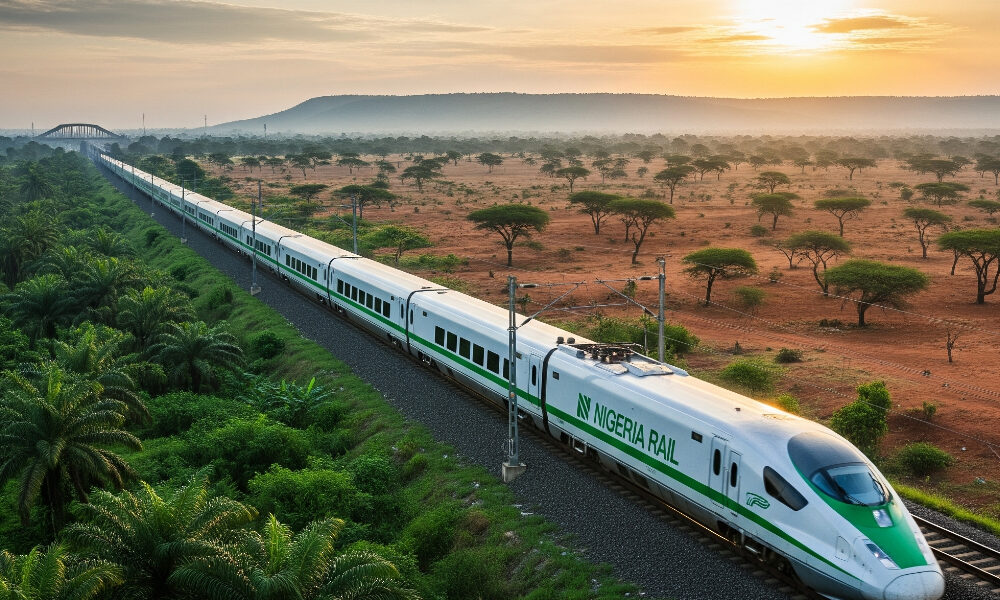
What once sounded like a futuristic dream is now inching toward reality as Nigeria advances its US$60 billion high-speed rail initiative – a 4,000-kilometer (2,500-mile) network poised to redefine transportation, trade, and economic integration across West Africa.
With 90 percent of regulatory approvals already secured, the project is no longer just a vision. It’s a national priority with regional implications.
Backed by Chinese financing and engineering expertise, this electrified, double-track rail system will operate at speeds of 200–250 km/h, linking Nigeria’s major commercial centers – Lagos, Abuja, Kano, and Port Harcourt – into a seamless corridor of mobility and logistics.
More than just a transport upgrade, this initiative represents the most ambitious infrastructure investment in West African history. Designed to run on power generated from Nigeria’s abundant natural gas reserves, the rail network promises to slash travel times, reduce road congestion, and create integrated freight corridors capable of moving goods more efficiently than ever before.
A Game-Changer for Regional Trade and AfCFTA Ambitions
This is not merely about moving people or cutting commute times. It’s about economic transformation.
By connecting Nigeria’s southern ports to its northern industrial zones and cross-border trade routes, the rail system aims to leapfrog the region’s outdated, road-dependent logistics model – one long plagued by delays, high costs, and inefficiencies. For a country where logistics can account for over 20 percent of product costs, this shift could be revolutionary.
The ripple effects could extend far beyond Nigeria’s borders. Landlocked nations in the Sahel – Chad, Niger, Burkina Faso – stand to benefit from faster, more reliable access to Atlantic ports.
As Nigeria strengthens its internal connectivity, it also positions itself as the logistical gateway to the wider ECOWAS (Economic Community of West African States) region, amplifying its influence in regional trade.
Under the African Continental Free Trade Area (AfCFTA), such infrastructure could give Nigeria a decisive competitive edge. With AfCFTA aiming to boost intra-African trade by over 50 percent in the coming decade, the nation that moves goods fastest and cheapest will lead.
Nigeria is betting that rail – not roads or air – will be its winning strategy.
High Stakes, High Risks: Can Nigeria Deliver?
Yet, for all its promise, the project carries significant risks.
The financial burden is immense: an estimated US$3–4 billion in annual debt servicing looms over the national budget. Heavy reliance on foreign financing and technology raises concerns about long-term sustainability, especially in the face of currency volatility and potential repayment challenges.
Operational success will depend on achieving ambitious ridership and freight volume targets, as well as building local technical capacity to maintain and manage the system independently.
Past infrastructure projects in Nigeria have faltered due to delays, mismanagement, and underutilization. This time, the stakes are higher – and so is the scrutiny.
Transparency, public-private partnerships, and robust maintenance frameworks will be critical to avoiding the pitfalls of previous megaprojects.
Still, if executed effectively, the Nigerian high-speed rail could serve as a blueprint for the continent. It sends a powerful message: Africa’s future isn’t just in digital innovation or resource extraction – it’s in bold, physical infrastructure that connects people, markets, and economies.
The question now isn’t whether Nigeria can build the rails. It’s whether it – and the region – can sustain them.
As West African nations grapple with aging transport networks and growing trade demands, Nigeria’s rail revolution may well become the catalyst for a broader infrastructure renaissance. Will other ECOWAS members follow suit?
Can regional cooperation turn this national project into a transnational corridor?
One thing is clear: the race to modernize Africa’s logistics backbone has begun. And Nigeria has just laid the first track.
Ziad Hamoui is the Co-Founder and Past President of the Borderless Alliance, a leading private-sector advocacy group promoting economic integration and removing trade and transport barriers in West Africa. With extensive experience in Ghana’s road transport, logistics, and shipping sectors, he currently serves as Executive Director of Tarzan Enterprise Ltd., a long-established family business. He is Co-Chair of the Africa Food Trade Coalition, Co-Founder of the Trade Facilitation Coalition for Ghana, and serves on multiple high-level advisory committees on trade, transport, agriculture, and security. A Chartered Fellow of the Chartered Institute of Logistics and Transport (CILT) Ghana, he is also a former member of its Governing Council.