Opinion
The $10 Trillion Question: Who Will Power and Connect Africa’s Future?
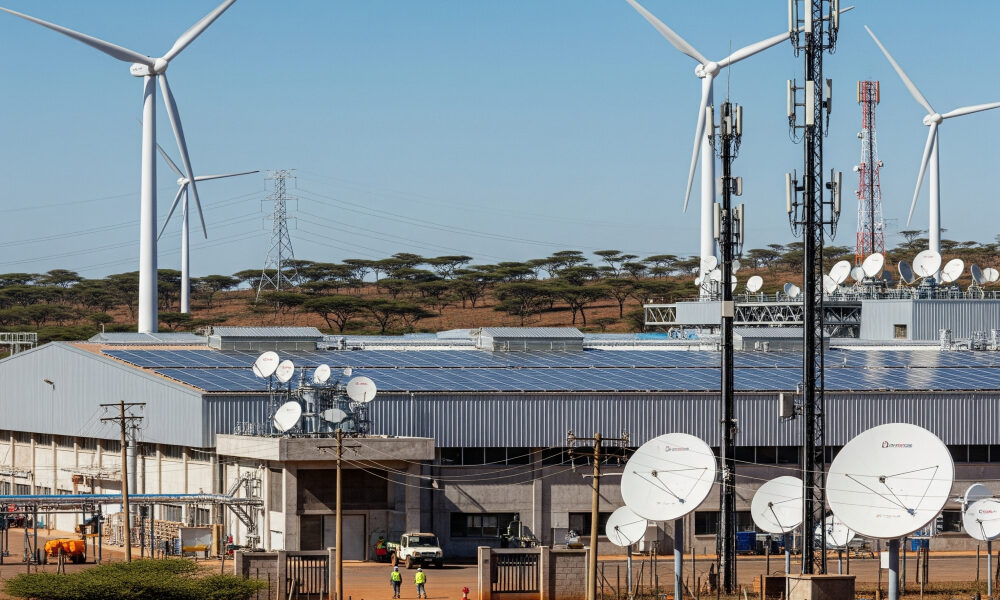


By Davida Ademuyiwa
Africa is often called the continent of the future. But futures aren’t built on slogans – they are built on steel, silicon, and strategy.
At the heart of Africa’s next chapter lie two foundational infrastructures: electricity and broadband internet. These are not just utilities; they are the twin engines of economic transformation.
Electricity is the backbone of every modern economy. Without it, factories stand idle, hospitals operate on generators, and education stalls in the dark.
Across sub-Saharan Africa, nearly 600 million people still live without access to reliable power – a deficit that stifles productivity, deters investment, and deepens inequality.
Equally critical is internet connectivity – the digital bloodstream of the 21st-century global economy. Affordable, high-speed internet unlocks access to digital finance, e-commerce, telemedicine, remote education, and global supply chains.
Yet, more than half of Africa’s population remains offline, excluded from the very networks driving innovation and inclusion worldwide.
Together, energy and connectivity form what I call Africa’s Twin Engines™ – the indispensable infrastructure duo that can propel the continent from promise to performance. When both are operational, Africa doesn’t just grow; it leapfrogs – bypassing outdated models and embracing digital-first, sustainable development.
Race for Africa’s Digital and Energy Future
But here’s the trillion-dollar question: Who will power and connect Africa?
Will it be African governments, tasked with vision and policy but often constrained by capacity and capital? Will global investors and development banks step in with funding – but on their own terms?
Or will African innovators, entrepreneurs, and local enterprises rise to lead the charge, building homegrown solutions tailored to African realities?
This isn’t just a logistical or financial challenge – it’s a strategic inflection point. The entity or alliance that successfully scales energy and digital infrastructure across Africa won’t just transform a continent.
They will unlock one of the greatest economic opportunities of the 21st century.
Consider the numbers: Africa is home to 60 percent of the world’s uncultivated arable land, a rapidly growing youth population, and abundant renewable energy potential – from solar in the Sahel to hydro in the Congo Basin. With full electrification and digital access, Africa could add US$10 trillion to its GDP by 2050, according to estimates from the African Development Bank.
An Africa that is fully powered and connected doesn’t just benefit Africans – it benefits the world. It becomes a new hub for manufacturing, innovation, and consumer markets.
It strengthens global supply chains. It accelerates climate resilience through decentralized solar grids and smart infrastructure.
And it diversifies the global economy at a time when multipolarity is no longer a trend – it’s a necessity.
A Continent’s Destiny, a Global Opportunity
The time for fragmented pilots and donor-driven projects is over. What Africa needs now is coordinated ambition – public-private partnerships, regulatory innovation, and investment at scale.
Countries like Kenya, Rwanda, and South Africa have shown what’s possible with bold policy and tech adoption. Now, that momentum must go continental.
The race to power and connect Africa has begun. The prize? Not just economic return – but influence, legacy, and a reimagined global order.
So, to governments, investors, and innovators: The US$10 trillion question isn’t rhetorical.
Who will answer it?
Because the future of Africa – and much of the world – depends on the answer.
Davida Ademuyiwa is a UK politician and founder of DaviGlobal International Trade & Investment. She facilitates cross-border investment and connects capital with scalable ventures across the UK, Europe, the Middle East, and Africa. She also serves as Regional Ambassador for the Conservative Policy Forum in the East of England, contributing to grassroots policy dialogue alongside her work in global trade and investment.