News
Tanzania: Samia Suluhu Hassan to make history as first female president
Under the constitution Hassan, the country’s 61-year-old vice president, will serve the remainder of Magufuli’s second 5-year term, which does not expire until 2025.
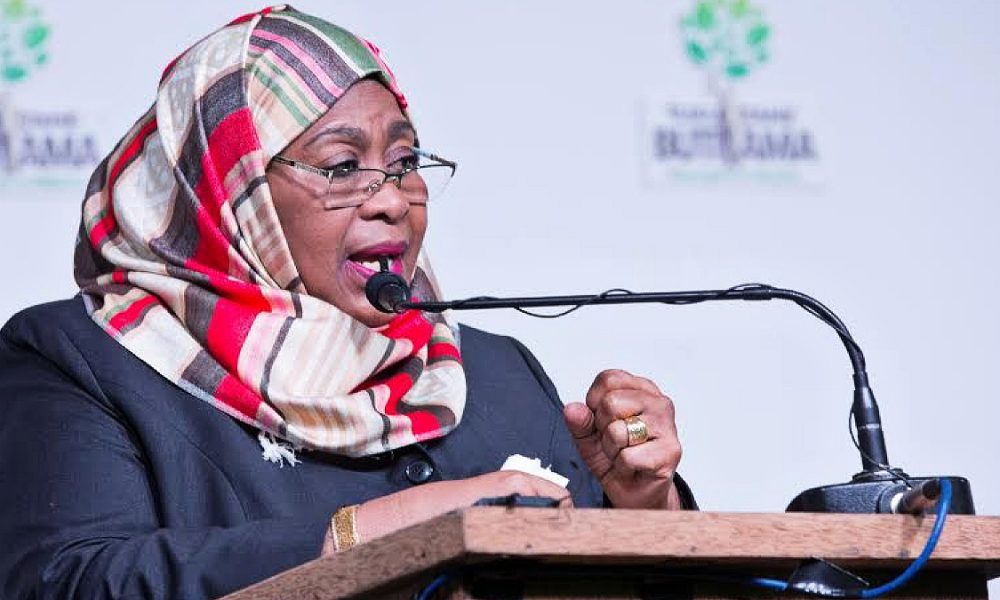
AFP | Samia Suluhu Hassan is a soft-spoken woman thrust from the obscure role of vice president to become Tanzania’s first female leader after John Magufuli’s sudden death.
Under the constitution Hassan, the country’s 61-year-old vice president, will serve the remainder of Magufuli’s second 5-year term, which does not expire until 2025.
A former office clerk and development worker, Hassan began her political career in 2000 in her native Zanzibar, a semi-autonomous archipelago, before being elected to the national assembly on mainland Tanzania and assigned a senior ministry.
A ruling party stalwart, she rose through the ranks until being picked by Magufuli as his running mate in his first presidential election campaign in 2015.
The Chama Cha Mapinduzi (CCM) comfortably won and Hassan made history when sworn-in as the country’s first-ever female vice president.
The pair were re-elected last October.
She would sometimes represent Magufuli on trips abroad but many outside Tanzania had not heard of Hassan until she appeared on national television to announce that Magufuli had died at 61 following a short illness.
In a slow and softly spoken address – a stark contrast to the thundering rhetoric favored by her predecessor – Hassan solemnly declared 14 days of mourning.
She will consult the CCM over the appointing of a new vice president.
Analysts say Hassan will face early pressure from powerful Magufuli allies within the party, who dominate intelligence and other critical aspects of government, and would try and steer her decisions and agenda.
Hassan was born on January 27, 1960 in Zanzibar, a former slaving hub and trading outpost in the Indian Ocean.
Then still a Muslim sultanate, Zanzibar did not merge formally with mainland Tanzania for another 4 years.
Her father was a school teacher and mother a housewife. Hassan graduated from high school but has said publicly that her finishing results were poor, and she took a clerkship in a government office at 17.
By 1988, after undertaking further study, Hassan had risen the ranks to become a development officer in the Zanzibari government.
She was employed as a project manager for the UN’s World Food Programme (WFP) and later in the 1990s was made executive director of an umbrella body governing non-governmental organizations in Zanzibar.
In 2000, she was nominated by the CCM to a special seat in Zanzibar’s House of Representatives. She then served as a local government minister – first for youth employment, women and children and then for tourism and trade investment.
In 2010, she was elected to the National Assembly on mainland Tanzania. Then president Jakaya Kikwete appointed her as the Minister of State for Union Affairs.
She holds university qualifications from Tanzania, Britain and United States. The mother of 4 has spoken publicly to encourage Tanzanian women and girls to pursue their dreams.
“I may look polite, and do not shout when speaking, but the most important thing is that everyone understands what I say and things get done as I say,” Hassan said in a speech last year.
She is among a very small circle of women to lead East African nations. Burundi briefly had an acting female president in 1993, while both Mauritius and Ethiopia have had women appointed to the ceremonial role of president.