Owusu on Africa
Sudan’s Civil War: The Fatal Legacy of Personalized Power
How Omar al-Bashir’s decision to personalize power in Sudan created the militia now tearing the country apart – and why this pattern threatens the rest of the continent.


By Fidel Amakye Owusu
Three years ago, as the first shells fell on Khartoum, the world scrambled to understand how Sudan – a country that had only recently celebrated the fall of a dictator – could descend so quickly into civil war. The easy answer was a power struggle between two generals. The truer answer, and the more troubling one, is that Sudan’s war was not a sudden rupture but the delayed detonation of a bomb planted decades earlier by a president who trusted no one, least of all his own army.
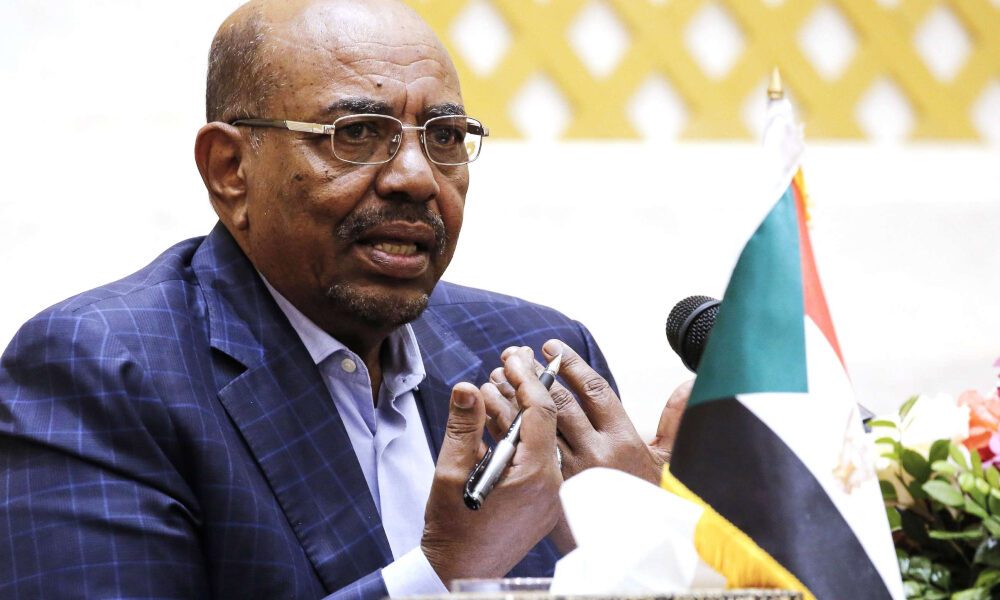
That president was Omar al-Bashir, and the bomb he built has a name: the Rapid Support Forces.
A Militia Born of Mistrust
To understand Sudan’s tragedy, rewind to the 2000s and the killing fields of Darfur. Faced with an uprising in Sudan’s western region, Khartoum treated it as it should have – as a grave national security threat, deserving of serious resources. But Bashir chose not to channel that response through the national army. Instead, he raised a militia of local fighters and loyalists, answerable to him alone.
This was not a matter of convenience. It was strategy. A conventional army, however loyal on paper, still commands institutional legitimacy of its own – legitimacy a paranoid ruler cannot fully own. A militia, by contrast, owes its existence, its salaries, and its impunity entirely to the man at the top. By personalizing Darfur’s counterinsurgency, Bashir ensured that Sudan’s most battle-hardened force answered to him, not to the state.
That force became the RSF. Its record in Darfur – mass killings, systematic sexual violence, the ethnic cleansing of entire communities – is now well documented by human rights investigators. But atrocity was only part of the design. Bashir also let the RSF’s leadership, including the man who now commands it, carve out a private economy from Darfur’s gold mines and farmland. Loyalty was purchased not just with impunity, but with riches. A militia that polices your enemies is useful. A militia that also enriches itself independently of the state treasury is loyal.
Exporting the Model, Losing Control
Bashir’s gamble paid dividends for years. When Sudan joined the Saudi-led coalition fighting in Yemen, he again sidelined the regular military and deployed the RSF instead – a decision that handed the militia’s commander direct relationships with Gulf capitals, and with them, independent sources of patronage and prestige beyond Khartoum’s reach.
Here lies the paradox at the heart of personalized power: the more useful a private force becomes to its patron, the more capable it grows of surviving without him. Bashir built the RSF as an instrument of control. He did not anticipate that it would become an instrument of his own undoing.
In 2019, as pro-democracy protesters filled the streets of Khartoum demanding his resignation, the RSF turned on the man who made it. It joined the coup that toppled Bashir, then folded into the transitional government that followed – where it just as readily turned its guns on the same democracy movement it had once helped exploit. The militia that was supposed to protect a personal ruler had outgrown him entirely, and it wanted what he once had exclusively: control of the state itself.
That ambition, and the regular army’s refusal to yield ground, is what set Khartoum ablaze in 2023 and continues to drive the fighting today.
A Continental Pattern, Not a Sudanese Anomaly
Sudan’s war is extreme, but its underlying logic is far from unique. Across Africa, leaders have long understood a hard truth: a national army, however well-funded, is never fully yours. It has its own officer corps, its own institutional memory, its own capacity to say no – or to stage a coup of its own. A presidential guard, a special forces unit, or a militia built from scratch carries no such baggage. It is often better equipped, better paid, and more loyal than the conventional forces meant to defend the nation as a whole.
This is the “personalization of power” in its most literal form – not simply autocratic rule, but the deliberate fragmentation of a state’s monopoly on violence into private, patronage-based instruments that answer to an individual rather than an institution.
The trouble is that these instruments, like the RSF, do not remain private forever. They accumulate their own economic interests, their own external patrons, and eventually their own ambitions. What begins as a tool for a leader’s protection can end as the very force that unmakes the state he sought to control.
What Sudan Should Teach the Rest of Africa
Sudan’s catastrophe offers a lesson that too few African governments – and too few of their international partners – appear willing to absorb: the health of a state can be measured by how many armed forces it truly commands. A country with one professional, accountable military is more stable than one that has quietly allowed a patchwork of personal militias to flourish in its shadow, however useful those militias might seem in the moment.
Reversing this trend will not happen through diplomacy alone. It requires the patient, unglamorous work of building institutions strong enough that no single leader can hollow them out – courts that hold, parliaments that check, and armies that answer to the state rather than to a man. It also requires ordinary citizens to keep insisting, as Sudan’s did in 2019, that power belongs to the public and not to whoever controls the guns.
Until that shift happens more broadly, Sudan will not be the last African nation to discover that the private army built to protect a ruler can become the very force that destroys his country.
Fidel Amakye Owusu is an International Relations and Security Analyst. He is an Associate at the Conflict Research Consortium for Africa and has previously hosted an International Affairs program with the Ghana Broadcasting Corporation (GBC). He is passionate about Diplomacy and realizing Africa’s global potential and how the continent should be viewed as part of the global collective.