Business
Sub-Saharan Africa’s Manufacturing Shift: A Blind Spot for Europe


By John Kourkoutas
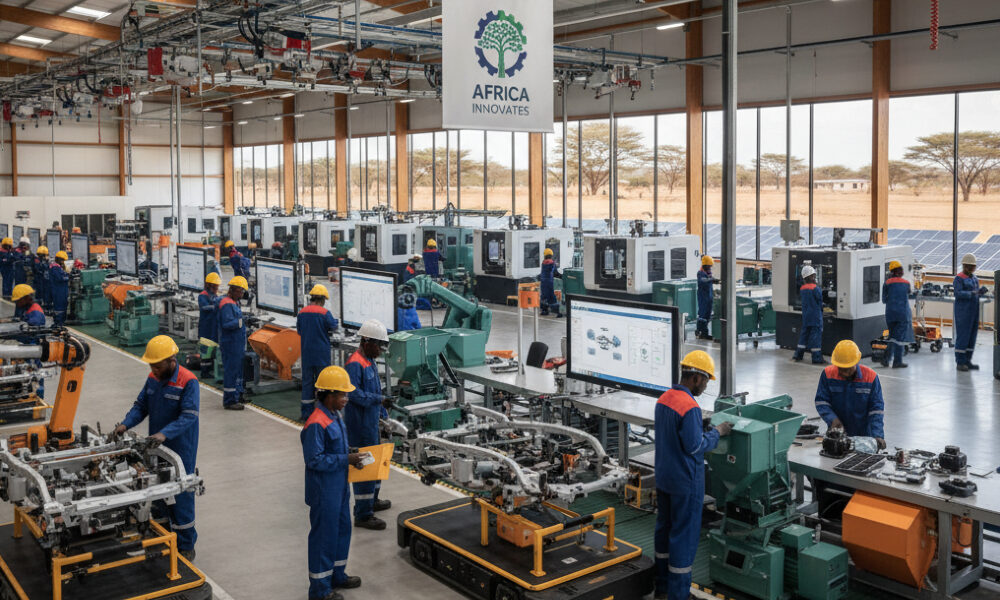
When most European executives think of African industry, they picture mines, quarries, and raw commodity exports. But while that narrative persists in boardrooms from Berlin to Brussels, a quiet manufacturing revolution is unfolding across Sub-Saharan Africa – one backed by hard data, strategic policy, and real industrial output.
In 2025, the continent’s manufacturing value-added output stands at US$77.66 billion, with total manufacturing output reaching US$284.70 billion. Far from being a footnote in global supply chains, Sub-Saharan Africa is home to dynamic, export-oriented industrial ecosystems that are scaling rapidly – and European firms risk missing out on first-mover advantage.
South Africa: Africa’s Automotive Powerhouse
South Africa isn’t just assembling cars – it’s exporting them. With over US$15 billion in annual automotive exports, the country hosts global giants like BMW, Volkswagen, and Mercedes-Benz, all operating sophisticated local production lines.
Automotive manufacturing contributes 6 percent of GDP, and the government’s newly announced US$54 million electric vehicle (EV) production stimulus is expected to generate 10,000 high-skilled jobs.
This isn’t catch-up industrialization. South Africa is actively deploying Industry 4.0 technologies: IoT-enabled production lines, robotics, and real-time analytics are now standard in its leading plants.
The message is clear: the future of African manufacturing is digital, integrated, and competitive.
Nigeria: Scale Before Export
Africa’s most populous nation – home to 220 million consumers – is also its third-largest manufacturing economy, employing 2.5 million people in the sector. Contrary to outdated perceptions, 60 percent of Nigeria’s industrial output comes from light manufacturing, with agro-processing growing at an impressive 7–9 percent annually.
Modern mechanized facilities, cold-chain logistics, and digital traceability systems are transforming staples like cassava, palm oil, and tomatoes into high-value exports. The key insight?
Nigeria doesn’t need to chase foreign markets to achieve scale. Its domestic demand alone enables manufacturers to optimize, iterate, and industrialize – before even considering cross-border trade.
Ghana: From Farms to Factories
Ghana’s “One District, One Factory” initiative is more than a policy slogan – it’s a structural shift. Manufacturing already contributes 8 percent of GDP, supported by strategic industrial parks in Tema, Kumasi, and Takoradi equipped with reliable power, streamlined logistics, and regulatory ease.
But the real breakthrough lies in vertical integration: smallholder farmers are now directly linked to agro-processing facilities, slashing post-harvest losses and capturing value at every stage. Positioned on West Africa’s Atlantic coast, Ghana also offers seamless access to the 200-million-strong Economic Community of West African States (ECOWAS) market, making it a natural export launchpad for regional and global goods.
Kenya: Lighting the Way with High-Tech Manufacturing
Kenya’s manufacturing sector contributes 10 percent of GDP, with a standout performer: LED production, growing at 15 percent annually. From municipal streetlight contracts to residential smart lighting, local factories are meeting surging demand while exporting across East Africa.
The Konza Technopolis special economic zone – dubbed “Africa’s Silicon Savannah” – offers tax incentives, high-speed connectivity, and modern infrastructure, attracting both regional and foreign investors. Kenya’s position as East Africa’s logistics and aviation hub further amplifies its export potential, particularly into the African Continental Free Trade Area (AfCFTA) markets.
The Strategic Imperative for European Businesses
These are not “emerging” or “potential” markets. They are active, growing manufacturing hubs characterized by:
- Established industrial infrastructure
- Skilled, cost-competitive workforces
- Proactive government incentives
- Expanding domestic demand
- Strong regional export corridors
While European firms continue to “monitor developments,” competitors – from Türkiye to China to India – are signing joint ventures, setting up local operations, and embedding themselves in African value chains.
The data is unequivocal: Sub-Saharan Africa’s manufacturing sector is growing at 8–15 percent annually. The question isn’t whether these markets matter – it’s whether European companies will arrive early enough to shape them.
As the African proverb goes: “The sun either melts you or forges you.” But you have to show up first.
John Kourkoutas is business development expert that specializes in helping companies, export teams, and business leaders succeed in Africa’s dynamic and emerging markets.