Business
Spotlight Ethiopia: Rapid economic growth drives up property and infrastructure boom
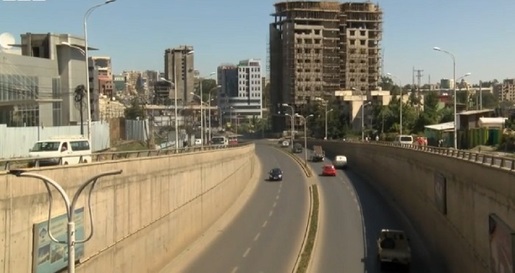
A property boom in Ethiopia’s capital is putting pressure on the government to keep homes affordable for the people who also live in one of its fastest-growing economies.
Smart apartments and hotels in mirror-glass buildings rise up in areas of Addis Ababa where shacks once stood. A new metro snakes through a city where an emerging middle class is snapping up new homes, but waiting lists for cheap state-built apartments grow.
This is a challenge for the government whose huge investments in infrastructure have sucked in financing from heavily regulated banks, driving up economic growth but leaving little capital to spur on private developers who could help meet the shortfall in housing.
“This house and apartment business is booming. If I had enough money, I would buy more,” said businessman Seife Tefera, who bought a flat for 1.7 million birr (US$83,000), paid for in two cash instalments.
Paying that kind of sum is only possible for a relatively small but growing portion of the population of Ethiopia, a country that was ravaged by communist purges in the 1970s and famine in the 1980s.
The Ethiopian economy now boasts of double-digit growth now.
Across Africa, rising wealth and an expanding middle class have fueled demand for new homes as well as stoking property prices. But there are few parallels to Ethiopia’s state interventionist approach and its control over how banks lend their money.
“The main challenge in Ethiopia is financing,” said Rateneh Fassil, who markets homes for upscale developer Noah Real Estate, blaming part of the real estate boom on people hunting for investments when bank deposits offer poor returns.
“It’s not just about owning a home, in some ways it is a hedge against inflation.”
Finding Financing
Ethiopia’s banking system is dominated by state-owned institutions. There are about 16 private banks, but they are required to invest the equivalent of 27 percent of their loan portfolio in low-yielding state development bonds.
The bonds have contributed to building a new national rail network, hydro-electric dams and roads to remote regions, lifting growth forecasts to 10 percent in the 2015/2016 fiscal year.
But there are few funds left to develop a mortgage market, so private real estate developers struggle to raise financing for new projects. The homes they can build target cash buyers, demanding sums most of those in the capital can only imagine.
The government has promised to step in. It has embarked on one of Africa’s biggest state housing projects, building about 32,000 units per year since 2006 and creating a national savings scheme that offers subsidized mortgages to the poorest.
But that still falls far short of demand. A the end of 2013, the last year for which official figures were available, about 900,000 people were on a waiting list for an apartment in Addis Ababa, whose population is set to more than double to 8.1 million by 2040.
The state’s next five-year “Growth and Transformation Plan” starting this month foresees a 5-fold increase in house building, said Tadesse Gebregiorgis, acting head of housing development in the Urban Development Ministry.
“The government has recognized the fact that housing provision for the urban population would require huge financial resources,” Tadesse said, adding that 1.5 million homes would be built by 2025.
For a new home, purchasers will still need a down payment worth at least 10 percent of the value of one- to three-bedroom apartments costing between 120,000 to 380,000 birr, or about US$5,800 to US$18,500. That is more affordable, but the wait can be years.
While praising Ethiopia for strong growth, the International Monetary Fund (IMF) has urged the government to give private business more space to drive the economy, allow banks more freedom and take other steps to boost investment.
Foreigners are barred from owning banks, retail firms and some other industries, while telecommunications remain a state monopoly. Ethiopians can only have leasehold agreements, as all land is owned by the state.
Foreign construction firms are allowed to build residential and other mixed complexes. But few have taken up the offer so far.
Source: Reuters