Business
Southern Africa’s Investment Landscape Is Being Redrawn – and the Smart Money Knows It
The region is no longer just a commodity play. A sweeping green recalibration, a digital infrastructure surge, and long-overdue trade reforms are converging to create one of the world’s most compelling emerging-market opportunities.


By Lance Chisue
If you have been watching the markets, the defining story of 2026 is not a stock, a rate decision, or a geopolitical flashpoint. It is a structural shift unfolding across Southern Africa – one that is quietly redrawing the region’s economic identity.
Capital is moving, priorities are evolving, and the investors paying closest attention are no longer simply asking what lies beneath the ground. They are asking how it gets processed, who builds the grid, and whether the logistics infrastructure can keep pace.
The answer, increasingly, is yes.
The Four Pillars of Southern Africa’s FDI Surge
First-quarter 2026 data points to four sectors commanding the lion’s share of foreign direct investment inflows into the Southern African Development Community (SADC) – and together they tell a coherent, compelling story.
Critical Minerals: The Beneficiation Pivot
The race for lithium, manganese, and copper is well-documented. What is less appreciated is the directional shift in where capital is flowing.
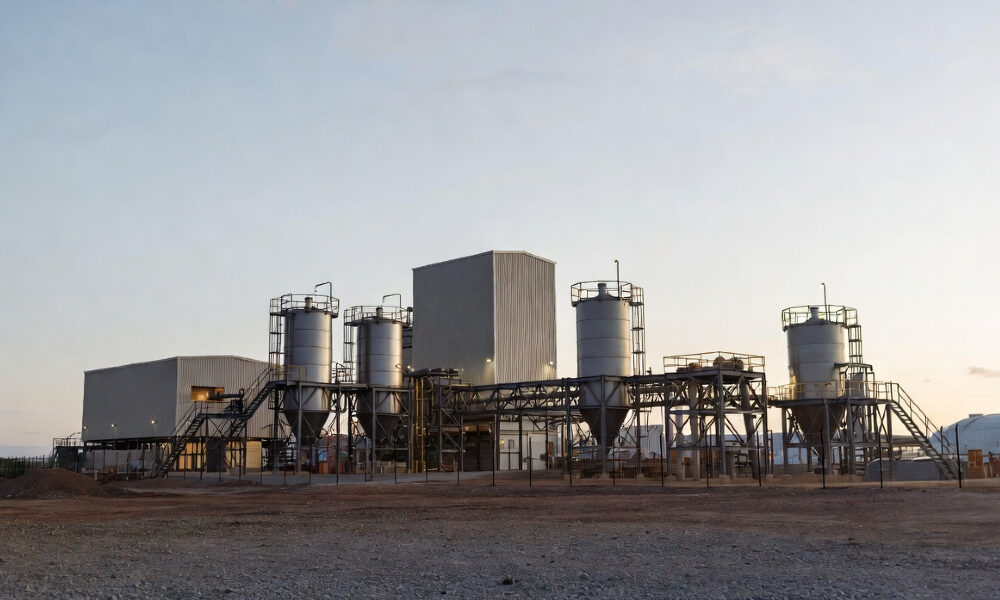
The old model – extract, export, and let someone else add the value – is giving way to a new imperative: process locally. Investors are now funding refineries and processing facilities within SADC, chasing both compliance credits under tightening global supply-chain standards and significantly higher profit margins.
“Extract and export” is being retired. “Value addition at source” is the new thesis.
Renewable Energy and Storage: The Volume Leader
Greenfield investments in wind and solar have surged by more than 60 percent, a figure striking enough on its own. But the more consequential development is the explosion of Battery Energy Storage Systems (BESS).
The rise of private energy wheeling – wherein industrial users procure power directly from generators, bypassing the grid – has created urgent demand for storage infrastructure capable of guaranteeing round-the-clock operational reliability. Massive industrial capital is flowing in to de-risk the grid, and with it, the investment case for manufacturing and processing in the region strengthens considerably.
Digital Infrastructure: The Fastest Grower
Southern Africa has, with relatively little fanfare, become the continent’s digital warehouse. Billions of dollars are being committed to Tier-4 hyperscale data centers in Gauteng and Cape Town, alongside strategic investments in subsea cable networks.
The drivers are familiar globally but arriving in Southern Africa with particular force: the explosion of artificial intelligence workloads and the rapid proliferation of sovereign cloud data-residency laws, which require that data generated within a jurisdiction remain within it. The region is positioning itself as the logical hub for a digitizing continent.
Logistics: The Strategic Enabler
Infrastructure investment, long the missing ingredient in Africa’s trade ambitions, is finally materializing at scale. The Lobito Corridor – a rail and port network running through Angola, Zambia, and the Democratic Republic of Congo, backed by both the European Union and the United States – is transforming landlocked mineral-rich nations into high-speed export arteries.
Its strategic importance extends beyond regional commerce: the corridor is emerging as a credible western alternative supply chain for the global electric vehicle industry, reducing dependence on historically concentrated sourcing routes.
The next major signpost arrives imminently. The sixth South Africa Investment Conference (SAIC), scheduled for March 31, is expected to produce the next wave of billion-rand pledges across manufacturing and technology. Watch it closely.
The Real Trade Barrier Nobody Is Talking About
Southern Africa’s investment story would be incomplete – and, frankly, misleading – without an honest assessment of what still stands in the way.
Most executives assume that regional trade friction is fundamentally a tariff problem. It is not.
Within SADC, the dominant constraint is Technical Barriers to Trade (TBT): fragmented product standards, duplicated testing requirements, inconsistent certification recognition, and procedural misalignment across 16 sovereign jurisdictions. This is where cost accumulates, timelines collapse, and commercial momentum is lost.
A manufacturer compliant in South Africa is not automatically compliant in Zambia, Mozambique, or Tanzania. The result is a region rich in trade agreements but poor in seamless trade execution. That, however, is beginning to change.
A Quiet Revolution in Regional Standards
During the SADC TBT Cooperation Structures meetings held in Johannesburg in late March 2026, delegates made meaningful progress toward a Unified Regional Quality Infrastructure – a framework aligned with SADC’s 2026 agenda for industrialization, agricultural transformation, and energy transition.
This is not administrative housekeeping. It is structural trade reform.
The body driving this harmonization is SADCSTAN – the Southern African Development Community Cooperation in Standards, Technical Regulations, and Conformity Assessment. Its mandate is to ensure that member states progressively adopt a “one standard, one test” model and mutually recognize certificates of conformity, creating a coherent technical trade ecosystem across the region.
The commercial implications are significant.
Reduced compliance complexity. Harmonized standards across priority sectors – agro-processing, pharmaceuticals, energy, manufacturing, mining beneficiation, and construction – would collapse 16 separate compliance frameworks into a single, navigable pathway.
Lower landed cost volatility. As mutual recognition architecture matures, redundant testing cycles and duplicated inspection requirements diminish. The result is more predictable cost structures for exporters and distributors operating across multiple SADC markets.
Border efficiency gains. Aligned technical benchmarks reduce the scope for discretionary clearance delays at high-volume crossings such as Beitbridge and Lebombo. In logistics, time is working capital – and every hour saved at the border has a direct balance-sheet equivalent.
The Bigger Strategic Signal
Here is the argument that deserves to be stated plainly: the African Continental Free Trade Area (AfCFTA) will not succeed because tariffs fall. It will succeed because standards align.
Continental trade integration is, at its core, a quality infrastructure execution story. Tariff schedules make headlines; technical harmonization makes trade flows.
Manufacturers that align early with evolving Standards, Quality Assurance, Accreditation, and Metrology (SQAM) systems across the region will find themselves structurally advantaged – with lower compliance drag, faster regional market replication, stronger distributor confidence, and greater export scalability.
This is not policy theory. It is competitive architecture.
Southern Africa is quietly reinforcing the systems layer that sits beneath trade. The investment landscape is shifting from raw extraction toward value addition, energy resilience, digital capacity, and logistical connectivity.
The standards infrastructure – unglamorous as it is – is what will ultimately determine whether that shift produces durable growth or merely a new cycle of underperforming potential.
The question for manufacturers, exporters, and investors is no longer whether Southern Africa is changing. It plainly is. The question is whether you are positioned to move with it.
Lance Chisue is the Founder and CMO of Sales Connect Africa, a Pretoria-based firm specializing in helping manufacturers enter and grow in Southern African markets. He leverages sales expertise and strategic visibility to connect products with buyers, supporting manufacturers in navigating complex regional market dynamics and distribution channels. Lance is dedicated to empowering manufacturers to succeed by bridging gaps between products and customers in emerging African markets