A Diaspora View of Africa
South Sudan’s Destructive Corruption


By Gregory Simpkins
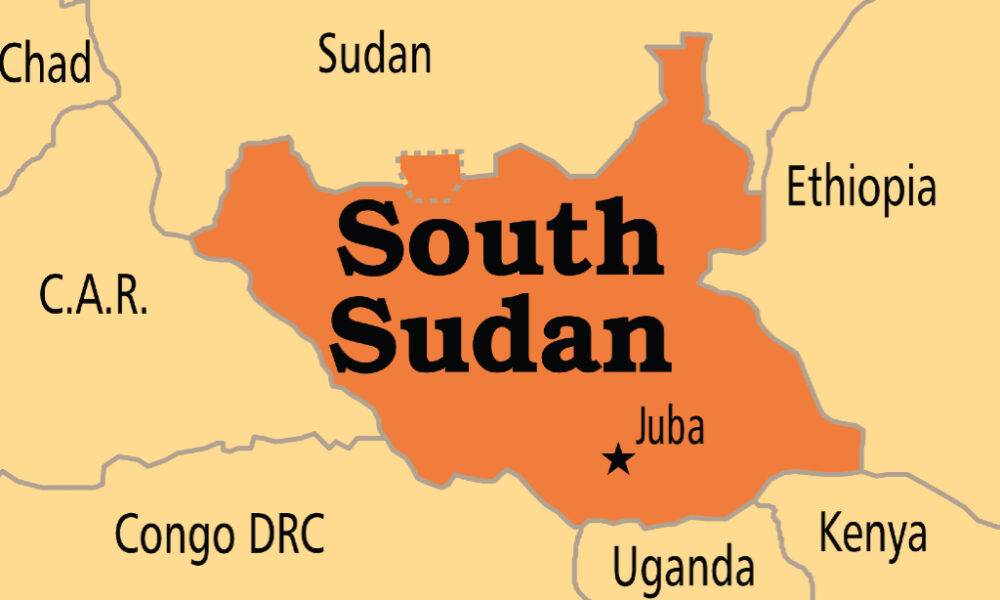
As I have written previously, South Sudan is critically placed in the geopolitical context. For example, waters that form the White Nile River are gathered from tributaries in Uganda, Rwanda, Kenya and Burundi in South Sudan.
Joining with the Blue Nile River in Khartoum, Sudan, it forms the mighty Nile River – perhaps the world’s longest river – that enabled the ancient Egyptians to create one of the world’s dominant civilizations millennia ago and which even today powers agriculture and commerce in northeastern Africa. South Sudan’s area known as the Sudd is one of the world’s largest wetlands.
So, while much of the region is suffering from insufficient water supplies, effective water management resources in South Sudan will provide for enhanced energy and agricultural production. The country produces as much as 170,000 barrels per day of petroleum that currently moves through its northern neighbor to Port Sudan, where it is shipped to refineries in locations such as Mombasa, Kenya, before returning to South Sudan for distribution.
Despite recurring conflict in the country since it split from Sudan in 2011, numerous regional entrepreneurs have been attracted there, and some have been enormously successful. In fact, several years ago, I advised a coalition of groups on a mission to South Sudan to focus on the business community rather than government, other than those connections necessary to do conduct business in the country.
Aside from the conflicts and a lack of cohesive governance, pervasive corruption is the cancer that is eating away at South Sudan’s very existence as a nation.
The Sentry, an investigative and policy organization that seeks to disable multinational predatory networks that benefit from violent conflict, repression and kleptocracy, has published what it calls a massive trove of data exposing the control by the family of South Sudan President Salva Kiir over a secret business empire. “Kiirdom: The Sprawling Corporate Kingdom of South Sudan’s First Family,” provides a deep dive into the first family’s private capture of assets across South Sudan’s major national economic sectors including petroleum, mining, banking, trade, aviation, logistics and private security.
According to a press statement extended to Radio Tamazuj, a daily news service and current affairs broadcaster covering South Sudan, the southern states of Sudan and the borderlands between the two countries. The exposé published on The Sentry’s new interactive Atlas platform, “Kiirdom” combines extensive documentation from the South Sudan Ministry of Justice with the findings from numerous original investigations by The Sentry.
John Prendergast, Co-Founder of The Sentry, explained that since independence, rather than work toward a secure and prosperous future, the Kiir regime has orchestrated destabilization, repression, violent conflict and mass starvation while consolidating a lucrative corporate empire. “The first family has deployed an array of circumvention techniques to veil from the public their businesses and assets,” he said.
In an earlier report on South Sudan’s corruption, “The Taking of South Sudan” in September 2019, The Sentry stated that South Sudanese officials did not act alone. The South Sudanese politicians and military officials ravaging the world’s newest nation received essential support from individuals and corporations from across the world who have reaped profits from those dealings.
Nearly every instance of confirmed or alleged corruption or financial crime in South Sudan examined by The Sentry has involved links to an international corporation, a multinational bank, a foreign government or high-end real estate abroad. This report examines several illustrative examples of international actors linked to violence and grand corruption in order to demonstrate the extent to which external actors have been complicit in the taking of South Sudan.
The local kleptocrats and their international partners – from Chinese-Malaysian oil giants and British tycoons to networks of traders from Ethiopia, Eritrea, Kenya and Uganda – have accumulated billions of dollars. The country’s natural resources have been plundered, lethal militia and military units responsible for atrocities have received financing and kleptocrats have lined their pockets with untold billions of dollars allocated by government programs meant to improve the livelihood of some of the poorest, most vulnerable people in the world.
The spoils of this heist are coursing through the international financial system in the form of shell companies, stuffed bank accounts, luxury real estate and comfortable safe havens around the world for the extended families of those involved in violence and corruption. Transparency International confirmed The Sentry’s findings in 2022, declaring South Sudan the most corrupt country in the world with a corruption perceptions index of 11 out of 100. The highest rating found was 88.
The Bitter Fruits of Corruption
As a result of corruption and misgovernance, almost 60 percent of South Sudan’s population are expected be acutely food insecure next year, with more than two million children at risk of malnutrition, warns data from a United Nations-backed review. The latest Integrated Food Security Phase Classification (IPC) review published on Monday estimated that starting in April, 57 percent of the population would be suffering from acute food insecurity, which the UN defines as when a “person’s inability to consume adequate food puts their lives or livelihoods in immediate danger”.
Almost 7.7 million people will be classed as acutely food insecure, according to the IPC, an increase from 7.1 million people the previous lean season. “Year after year, we see hunger reaching some of the highest levels we’ve seen in South Sudan,” said Mary-Ellen McGroarty, the country director for the UN’s World Food Programme (WFP).
“When we look at the areas with the highest levels of food insecurity, it’s clear that a cocktail of despair – conflict and the climate crisis – are the main drivers,” she said.
Perhaps a more urgent result of the government’s failure is its inability (or lack of will) in paying the salaries of its employees, including the military. In an exclusive interview with Radio Tamazuj, Joseph Siegle, Director of Research at the Africa Center for Strategic Studies at the National Defense University in Washington, D.C., said the government’s failure to pay salaries is a very severe situation and shows the weak governance realities in South Sudan that pose a risk of the country becoming a failed state.
He contends this will come with even deeper lawlessness, a power shift to warlords and militias, and the potential fragmentation within the country.
During my visits to South Sudan with Members of Congress or Congressional staff members, we found that the recurring conflict has as much to do with efforts to secure a desired share of profits from resources as it did ethnic or political differences. Continuing efforts to bring the warring parties together fail due to lack of resolve to bring lasting peace to the country.
Just as Siegle predicted, warlordism is rampant. An example we found during a visit after one of the conflicts broke out was that Kiir and his First Vice President Riek Machar were at the presidential residence when fighting broke out, which would be an odd thing if either side had foreknowledge of such a resumption of conflict.
US embassy analysts believed it was warlords who instigated the conflict without direct orders from either Kiir or Machar. This lack of control has long made resolution of conflict there elusive.
Given the lack of competent government institutions, the predatory nature of top government officials and the impetus from foreign actors to stimulate and facilitate corrupt practices in South Sudan, it will continue to be a difficult task to achieve stability and honest governance in South Sudan, but it must be attempted by the international community because of the regional destruction it causes.
How will this be achieved? Hard to say since nothing has worked thus far. Clearly, regional powers must take a leading role in achieving lasting peace in South Sudan – if they can prevent conflict among themselves first.
Gregory Simpkins, a longtime specialist in African policy development, is the Principal of 21st Century Solutions. He consults with organizations on African policy issues generally, especially in relating to the U.S. Government. He further acts as a consultant to the African Merchants Association, where he advises the Association in its efforts to stimulate an increase in trade between several hundred African Diaspora small and medium enterprises and their African partners.