Zina’s Youth View on Africa
South Sudan’s 2026 Election: A Vote That Could Build Peace – or Break It
As Juba races toward its first-ever national election, removing legal roadblocks has proven far easier than removing the risk of renewed civil war.


By Godfred Zina
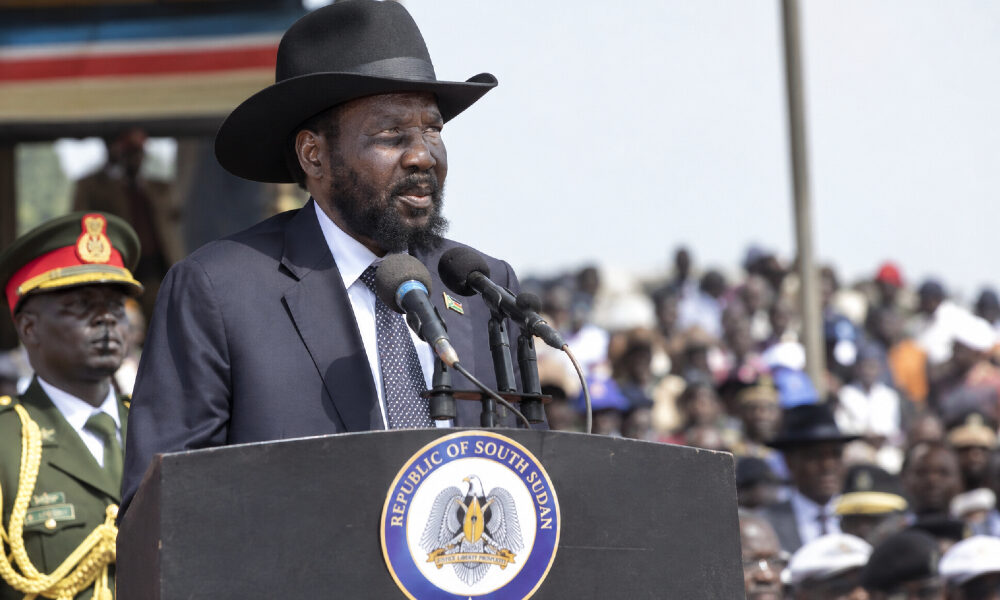
On September 2nd, President Salva Kiir signed into law a set of constitutional amendments clearing one of the last formal obstacles to South Sudan’s general election, now scheduled for December 22nd, 2026. On paper, this looks like progress: a country that has never held a national vote since seceding from Sudan in 2011 is, at last, edging toward one. In practice, it may be progress toward the wrong outcome. An election held without the security guarantees, political inclusion, and financing that credible balloting requires would not settle South Sudan’s future. It would risk detonating it.
A Promise Deferred, Again and Again
South Sudan’s original constitution called for elections by July 2015. They did not happen. Nor did they happen in 2018, 2021, 2023, or 2024. Each deadline dissolved into a fresh political deal or legislative patch that extended the transitional government’s life without ever putting it before voters. The amendment Mr. Kiir just signed follows the pattern: it does not resolve the underlying disputes that have repeatedly derailed the process, so much as remove the legal tripwires – chiefly the requirements for a completed national census and a permanent constitution – that stood between the government and a vote it can now schedule on its own terms.
That distinction matters. A country’s first election is meant to confer legitimacy on whoever wins it. Legitimacy, in turn, depends on the losers believing the contest was fair. Stripping out procedural safeguards to hit a date is a poor way to build that belief.
The Absent Vice-President
No single fact captures the risk better than the continued detention of Riek Machar, South Sudan’s first vice-president and the leader of the country’s main opposition movement, the SPLM-IO. Mr. Machar and several allies have been held since March 2025 on treason charges, and Mr. Kiir has since replaced ministers loyal to him. His return to government in 2018, and the integration of thousands of his fighters into a unified national framework, was among the central achievements of the peace agreement that ended South Sudan’s civil war. His exclusion from the vote unwinds that achievement in real time.
An election that proceeds with the leading opposition figure in jail is not a contest; it is a coronation with a ballot box attached. Supporters of the SPLM-IO are unlikely to accept the result as legitimate, and a government that wins uncontested will struggle to claim a genuine mandate. Elections are supposed to channel political rivalry into a peaceful process. When one side is locked out before voting begins, that rivalry has nowhere to go but back onto the battlefield.
The United Nations Human Rights Committee has said as much directly, warning that holding elections without adequate political, security, and human-rights guarantees – and without genuine, inclusive dialogue – could reignite conflict and raise the risk of atrocities, including ethnic violence.
A Budget that Does Not Add Up
Even setting politics aside, South Sudan is not logistically ready. The National Elections Commission has put the cost of a credible vote at roughly US$250 million. As of early September, the government had provided only about US$27 million – an eight-percent down payment on a national election with eleven weeks to go. The African Union’s Peace and Security Council has urged donors to close the roughly US$223 million gap by October, while the United States has signaled that it expects South Sudan to fund its own vote from domestic revenue – revenue that depends almost entirely on oil exports through a pipeline in neighboring Sudan that has itself been repeatedly disrupted by war.
Money is not a peripheral concern; it is the difference between a functioning voter registry and a chaotic one, between polling stations that open on time and ones that do not open at all. The NEC’s own chairman has acknowledged that “political will, security and funding” all rest with the government, not the commission – an unusually candid admission that the institution charged with running the election does not control the conditions for running it well.
Guns that Answer to Different Masters
Underneath the funding gap sits a harder problem: South Sudan’s rival armed forces were never fully unified, as the 2018 peace agreement required. Government troops and forces loyal to opposition figures still answer to different chains of command. That matters enormously in an election year, because a disputed result or a contested seat is far more dangerous when the aggrieved side retains an army rather than merely a grievance.
The instability is not confined within South Sudan’s borders, either. Sudan’s SPLM-North, a rebel movement rooted in the Nuba Mountains just across the frontier, has aligned itself with Sudan’s Rapid Support Forces, the paramilitary group at war with Sudan’s army. That alignment threads South Sudan’s domestic fragility into a wider regional conflict, giving local disputes an external dimension and external conflicts a local foothold.
What Would Actually Help
None of this means South Sudan should abandon the idea of an election – only that the date should serve the country’s stability rather than the other way around. Three things would make a real difference.
First, genuine political inclusion. That means releasing Mr. Machar and other detained opposition figures and bringing them into a real negotiation over the terms of the vote, not merely inviting them to observe it. Talks that address power-sharing and security arrangements alongside the electoral calendar would give losers a reason to accept results rather than reach for weapons.
Second, honest accounting on money and time. International partners – the African Union, the United States, the European Union, and Gulf states with a stake in regional stability – should either close the funding gap quickly and transparently, or accept that a rushed, underfunded vote in December will produce a less legitimate outcome than a properly resourced one a few months later. A flawed election is not a milestone; it is a liability with a ballot attached.
Third, and most fundamentally, the security-sector unification promised in 2018 needs to actually happen. So long as rival forces remain loyal to rival politicians, any disputed result carries the risk of becoming an armed confrontation rather than a legal challenge. A single, unified national force would not guarantee a peaceful election. But without one, peace is asking a great deal of goodwill in a country that has had very little reason to extend it.
South Sudan’s first election could be a genuine milestone – the moment the country converts a fragile peace into an elected government with a real claim to legitimacy. It could just as easily be the moment a long-postponed vote, held for its own sake rather than the country’s, tips a fragile peace back into war. Which outcome South Sudan gets will depend less on the date on the calendar than on whether its leaders treat the vote as a genuine transfer of political risk – or merely as the last box left to tick.
Godfred Zina is a freelance journalist and an associate at DefSEC Analytics Africa, a consultancy specializing in data and risk assessments on security, politics, investment, and trade across Africa. He also serves as a contributing analyst for Riley Risk, which supports international commercial and humanitarian operations in high-risk environments. He is based in Accra, Ghana.