Politics
South Sudan requests the deployment of a regional protection force
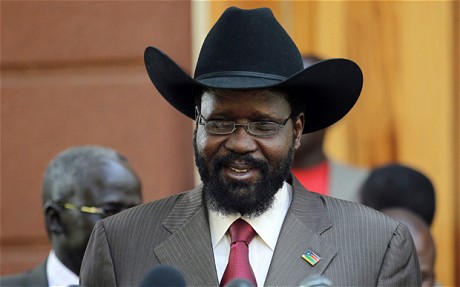
South Sudanese President Salva Kiir has called for an expeditious approval and deployment of a regional deterrence and protection force to end ongoing violations of the cessation hostilities agreement signed with his former deputy turned rebel leader, Riek Machar.
The calls for a regional protection force comes amid accusations of ongoing violations of the ceasefire agreement by the Machar-led forces. Kiir and Machar agreed to stop fighting, which has been raging since last December, following protracted negotiations in Ethiopia.
Speaking in Pretoria, South Africa on Saturday, Kiir told leaders from the regional grouping Inter-governmental Authority on Development (IGAD) that the deployment of a peacekeeping force was urgent. Uganda’s presidential assistant, Sarah Kagingo said the closed meeting was attended by president Museveni, Uhuru Kenyatta of Kenya, Eduardo Dos Santos of Angola, Hailemariam Desalagn of Ethiopia and Joseph Kabila of Democratic Republic of Congo.
She said the consultative meeting was also attended by West African leaders from Nigeria, Mali, Niger, Nigeria and Cameroon. Meanwhile, Sudanese newspaper, Sudan Tribune has reported that a Salva Kiir aide, who spoke on condition of anonymity, confirmed that the president had held sideline meetings with a number of key African leaders in which he speculated that pro-Machar rebel forces would continue to commit ceasefire violations.
The aid, requesting anonymity, said; “President Kiir made it abundantly clearly that the rebels of Riek Machar will never respect the cessation of hostilities agreement unless a deterrence and protection force is deployed to secure and provide protection during the movement of the monitoring and verification team to track down and report independently the side violating or failing to implement the agreement.”
The aide said that Kiir also held talks with South African President, Jacob Zuma, where he asked for South African support at the African Union to consider the deployment of a foreign force. The proposed deployment has been rejected by Machar, who claims it would widen and regionalise the conflict.
Deployment of foreign troops in the troubled nation has always been a sensitive matter, with IGAD chairman, Ethiopian Prime Minister, Hailemariam Desaegn at one point suggesting that Uganda pull out its soldiers. But Museveni declined, insisting Ugandan troops were in South Sudan at the invitation of that country’s leader.
A top Ugandan foreign affairs official, James Mugume, in February, however, insinuated that the country would consider a progressive pull out from South Sudan to let IGAD take charge after the United States, Norway and Ethiopia publicly requested the East African country withdraw its soldiers.
Mugume had argued that since the situation in South Sudan had stabilised, the Ugandan military could work under the auspices of IGAD and the newly set up African Capacity for Immediate Response to Crises (ACIRC). However, Uganda’s army commander, General Katumba Wamala said recently that Ugandan troops were in South Sudan under bilateral agreement and will remain there until Uganda is asked to leave by South Sudan.