Owusu on Africa
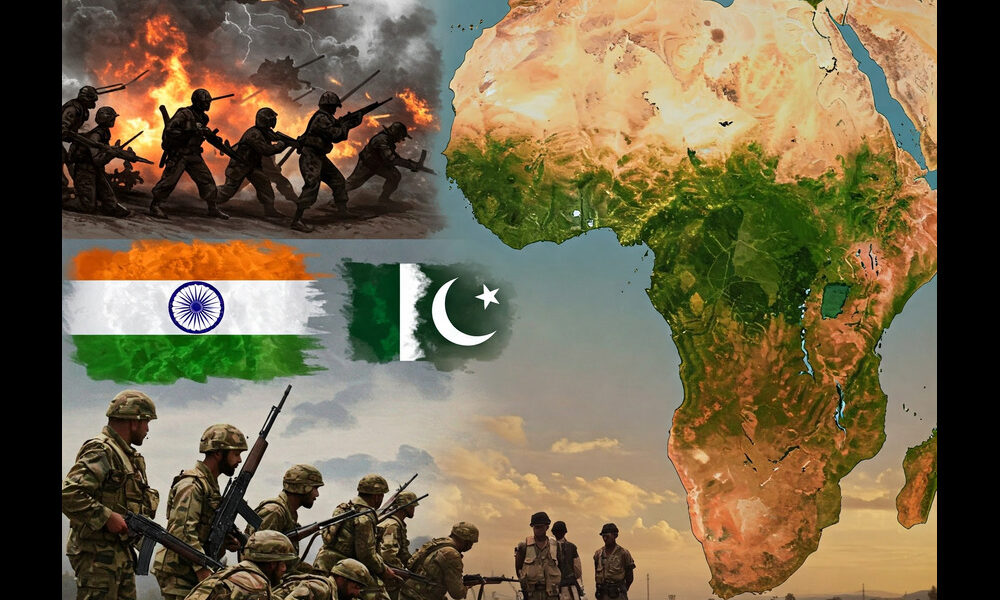
South Asia’s Decades-Long Conflict: What Africa Can Learn


By Fidel Amakye Owusu
The United Nations Military Observer Group in India and Pakistan (UNMOGIP) is one of the UN’s longest-standing missions, rooted in the early days of the Kashmir conflict that erupted after the partition of British India into India and Pakistan.
Since then, India and Pakistan have fought several wars, and tensions between the two nations continue to flare – most recently following a brutal terrorist attack on Indian soil. These escalations, while alarming, offer valuable lessons for Africa’s 54 sovereign states.
Lesson One: Partition and Secession Is No Panacea for Peace
While the partition of India and Pakistan was rooted in colonial-era religious and political divisions, it failed to resolve underlying grievances. Instead, it created unresolved territorial disputes, such as Kashmir, that continue to ignite violence.
Africa is no stranger to secessionist movements. From Somalia and Senegal to the Democratic Republic of Congo, Nigeria, Cameroon, and Angola, the risk of fragmentation looms large.
The solution lies not in separation but in fostering inclusivity, dialogue, and mutual respect to address alienation before it morphs into rebellion.
Lesson Two: Militarization Escalates, Not Resolves, Tensions
In the 1970s, India and Pakistan embarked on a nuclear arms race, with some theorists naively claiming mutually assured destruction would deter conflict. Instead, brinkmanship persists, with both nations allocating vast resources to weapons rather than development.
Similarly, many African regions – such as the Great Lakes, the Sahel, North Africa, and the Horn of Africa – are witnessing growing stockpiles of conventional weapons amid strained inter-state relations. But military build-up without diplomacy only deepens hostilities.
True security lies in cooperation, not confrontation.
Lesson Three: Water as a Weapon: A Dangerous Precedent
Recent tensions between India and Pakistan have spotlighted the Indus Water Treaty, a 60-year-old agreement now teetering as both nations weaponize water access. Africa confronts parallel challenges, particularly in the Nile Basin, where Ethiopia’s Renaissance Dam has sparked friction with Egypt and Sudan.
Transboundary water management demands transparent frameworks and collaboration—not unilateral actions. Failure to prioritize shared resources risks ecological crises and escalations that could spiral beyond control.
Lesson Four: Terrorism Thrives in the Shadows of Division
The Kashmir conflict underscores how militant groups exploit state rivalries. Pakistan-India tensions have long provided fertile ground for extremist networks, a dynamic mirrored in Africa.
With the continent now the global epicenter of terrorism – from Boko Haram in the Sahel to Al-Shabaab in East Africa – governments must resist the temptation to manipulate non-state actors for short-term gains. Regional intelligence-sharing and counterterrorism strategies, rather than fragmented national agendas, are vital to curbing this threat.
A Call for Proactive Diplomacy
South Asia’s history is a cautionary tale: unresolved disputes, militarization, and resource nationalism only deepen crises. For Africa, the path forward lies in rejecting zero-sum politics and prioritizing collective security.
By learning from South Asia’s missteps, African nations can champion dialogue, invest in conflict prevention, and forge unity against shared threats – before simmering tensions boil over. The time to act is now.
Fidel Amakye Owusu is an International Relations and Security Analyst. He is an Associate at the Conflict Research Consortium for Africa and has previously hosted an International Affairs program with the Ghana Broadcasting Corporation (GBC). He is passionate about Diplomacy and realizing Africa’s global potential and how the continent should be viewed as part of the global collective.