Business
South Africa’s President urges Nigeria to sign onto the African Continental Free Trade Area agreement
Intra-Africa Trade
South African President Cyril Ramaphosa urged his Nigerian counterpart to sign a continent-wide free-trade deal.
Nigeria should take its time to consult on the agreement before signing up, but should not “take too long,” Ramaphosa said at a conference Wednesday in the West African nation’s capital, Abuja. “The continent is waiting for Nigeria and South Africa. By trading among ourselves, we are able to retain more resources in the continent.”
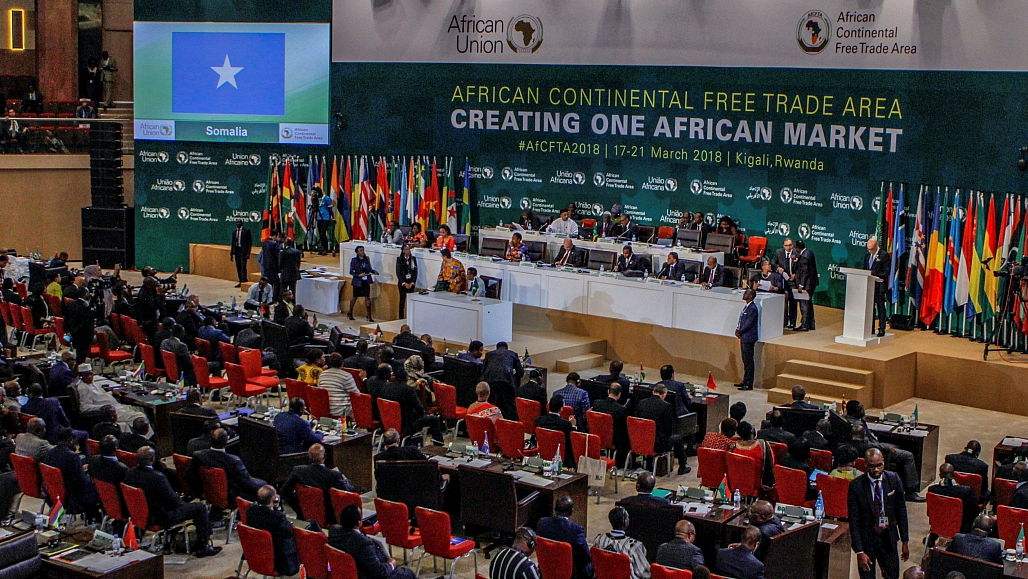
Talks to establish the African Continental Free Trade Area (AfCFTA) with a combined gross domestic product (GDP) of more than US$3 trillion started in 2015, and in May, Ghana and Kenya became the first countries to ratify the deal. Ramaphosa signed the agreement last week in Mauritania. South Africa will ratify it “soon,” he said.
The AfCFTA is a project driven by the African Union (AU) to eliminate tariffs on intra-Africa trade of goods and services and create a single continental market with free movement of business people. It will only become effective once the parliaments of at least 22 members ratify it.
“Can’t Rush”
Nigeria and South Africa account for about half of the continent’s GDP.
Nigeria can’t rush signing the deal because it does not want to get things wrong, Finance Minister Kemi Adeosun said at the conference. Her government is talking to stakeholders including manufacturers, she said.
Ramaphosa and Adeosun were speaking at the African Export-Import Bank’s annual meeting being held in Abuja this week.
The Cairo-based lender released its 2018 Africa trade report, which showed that the trade deficit narrowed to US$96.9 billion last year compared with US$132.5 billion in 2016. Exports increased to US$405.3 billion in 2017 from US$344 billion a year earlier, while imports advanced to US$502.3 billion from US$476.6 billion, it said.
While Africa’s trade with the rest of the world expanded 11 percent to US$907.6 billion last year, the portion of trade within the continent declined to 14 percent of the total. Namibia, Nigeria and South Africa accounted for more than 35 percent of intra-Africa trade last year. South Africa contributed a quarter of the region’s domestic commerce in 2017, mostly in oil imports from Angola and Nigeria.
Agreement Effect
A free-trade area for the continent, if implemented according to schedule, could increase intra-Africa trade by at least half by 2022, according to the report.
“An integrated African market is also likely to see enhanced flow of foreign direct investment (FDI) and could shift FDI from natural resources to industry and manufacturing as investors seek to take advantage of increased market size,” the bank said in the report.
Source: Bloomberg News