News
South Africa: Nation holds it’s breath as Mandela condition worsens
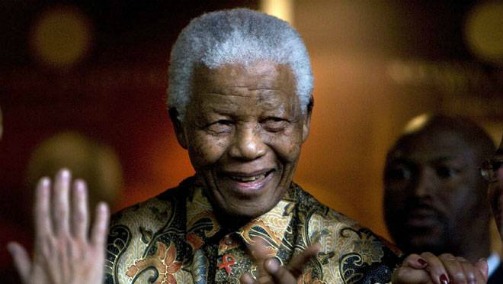
Former South African President Nelson Mandela. PHOTO/PETER DEJONG /AP
(Reuters) – Former South African President Nelson Mandela is still clinging to life, his eldest daughter Makaziwe said on Thursday.
A deterioration in Mandela’s status after 20 days of treatment for a lung infection forced South African President Jacob Zuma to cancel his participation in a regional summit in neighboring Mozambique on Thursday.
“I won’t lie, it doesn’t look good. But as I say, if we speak to him, he responds and tries to open his eyes. He’s still there. He might be waning off, but he’s still there,” Makaziwe told state broadcaster SABC after visiting her father at the hospital in Pretoria where he is being treated.
Mandela’s fourth hospitalization in six months has forced a growing realization among South Africans that the man regarded as the father of their post-apartheid “Rainbow Nation” will not be among them forever.
“Mandela is very old and at that age, life is not good. I just pray that God takes him this time. He must go. He must rest,” said Ida Mashego, a 60-year-old office cleaner in Johannesburg’s Sandton financial district.
U.S. President Barack Obama, who is due to visit South Africa this weekend, said his thoughts and prayers were with the Mandela family and South Africans.
Speaking in Senegal, his first stop on a three-nation Africa tour, Obama said that if Mandela dies, his legacy will live on for ages. He confirmed he still planned to travel to South Africa in the coming days, in response to speculation he might re-schedule his trip because of Mandela’s deteriorating health.
Mandela is revered for his lifetime of opposition to the system of race-based apartheid rule imposed by the white minority government that sentenced him to 27 years in jail, more than half of them on notorious Robben Island.
He is also respected for the way he preached reconciliation after the 1994 transition to multi-racial democracy following three centuries of brutal white domination.
Well-wishers’ messages, bouquets and stuffed animals have piled up outside Mandela’s Johannesburg home and the wall of the hospital compound where he is being treated in the capital.
South Africans seemed resigned to the prospect of losing their hero, but expressed gratitude for what he had done.
“That great man who is in God’s hands now fought so a black woman like me could move into this “whites-only” area in 1991,” teacher Nthabi Chauke, 54, said outside the hospital. “Now I know what freedom feels like. I came here to say thank you.”
Mandela stepped down in 1999 after one five-year term in office. Since then he has played little role in public life, dividing his time in retirement between his home in the wealthy Johannesburg suburb of Houghton and Qunu, the village in the impoverished Eastern Cape province where he was born.