Zina’s Youth View on Africa
Somaliland’s Recognition Gambit: A Test Case for African Sovereignty


By Godfred Zina
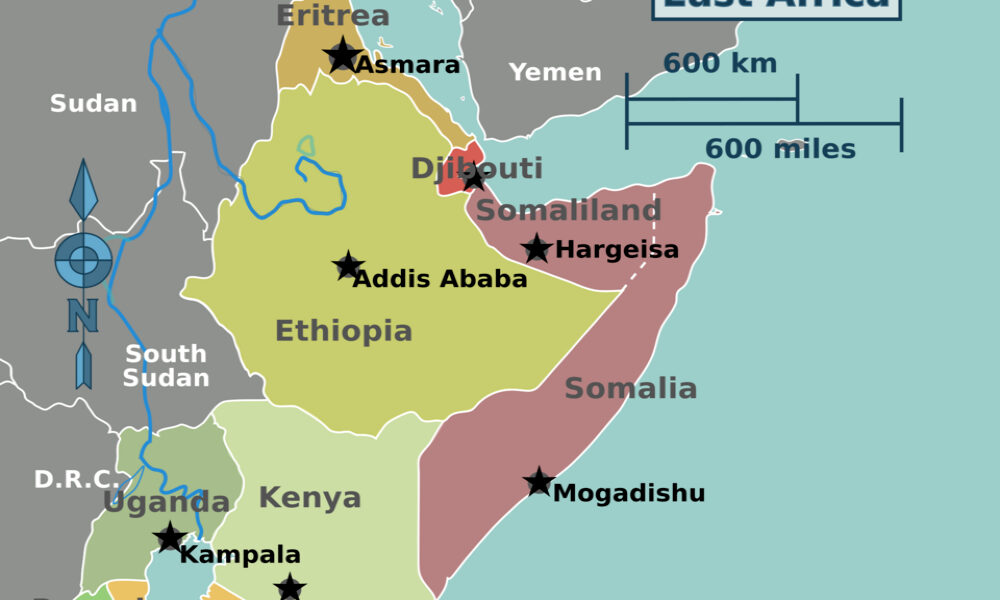
For more than three decades, Somaliland has governed itself as a de facto state, maintaining stability while its parent nation, Somalia, struggled with fragmentation and conflict. Now, the breakaway region’s long quest for international legitimacy has reached a critical juncture – one that threatens to upend foundational principles of African statehood and regional order.
Israel’s formal recognition of Somaliland on December 26, 2024, marks the first time any country has acknowledged the self-declared republic’s sovereignty.
The decision represents far more than a symbolic gesture. When Israeli Foreign Minister Gideon Saar traveled to Hargeisa shortly afterward, the visit transformed what might have been dismissed as diplomatic theater into a strategic realignment with profound implications for the Horn of Africa.
The reaction was swift and unequivocal. Somalia condemned the move as an egregious violation of its territorial integrity, while the African Union’s Peace and Security Council demanded immediate revocation.
Their response underscores a bedrock principle of post-colonial African diplomacy: the sanctity of inherited borders, however arbitrary or contested they may be.
Strategic Calculations in a Shifting Landscape
Israel’s timing reveals much about its current geopolitical predicament. Isolated by many traditional partners over its conduct in Gaza and the West Bank, Jerusalem appears to be cultivating alternative alliances wherever opportunity presents itself.
Somaliland, desperate for recognition and willing to align with Western security priorities, fits that bill perfectly.
The pattern extends beyond bilateral diplomacy. Somaliland’s endorsement of the recent U.S. military intervention in Venezuela – characterizing it as a “calibrated international effort” to restore democracy – signals its willingness to embrace interventionist Western foreign policy.
Israel’s own praise for American “forceful leadership” in that affair suggests a meeting of minds on questions of power projection and strategic alignment.
This is not Somaliland’s first brush with great power politics. In January 2024, Ethiopia signed a memorandum of understanding granting it access to the Red Sea port of Berbera in exchange for recognizing Somaliland’s independence.
The agreement nearly triggered open conflict with Somalia before mediation by Türkiye and the African Union (AU) defused tensions. That episode should have served as warning enough about the volatility inherent in challenging established sovereignty.
The Domino Question
Israel may have opened the floodgates. US Senator Ted Cruz has publicly advocated for U.S. recognition of Somaliland, framing the territory as a reliable partner in counterterrorism and maritime security.
Other nations seeking strategic footholds in the Red Sea corridor may calculate that the precedent has already been set.
Yet the response at the United Nations Security Council suggests considerable international unease. Members condemned Israel’s recognition as destabilizing and precedent-setting – with one notable exception.
The United States, constrained by its broader geopolitical relationship with Israel and concerns over Gaza, conspicuously withheld criticism.
That silence speaks volumes. If Washington eventually follows Jerusalem’s lead, the dam may well break entirely.
What Hangs in the Balance
The stakes extend far beyond Somaliland itself. Africa’s current borders are products of colonial mapmaking, not organic political development.
Many reflect administrative convenience rather than ethnic, linguistic, or historical logic. The continent has nevertheless maintained a tacit agreement: however flawed these boundaries may be, wholesale revision would invite chaos.
Somaliland’s case is admittedly unusual. The territory functioned as a separate British protectorate before voluntarily joining with Italian Somaliland in 1960 to form the Somali Republic.
It has maintained remarkable stability since declaring independence in 1991, holding regular elections and establishing functioning institutions – achievements that contrast sharply with Somalia’s protracted dysfunction.
But exceptionalism is a dangerous doctrine in international relations. If Somaliland’s functional governance justifies recognition, what of Puntland, Biafra, or Cabinda?
The AU’s resistance reflects hard-earned wisdom: once the principle of territorial integrity fractures, centrifugal forces become difficult to contain.
The Path Forward
African leaders face an urgent imperative. They must engage Israel diplomatically with unmistakable clarity: unilateral recognition of Somaliland undermines AU authority, threatens regional stability, and jeopardizes security in the strategically vital Red Sea corridor.
The risk of militarization and interstate conflict is not theoretical – Ethiopia’s land-access agreement already brought the region to the brink.
Somalia, for its part, cannot rely on moral condemnation alone. Mogadishu must mobilize the full diplomatic arsenal available to recognized states.
This means sustained engagement with the AU, intensive lobbying at the United Nations, and coordination with regional powers who share an interest in preserving the status quo. Statements of principle, however justified, will not suffice.
The international community should recognize what is truly at stake. Somaliland’s pursuit of statehood is understandable, even sympathetic.
But recognition achieved through great power patronage rather than regional consensus risks establishing a template for instability – one where strategic convenience trumps collective African decision-making about the continent’s political architecture.
The post-colonial order in Africa has never been perfect. Yet the alternative – a return to the logic of might-makes-right in border determination – promises something far worse.
As Somaliland presses its case and opportunistic powers weigh their options, Africa’s leadership must hold the line. The alternative is to invite a Pandora’s box of secessionist movements, proxy conflicts, and renewed great power competition on African soil.
That outcome would serve no one’s interests – least of all those of ordinary Africans who have already paid too high a price for borders drawn by others.
Godfred Zina is a freelance journalist and an associate at DefSEC Analytics Africa, a consultancy specializing in data and risk assessments on security, politics, investment, and trade across Africa. He also serves as a contributing analyst for Riley Risk, which supports international commercial and humanitarian operations in high-risk environments. He is based in Accra, Ghana.