Business
Somalia: Nation gradually rises from the ashes, opportunities abound in telecommunications sector
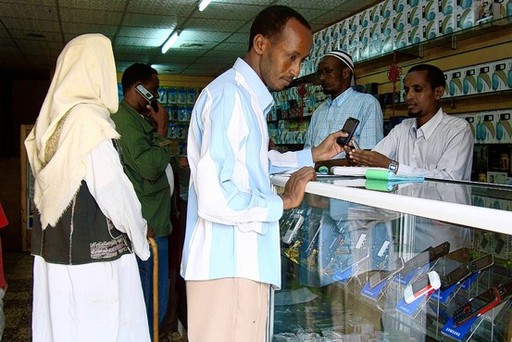
Somalis register new cell phones. PHOTO/Reuters
It may be two steps forward and one step back but Somalia is beginning to pick itself up off the ground after years of civil war. In the absence of regulation, a telecommunications sector has developed. Now the new government must put in place regulation and start to focus on connecting the disparate parts of the country.
In political terms, there are three parts of Somalia in which it’s possible for the telecommunications sector to develop: the area controlled by the new government around around the capital Mogadishu; Somaliland (which has declared independence); and Puntland (which has not declared independence).
Security issues have made it difficult for even outside investors with strong nerves to get involved.
Somaliland is considered much safer, however, Puntland is not as safe because of the sea pirates who base themselves there.
Despite the security issues, diaspora Somalis are coming back to Mogadishu and setting up businesses like cafes, restaurants and hotels.
In the absence of tax and regulation, the mobile sector has flourished and penetration is just under a quarter of the population, with around 2.3 million subscribers at the end of 2012. Mobile communications is a vital lifeline between Somalis across the country and the Somali diaspora who provide much of the funding that keeps the country afloat.
There are five main players in the mobile market: Hormuud Telecom (HorTel), Somafone, Telesom, Nationlink and Telecom Somalia. HorTel is by far the biggest player out of all these with a market share of just over 40 percent. Some operate only in Somaliland and Puntland, whereas others provide something approaching a national service. Some part of these networks offer GPRS/EDGE and 3G.
There are several mobile money services, the most popular of which seems to be Telesom’s Zaad service. This was banned by the al-Qaeda-linked al-Shabaab Islamist group when it controlled Mogadishu but is now functioning again. In the absence of a banking sector, these services are vital for transferring money into the country from the diaspora and around the country.
Somalia’s transitional Federal Government – which was been replaced by the current administration, set up a Ministry of Information, Posts and Telecommunications and it adopted the 2012 Telecommunications Act, which is in the process of the setting up of a regulator to be called the National Communications Commission. Once this gets off the ground it will be a converged regulator dealing with both media and telecommunications.
However, the reality is that the new administration has bigger concerns than trying to get this kind of legislation implemented and the operators have campaigned vigorously against it. From their perspective, more regulatory control and taxes are not a happy prospect and it’s fair to say that there’s a connection between high levels of competition, the absence of taxes and low user prices. Nevertheless, for a state to function it needs revenues and the telecommunications operators are the most successful businesses in all parts of the country.
The telecommunications sector is vital to the recovery of Somalia. International call income is the second largest source of revenue after diaspora remittances, however, due to the absence of regulation, none of that revenue benefits the government.
Somaliland is currently connected to international fiber via Djibouti, however, Mogadishu does not yet have such a connection – all international communication to Mogadishu is via satellite – a very expensive. alternative.
The new administration in Somalia and implementing partners are in the process of working to bring international bandwidth to the capital. They want to set up a series of video/Skype rooms in government ministries, departments and leading agencies so that the government can communicate effectively with the outside world.
One of the returning diaspora Somalis is entrepreneur Omar Osman who recently founded the Internet Service Provider (ISP) Somalia Wireless, that has around 100 subscribers including UN agencies, hotels and private residences. The company intends to create a “Super Wi-Fi” network using TV White Spaces spectrum.
Somalia is a country that has began to recover from the ravages of war – there is great interest from the diaspora, however, investors continue to hedge their bets until security improves considerably. Development is happening in both Somaliland and Puntland and this is an indication of what will come.
Source: Balancing Act Africa