Opinion
Small and Vulnerable Economies Face Severe Threat from New U.S. Tariffs


By Danilo Desiderio
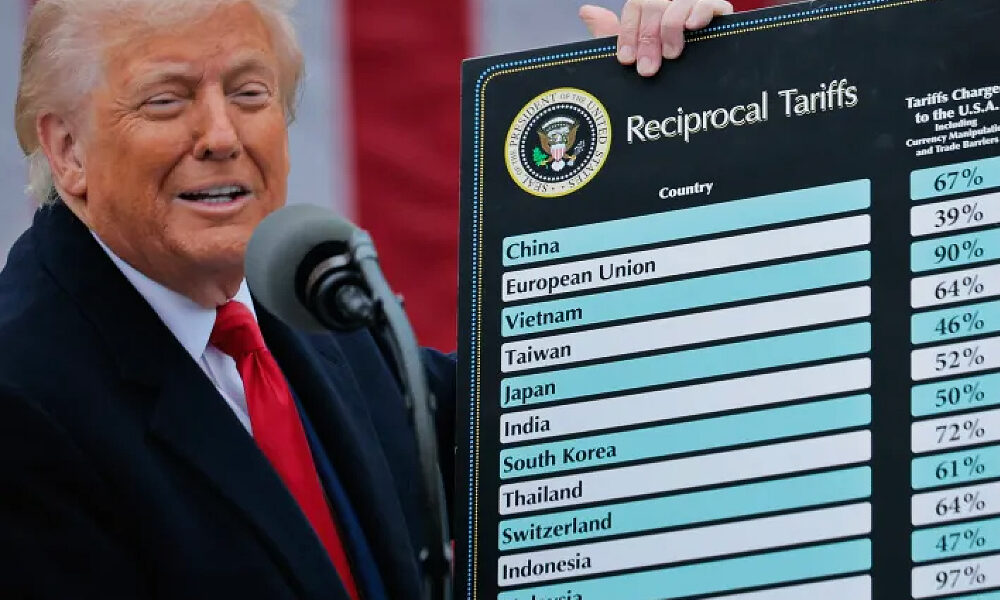
The April 2025 edition of the UNCTAD Global Trade Update offers a comprehensive analysis of the newly implemented “reciprocal tariffs” by the United States, revealing significant risks to global trade dynamics. These additional customs duties, targeting 57 trading partners, could severely hinder the growth potential of small and vulnerable economies, particularly those in Africa, while undermining their ability to diversify and add value to their exports.
A Shift in U.S. Trade Policy
Currently, the United States has 14 free trade agreements (FTAs) with 20 countries, including Morocco, the only African nation with an FTA with the U.S. Despite these preferential agreements, all partner nations are now subject to a baseline 10 percent customs duty, as outlined in the Executive Order of April 2, 2025.
Exemptions exist for specific products listed in Annex II, such as graphite, copper ores, cobalt concentrates, rare earth metals, petroleum, natural gas, and certain timber and wood products.
However, the situation is more severe for the 57 countries and customs territories listed in Annex I, including the European Union. These nations face “reciprocal tariffs,” calculated on a one-to-one basis by dividing the U.S. trade deficit with each country by its total imports into the U.S., then halving the result.
In Africa, these tariffs range from 11 percent for Cameroon to a staggering 50 percent for Lesotho.
Temporary Relief and Exceptions
On April 9, 2025, President Trump announced a 90-day pause, reducing reciprocal tariffs to 10 percent for all countries except China. This temporary measure, effective from April 9 to July 8, 2025, aims to ease immediate economic pressures.
Additionally, Canada and Mexico receive special treatment under the United States-Mexico-Canada Agreement (USMCA), exempting their exports from the general 10 percent tariff rule if they comply with USMCA regulations.
Disproportionate Impact on Small and Vulnerable Economies
The UNCTAD report underscores that the new tariffs will disproportionately affect small and vulnerable economies, particularly Least Developed Countries (LDCs), which contribute minimally to the U.S. trade deficit. For instance, Lesotho – facing the highest tariff increase at 50 percent – accounts for just 0.019 percent of the total U.S. trade deficit.
Similarly, 28 of the affected countries each contribute less than 0.1 percent of the deficit.
These tariff hikes, the report argues, will have a negligible impact on reducing the overall U.S. trade deficit. Moreover, they are unlikely to rebalance trade relationships with small economies, given their limited purchasing power and inability to significantly increase imports of U.S.-made goods.
Threats to Economic Diversification
For many African nations, the implications are alarming. Countries like Zambia and the Democratic Republic of Congo, which primarily export mineral products, risk losing opportunities to diversify and add value to their exports.
While raw materials like metal ores and concentrates remain exempt from tariffs, higher-value processed goods derived from these commodities will face increased import duties. This creates a disincentive for industrialization and economic transformation.
In contrast, agricultural commodities exported from Africa to the U.S. – such as vanilla and cocoa, which lack domestic substitutes – are likely to drive up consumer prices in America. For example:
- Vanilla: The U.S. imported US$150 million worth of vanilla from Madagascar alone in 2024.
- Cocoa: Imports from Côte d’Ivoire (Ivory Coast) and Ghana totaled US$800 million and US$200 million, respectively, in 2024.
These price increases could ripple through supply chains, affecting a wide range of finished products consumed in the U.S.
A Call for Exemptions
UNCTAD concludes with a strong recommendation for the U.S. government to exempt small and least developed countries from the tariff increases. The report emphasizes that imposing additional tariffs on these economies will yield minimal benefits for U.S. trade policy while causing potentially severe economic harm.
By prioritizing exemptions, the U.S. can foster equitable trade relationships, support sustainable development in vulnerable regions, and avoid unintended consequences that could disrupt global markets and harm American consumers.
Danilo Desiderio serves as the CEO of Desiderio Consultants Ltd in Nairobi, Kenya, specializing in African customs, trade, and transport policies. He is a customs and trade expert at the World Bank and a senior associate to the Horn Economic and Social Policy Institute (HESPI).