Opinion
Should the United States Lose to China in Africa?
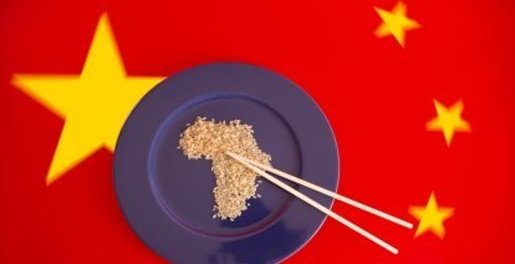
Sometime last year, a high-ranking Ugandan Minister sent an email to a contact in a United States Agency. Like any good college alumni, Mr. Minister had kept a torch burning for the world’s largest economy, and in this particular missive, he wanted to know if the Americans were willing to support his ministry’s venture. The response was prompt, but not satisfactory: Things, he was told, were a little more elaborate now in the ‘No Drama Obama’ administration where no one wanted investigations into their department because of a rush decision.
Frustration.
Then, just as his disappointment knows no bounds, in walks an eager businessman. Any project the Honorable Minister wants funded can be done, the Minister is told. How long will it take to get a response on these things, the Minister asks? An answer can be given Now, Now! A quick response is always suspect. Skepticism. A phone call, furious nodding of heads later, approval is granted. A handshake, a memorandum of understanding, and in three weeks, the Minister reports to his colleagues and constituents that while he’d probably still be Waiting for Godot with the U.S., the Chinese have another friend in Uganda.
Do the Americans Even Care?
Although partly fiction, the story is about an overwhelmingly familiar dynamic between the United States and China in Africa: America does not pay Africa as much respect as China does – much to the chagrin of those who thought that things would change with Obama in the White House. However, the ferocity of the economic downturn and opposition Obama faced from the Republicans took prospects off the table during the President’s first term, save of course, for the trip to Ghana and Egypt.
In the meantime, China in 2009 eclipsed the United States as Africa’s largest single trading partner. Under Obama, China doubled and trebled its no strings attached dealings equally with both Africa’s best and worst public sector managers. This yielded two-way trade nearly trebling in the last seven years alone to about US$300 billion. Chinese investment goes into mining and the infrastructure to facilitate extraction of raw materials to China.
Like the Ugandan minister, Africa marvels at the differences in engagement between the East and the West. Yet, in the United States, much of what you may hear is how bad China will, ultimately, be for Africa. Brookings’ Yun Sun makes the argument that China’s growing economic presence in Africa is hardly altruistic, and is based on a hardnosed quid pro quo of investing broadly while extracting natural resources in return. Many even see China as a third world country with a seat on the United Nations Security Council and associate it more with the goods in their supermarket, Tiananmen Square and the lack of basic freedoms.
These same Americans aren’t naive about the politics of muscle in international relations. While some may prefer that the U.S. be healed first before it can go abroad, they also know that it’s in America’s long-term interests to invest in Africa to ensure some sort of economic and military stability.
The Pragmatists
On the other side of the coin are pragmatists like Ambassador Michael Froman, United States Trade Representative. On the 2013 Obama trip to Africa, Froman apparently took a jab at China by saying that ‘Africa wants investors, especially American investors.’ Another one, Obama was also pragmatic when he took various American businessmen with him on his sophomore trip to Africa, and announced important initiatives like Power Africa. Meant to illuminate the continent and solve as many energy solutions as possible; Obama brought about US$16 billion and a summit with Africa’s leaders in pledges. Invariably, 3 months before Obama visited Africa, China’s new president Xi Jinping, who was on his first overseas tour after taking office in Beijing, offered African countries a US$20 billion line of credit and signed major deals that included a US$10 billion port project in Bagamoyo, Tanzania.
While the August 2014 summit came to pass, and was a diplomatic success for Obama, it further illustrated that when juxtaposed with China, policymaking in America is painfully laborious, and oftentimes publicly messy. For its part, China’s Communist Party has progressively morphed its investment decision-making into the perfect balance between bureaucratic control and market conditions. With the ruling organ taking unilateral decisions, China is, in fact, the most powerful capitalist in the world today.
In 2012, Todd Moss of the Center for Global Development suggested that in regard to its Africa policy, the United States is stuck in a time warp and is trying to discard an ancient engagement plan but cannot seem to quickly latch onto the next thing. Foreign Policy Magazine ostensibly agrees, but adds that the United States may have finally gotten better at its foreign policy. But for non-policy people, questions come up: For instance, in a world where America does not need to grapple with communism, how difficult could it be to engage with Africa where it has a military presence in 49 of the 54 countries? Besides, is Africa not easier to deal with than the Far East? After all, although Africa’s over one billion people are neither monolithic nor live under a central authority, much of Africa consists of semi-to-fully liberal democracies with much friendlier business climates than many Asian or even European rivals.
More Questions:
If America could win the Cold War, why can’t it win against China? Subtly, many Americans wonder if America is in decline. After all, the country’s strategy to compel African governments to do its bidding may have failed. A quick look at how non-AGOA beneficiaries like Zimbabwe, the Democratic Republic of Congo and the recently removed Swaziland react to their circumstances is laughable. They do not care about America since they can always run to China, amongst other donors and trade partners, for cheap goods, cheap credit and quick ‘no questions asked’ deals.
Do Not Change: Mutate.
But no one is asking America to do what China does. However, like Uganda’s president says, the Americans could engage with Africa a little more aggressively. In a 2013 speech at the Library of Congress, Mr. Museveni lightheartedly chided the Americans in saying ‘[w]e cannot speak Chinese,’ and that ‘even if it is a little difficult to understand [what we’re saying in] our thick accents,’ the U.S. can do more business with Africa than China is doing now. Undeviatingly, a simple survey of African countries shows that in whatever sector the Chinese operate, Africans are upset that they bring other Chinese to do work that unemployed Africans can do; Africans get inconsolably irascible at the debilitating traffic jams even as the Chinese try to fix roads, and everyone has a sardonic joke about how durable goods from China are.
In spite of America’s historical support for the African Union and Africa’s regional economic communities, China has a better finger on Africa’s pulse by knowing that when you visit, you really ought to bring a befitting gift: They offered a brand spanking new building to serve as the African Union’s headquarters in Addis Ababa, Ethiopia. Now, while pictures of cracks in the new facilities made their rounds on social media, the tallest building in Ethiopia is, at least, habitable, giving Africa’s largest collective of states a veneer of respectability. And ‘respect’ is something Africa responds well to.
On the other hand, with the recent U.S. – Africa Summit, things seem to have changed for the better. On top of giving Africa the chance to dominate America’s press and media circuit for at least a week, an August 2014 memo from President Obama constituted a Steering Group on Africa Trade and Investment Capacity Building whose task it was to bolster trade relationships between the U.S. and the region, ranging from determining how to utilize AGOA to those supply-side issues. With agencies like the Small Business Administration as an integral part of that Steering Group, there’s a chance that Obama will have the silver bullet for China in Africa.
Also, a few observers noted that unlike the past, the U.S. spared no expense in feting Dr. Nkosazana Dlamini-Zuma, African Union Chair and her Deputy Erastus Mwencha with the respect and prominence the 54-member body they represent deserves. Interpretively, if Africans continue to cede more autonomy to their union, Africa is that much closer to a continental free trade area – something that could prompt the U.S. to start the process of negotiating agreements that are much better than the EU’s economic partnership agreements (EPAs).
The American Private Sector
America’s corporate sector may be coming around to the pudding in Africa. The continent’s overall growth rates have ‘quietly’ caught up with Asia’s. Then, International Monetary Fund (IMF) estimates that not only will Africa be the fastest growing continent over the next five years; this growth is delivering a more educated population with significant declines in infant mortality.
Moreover, PriceWaterhouseCoopers safely projects that the East African Common Markets will see both increased inter-country trade and factors of production mobility across borders, and H.J. Heinz, a ketchup-maker foresaw that Africa’s spending will grow from US$900 billion to US$1.4 trillion over the next eight years. VeriFone Systems is doing ‘phenomenally well’ by influencing African electronic payments’ with now more than 100,000 point of sale terminals installed in Nigeria; and aiming for much growth in Ghana and in Kenya; Portugal Telecom, in 2012 got most of its revenue from Africa, and Syngenta, the largest agricultural chemical manufacturer in the world currently makes just under US$1 billion, but analysts see Africa’s herbicide demand jump to US$4 billion in 10 years.
Nonetheless, the Charleston Regional Business Journal admonishes sunny projections and underscores the low disposable income prevalent in Africa. Remarkably, even if South Carolina’s exports to South Africa fell about 13 percent between 2012 and 2013 (US$279 million in 2011, US$266 million in 2012 and US$231 million in 2013), these are still impressive figures. In fact, companies like Scott Harvey Wines from California cite African countries with higher per capita gross domestic product (GDP) than China to introduce 6 wine varieties to Kenya and Tanzania*.
With an ever-expanding middle class, any report of less-than-optimal income belies the incredible change that is happening in African’s consumption patterns. The Economist makes the case that what the Africans may lack in actual disposable income and infrastructure, they make up for in enthusiastic adaptability like how Somalia and Southern Sudan, alongside much of Africa, heartily embraced ICT.
In a recent study, Kenyans were found to be skipping luxuries like meat or choosing to walk over paying bus fare just so they can have credit to make calls or send texts that will bring tomorrow’s food for their family. With this snapshot, we find that Africans with mobile phones are not only laying a foundation for communication infrastructure but also doing more business with the world; with their annual expenditure of between US$1,460 and US$7,300, they now demand goods and services in volumes and varieties unheard of 10 years ago. As paltry as a US$7,300 a year may seem to America’s middle class, this is a new and huge amount of money – momentous for Africa!
A 2012 CATO Institute column toasted to the fact that much of this growth is as a direct result of better economic policy and governance from countries like Botswana and Ghana that have astutely used their respective diamond and oil resources in tandem with infrastructure spending to, somehow, put more money in people’s pockets.
* Neither Kenya nor Tanzania have higher per capita gross domestic product than China
A Little Realism
We could say that China is winning in Africa. But then, what is China actually winning? Is it not just building the roads and other infrastructure so that Fords, Chryslers and Chevrolets can drive down highways between Congo Brazzaville and Mombasa, Kenya? Why, then, would America fight with China over a continent that provides about 2 percent of America’s imports when it can continue to spend 70 percent of her foreign assistance on health. Anyhow, the Chinese are, in the short term being laughed at for what The Economist called ‘sloppy’ and ‘slapdash’ construction.
Noteworthy: A 2012 GlobeScan poll showed China as more popular than the United States. In 2014, China remained in the top 10, but fell below the United States, which also lost ground among its closest allies; the UK, France and Germany.
But this is the kind of opening the United States needs. It is now February 2015, more than 180 days since President Obama instituted his Steering Group on Africa. Everyone knows that whatever this group recommends will be good for the U.S. partnership with Africa because it will translate into a bigger and more coordinated American effort into preventing China from overwhelming America’s private sector in Africa.
For some reason, the Africans, like Museveni suggested, may be rooting for the Americans. Many of them, after all, grew up on Hollywood movies and television shows. China is aggressively countering this, of course, with their state-sanctioned movies, and they may be having an impact: Uganda’s growing cinema industry is upping its ante on producing kung fu movies.