News
Senegal: Faye unveils new Cabinet
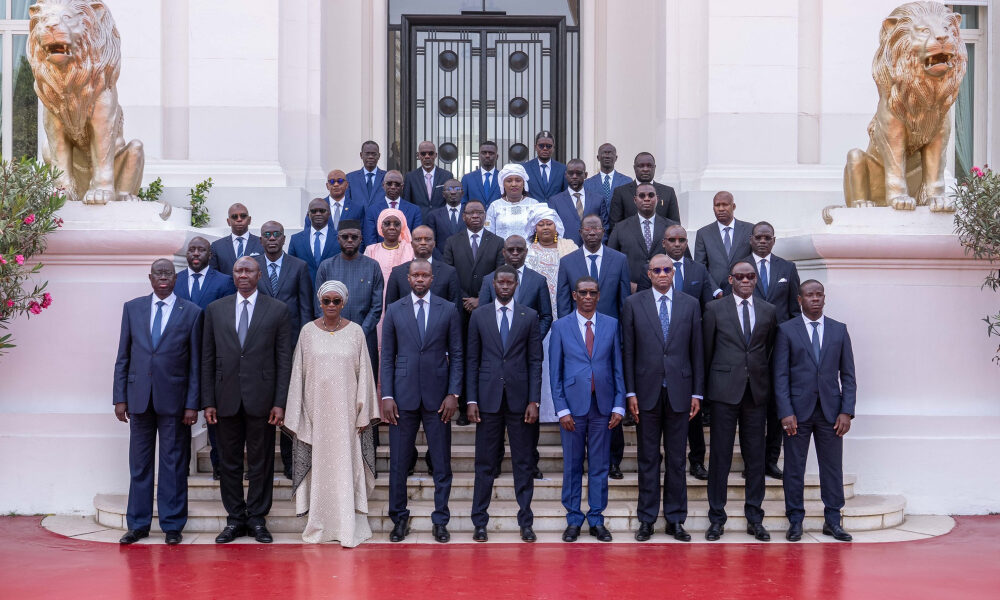
Senegal’s recent political landscape has undergone a notable transformation with the inauguration of President Bassirou Diomaye Faye and Prime Minister Ousmane Sonko, unveiling a government marked by a blend of fresh faces and familiar figures from the previous administration.
Prime Minister Sonko presented his proposed list of ministers to President Faye, which received the presidential nod. This cabinet comprises 25 ministerial appointees and five Secretaries of State, with half hailing from Sonko’s now-defunct PASTEF party, dissolved by the previous regime in July 2023.
Notable inclusions are two military figures, General Birame Diop as the armed forces head and General Jean-Baptiste Tine as Interior Minister, symbolizing a move towards politically neutral governance.
The new administration, emerging from the opposition, pledges a transformative governance approach, sparking concerns over potential instability due to drastic changes. The appointment of the two generals appears to be a strategy to assuage such concerns.
Notable appointments include Serigne Gueye Diop, former advisor to ex-President Macky Sall, as Minister of Industry and Trade, along with Yacine Fall, former Vice President of PASTEF, appointed as Minister of African Integration and Foreign Affairs.
Birame Souleye Diop, another ex-PASTEF member, assumes the crucial role of Minister of Energy, Petroleum, and Mines, reflecting the government’s focus on vital sectors. Abdourahmane Sarr takes charge as Minister of the Economy, tasked with addressing pressing issues like youth unemployment.
President Faye’s victory marks a significant milestone for Senegal’s opposition and presents a testing ground for new political actors, including Faye himself, a first-time officeholder.
Key ministerial portfolios, particularly the Economy and Energy sectors, align with President Faye’s campaign promises. Renegotiating energy, defense, and mining contracts to benefit the populace and address youth unemployment are central to his agenda.
The impending production of oil and gas underscores the urgency of contract renegotiations to ensure equitable benefits for Senegalese citizens. Additionally, there are plans to potentially transition from the West African Franc (CFA), reflecting Senegal’s desire for greater economic autonomy.
The new administration’s pledge to review Senegal’s relationship with France hints at potential diplomatic shifts. Faye’s vision for a corruption-free, prosperous Senegal hinges on the successful execution of their plans, resonating with a populace disillusioned by past governance.