Business
Rwanda’s Calculated Bet: Becoming East Africa’s Cooling and Cold-Chain Hub
A quiet revolution in cooling infrastructure is underway in the heart of Africa – and the world should be paying attention.
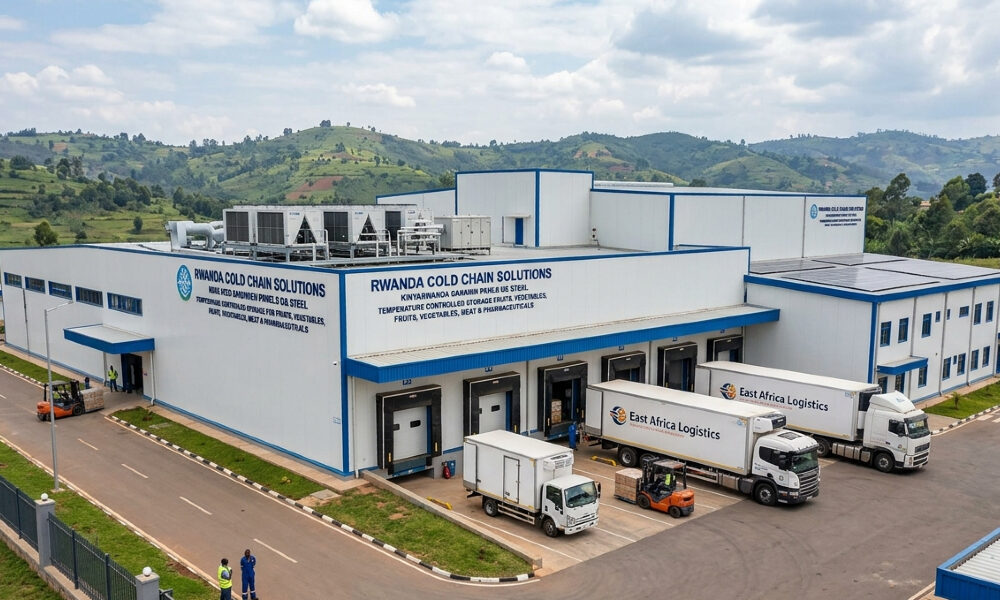
Rwanda is making a calculated and consequential bet: that mastery of the cold chain will unlock the next chapter of its economic rise. Far from a niche industrial concern, the country’s push to become East Africa’s premier hub for cooling infrastructure and cold-chain logistics represents one of the most strategically coherent development plays on the continent today.
The logic is compelling. Across sub-Saharan Africa, post-harvest food losses routinely consume between 30 and 40 percent of agricultural output – not because farmers lack productivity, but because the infrastructure needed to preserve and transport perishable goods has long been inadequate.
Rwanda, with characteristic deliberateness, has identified that gap as an opportunity.
By scaling modern cold storage facilities and building out reliable refrigerated logistics networks, Rwanda stands to accomplish something that development economists have long argued matters more than raw growth figures: structural transformation.
Reduced post-harvest losses translate directly into stronger food security. Reliable cold-chain access opens export markets for high-value perishables – fresh produce, cut flowers, fish – that were previously beyond reach.
And robust pharmaceutical-grade storage capacity is not a luxury in a region where vaccine efficacy depends on an unbroken temperature-controlled supply line; it is a public health imperative.
The jobs and investment that follow are not incidental. They are the point.
Predictability Is the New Premium
Yet Rwanda’s cold-chain ambitions do not exist in isolation. They are an extension of something more foundational – a national reputation for doing what few African governments have managed to sustain: governing quietly, consistently, and well.
During a recent consultation with an international investor exploring expansion across the continent, the opening question was telling. It was not about market size, demographic dividends, or projected returns. It was simply this: How stable is the environment?
That question reveals a great deal about how serious capital actually moves. Sophisticated investors have learned, often through painful experience, that opportunity without predictability is merely risk dressed up in optimistic projections.
What they are searching for – and increasingly finding in Rwanda – is something more durable: confidence in a country’s direction.
Rwanda offers precisely that. Its political environment is stable and its long-term development vision, anchored in successive iterations of the national strategy known as Vision 2050, is coherent and consistent.
Governance is structured, regulatory frameworks are transparent, and public services have been progressively digitized in ways that meaningfully reduce the friction of doing business. Geographically, Rwanda’s landlocked position, once considered a liability, has been reframed through investment in logistics and connectivity into a gateway advantage for the broader East African market.
Intentional Growth in an Impatient World
Rwanda’s growth does not announce itself loudly. There are no splashy megaprojects built for headlines, no volatile commodity windfalls inflating the numbers. What Rwanda offers instead is something rarer and, for long-term investors, considerably more valuable: intentionality.
The cold-chain initiative exemplifies this disposition. It is not a vanity project. It is a carefully reasoned infrastructure investment aligned with regional demand trends, climate realities, and the country’s own agricultural and health-sector priorities.
As temperatures rise across East Africa and as the continent’s expanding middle class demands safer, better-preserved food and medicine, the countries with functioning cold-chain networks will hold a decisive competitive advantage. Rwanda has decided it intends to be one of them.
For foreign investors evaluating where in Africa to place long-term bets, that combination – sectoral foresight embedded within a stable, well-governed environment – is increasingly rare and increasingly valuable. Rwanda may not be the loudest voice in the room. But in a continent full of noise, it is one of the most credible.