A Diaspora View of Africa
Rwanda Defiant on Crisis in DR Congo


By Gregory Simpkins
M23 Rebels Gain Ground in Eastern DR Congo
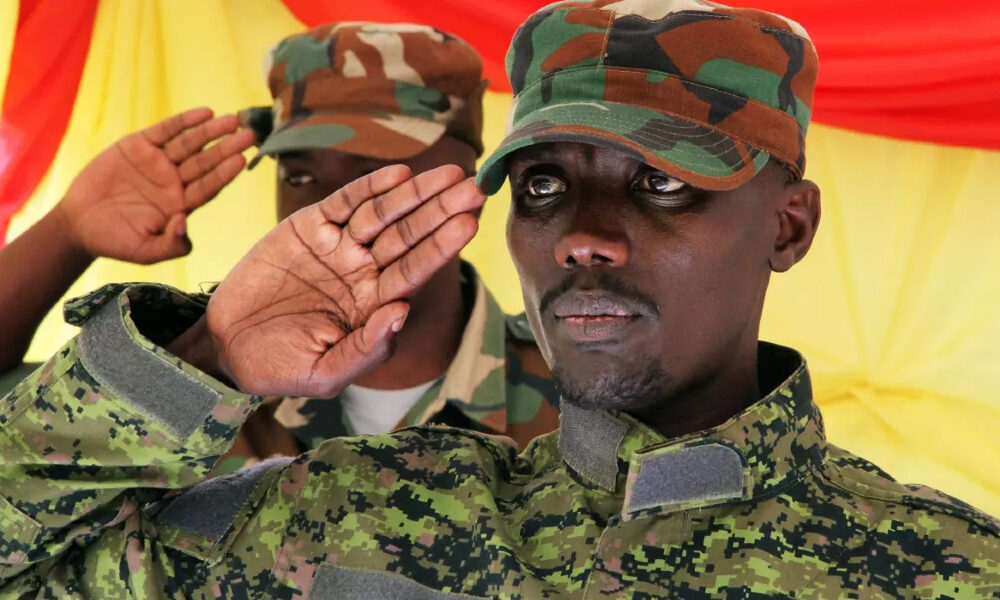
The Rwandan-backed March 23 Movement (M23) rebels, who are steadily gaining territory in eastern Democratic Republic of the Congo (DR Congo) beyond Goma, the border city with Rwanda, and appear unaffected by widespread international condemnation of their actions. “We are here in Goma to stay,” Corneille Nangaa, the head of the Congo River Alliance, a coalition of militias that includes M23, said at a press conference in Goma.
“We are going to continue the march until Kinshasa,” he added, referring to Congo’s capital 1,000 miles (1,600 kilometers) away.
Historical Context of Rwanda’s Involvement in DR Congo
This rebel action is part of a long line of Rwanda-backed interventions into DR Congo, beginning with its support of a rebel force led by Laurent Kabila in October 1996. However, the government of Rwanda was never comfortable with Kabila’s inability to stem the tide of Hutu rebels wanting to overthrow the regime of Paul Kagame.
Hutu Militias and Cross-Border Attacks
Because of continuing attacks into Rwanda by Hutu militias, which the Tutsi-dominated Rwanda Patriotic Front (RPF) defeated in July 1994. Hutu refugees from Rwanda were placed in United Nations created camps near the border, and when the Congressional staff delegation I led met with DR Congo and UN officials on the ground four years later, we were told that the Hutu militias were using the camps as staging grounds for attacks into Rwanda.
In fact, we were meeting with the North Kivu governor when he was urgently summoned to Kigali, Rwanda, to answer for why his government had not been better able to control Hutu invasions.
M23’s Continued Insurgency Since 2012
The Tutsi-led M23, beginning in 2012, confronted DR Congo government troops, displacing numerous people. In late 2012, a peace agreement was ostensibly reached, but over the years, M23 has continued to be active in eastern Congo, leading up to this year’s takeover of Goma and territory to the south.
According to the risk analysis firm DefSec Analytics Africa Ltd., Rwanda is defiant in the face of regional condemnations and threats by donors to cut aid.
International Reactions and Aid Suspensions
Germany, the United Kingdom and the European Union (EU) have either stopped aid talks or signaled the “reassessment” of aid. President Kagame has said Rwanda is ready for any “confrontation”.
The firm says M23 seeks to hold Goma and administer it as there have been reported attacks against civilians after the major operation to take the town and its immediate surrounding areas a few days ago. With the territory sharing direct boundaries with Rwanda, the eastern frontiers seem secure for the rebels.
Rwanda’s Defiance Amid Regional Condemnations
Although the Congolese military has vowed to retake lost territory, the consequences of that to the population and other operational factors could hinder that from happening immediately. The situation has become so dire that the Congolese president, Félix Tshisekedi, called on young people to enlist in the army “massively” and vowed “a vigorous and coordinated response” to the rebel advance.
Tensions Between Rwanda and South Africa
The Kenyan newspaper The Star reported that Presidents Paul Kagame (Rwanda) and Cyril Ramaphosa (South Africa) clashed after the latter linked Rwanda’s defense forces to the ongoing DR Congo conflict. It all began with a statement from Ramaphosa saying that a militia comprising the M23 rebel group and the Rwanda Defence Force (RDF) had attacked the Armed Forces of the DR Congo (FARDC) and the SADC Mission in the Democratic Republic of Congo (SAMIDRC) – a peacekeeping unit – killing at least 13 South African soldiers.
Allegations of Assassination Plots Against Rwandan Dissidents
The South African-Rwandan animosity dates back to 2011. A House Subcommittee on Africa report I organized detailed an assassination plot against Rwandan dissidents in South Africa that was investigated and substantiated in a series of articles in Canada’s Globe and Mail newspaper, which interviewed Rwandan exiles in South Africa and Belgium. The newspaper obtained a 2011 recording identified as Colonel Dan Munyuza, Rwanda’s director of military intelligence, who offered US$1 million to former Rwandan Army Major Robert Higero to assassinate two of Rwandan President Kagame’s most hated enemies.
South African Government’s Response to Rwandan Activities
General Nyamwasa had fled to South Africa after reportedly falling out of favor with President Kagame. Three months after arriving in South Africa, he was shot in the stomach by assailants at his home in a Johannesburg suburb, and The Globe and Mail reported that even as he recuperated in the hospital, another group of attackers tried to kill him in his room.
According to South African officials, one of the suspects planned to strangle the general with string.
African Union’s Position on the Crisis
The African Union Peace and Security Council has expressed grave concern over the increased tensions between the DR Congo and Rwanda and strongly condemns the heinous attacks by the M23, which resulted in the loss of lives, injuries, and displacement, especially women and children, and warns that those concerned will be held accountable for their actions.
Call for Ceasefire and Withdrawal of Armed Groups
“The activities of the Allied Democratic Forces (ADF) and Democratic Forces for the Liberation of Rwanda (FDLR) have worsened the insecurity and suffering of the population in eastern DR Congo,” a PSC statement read. “The PSC demands the M23, ADF and FDLR, other armed and terrorist groups operating in eastern DR Congo to immediately and unconditionally cease their attacks and permanently disband and lay down their arms.
Further, PSC calls for an immediate and unconditional withdrawal of M23 from Minova, Sake, and Goma, and other occupied areas in the DR Congo, and all other foreign armed and terrorist groups operating in the DR Congo.”
Uncertain Future for Peace in Eastern DR Congo
Will this statement or the threat of the suspension of economic cooperation make a difference? We shall see, but Kagame seems resistant to outside pressure, and South Africa has a longstanding grudge against the government of Rwanda. Neither situation bodes well for a calm solution to the crisis in eastern DR Congo.
Gregory Simpkins, a longtime specialist in African policy development, is the Principal of 21st Century Solutions. He consults with organizations on African policy issues generally, especially in relating to the U.S. Government. He further acts as a consultant to the African Merchants Association, where he advises the Association in its efforts to stimulate an increase in trade between several hundred African Diaspora small and medium enterprises and their African partners.