Opinion
Rethinking African Infrastructure: Harnessing the Continent’s Untapped River Highways


By John Kourkoutas
Corporate boardrooms across the developed world repeat the same tired mantra: African infrastructure challenges. Executives bemoan logistics while the Congo River carries more water than any river save the Amazon. Investors demand connectivity proof while the Nile, Niger, and Zambezi have moved goods for millennia.
The problem is not geography. It is our failure of imagination.
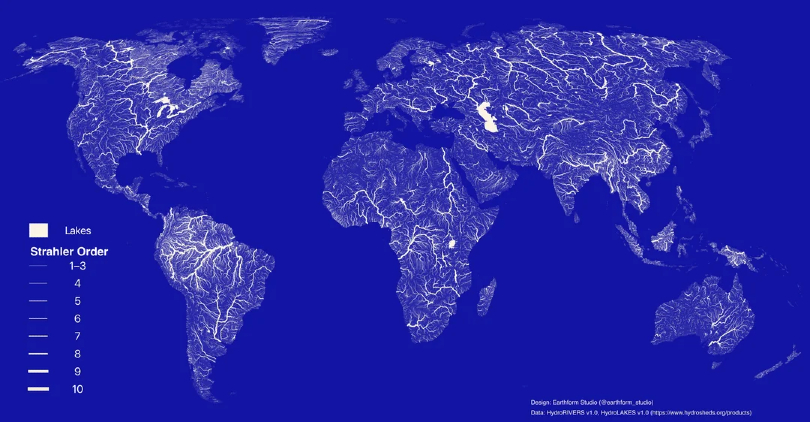
A global map of river systems classified by Strahler Order – a measure of stream size and connectivity – reveals a striking truth about Africa. The infrastructure is not missing.
We simply refuse to use what has always been there.
The Untapped Arteries of Commerce
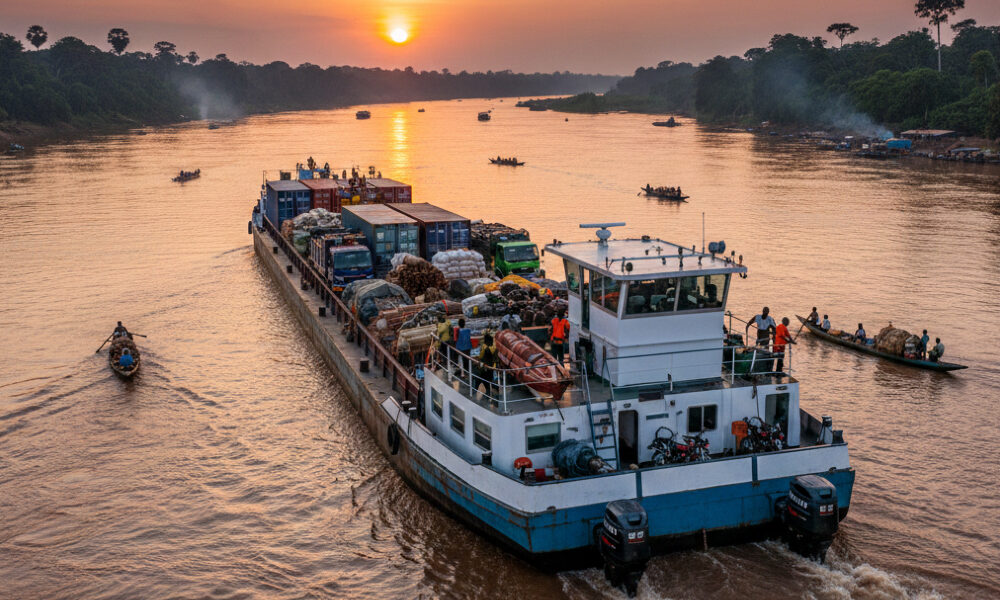
Consider the Congo River: the second-largest river by discharge globally, with 4,700 kilometers (2,920 miles) of navigable waterway potential connecting nine countries. It remains almost completely underutilized for commerce.
The Nile, Earth’s longest river, flows through eleven nations and served as antiquity’s premier trade route, yet modern logistics networks treat it as an afterthought. The Niger River stretches 4,180 kilometers (2,597 miles) through West Africa, linking Mali, Niger, Benin, and Nigeria in a natural distribution corridor that sees minimal regional trade.
This is not merely an oversight. It represents a fundamental misreading of African economic potential, rooted in the assumption that development must replicate European or North American models.
The Cost of Eurocentric Thinking
European companies wait for highways and railways while natural waterways sit idle. They complain about infrastructure costs while rivers offer transportation corridors that require no construction.
They demand modern logistics while dismissing transport systems that predate every European road by thousands of years.
After observing more than 100 projects across the continent, a pattern emerges with crystalline clarity: companies that work with Africa’s natural geography succeed; those waiting for Africa to resemble Europe fail.

The cognitive dissonance is remarkable. The Amazon River moves massive cargo through Brazil’s vast interior.
The Mississippi serves as America’s industrial backbone. The Rhine functions as Europe’s commercial highway, generating billions in trade annually.
Yet we persist in treating African rivers as obstacles rather than assets, applying infrastructure assumptions developed for temperate plains to tropical watersheds that operate by entirely different rules.
The Economic Case for Waterways
The numbers tell a compelling story. River transport costs roughly one-seventh that of road transport.
Waterways require no maintenance comparable to asphalt or concrete. Natural corridors already connect major markets across multiple countries, offering regional integration without diplomatic negotiations over border crossings or customs facilities.
The Congo Basin alone could transform Central African trade networks. Properly developed river ports and modern barges could move agricultural products, minerals, and manufactured goods at a fraction of current costs.
The Niger River could become West Africa’s commercial spine, reducing dependence on congested coastal roads and decreasing transportation costs for landlocked nations like Mali and Niger. Yet investment continues to flow toward conventional infrastructure projects that struggle with funding, face delays, and often fail to account for Africa’s climatic realities.
Roads wash out in rainy seasons. Railways require constant maintenance in humid tropical environments. Rivers, by contrast, operate year-round in most regions and improve with increased use as channels naturally deepen.
Redefining Infrastructure
This is not an argument against roads or railways. Modern economies require multimodal transportation networks.
But the systematic neglect of Africa’s riverine systems reveals how deeply colonial-era thinking still shapes economic development policy. The assumption that African nations must build their way to prosperity using mid-20th-century Western models ignores both geography and economics.
Infrastructure is not merely what we build. It includes what nature provides and what human ingenuity can harness.
The challenge facing African development is not the absence of infrastructure but the narrowness of our definition.
Companies and investors who recognize this distinction will discover competitive advantages their rivals cannot replicate. River-based logistics networks offer cost structures that road-dependent competitors cannot match.
Natural waterways provide redundancy that single-mode transport systems lack. Geographic advantages rooted in hydrology create barriers to entry that protect early movers.
The Path Forward
Africa’s rivers have been here the entire time, flowing through the continent’s interior, connecting its regions, offering pathways that require vision rather than venture capital. The question is not whether African nations can afford to build conventional infrastructure.
It is whether the global economy can afford to keep ignoring the infrastructure that already exists.
We are limited by our assumptions, not by Africa’s geography. The sun may forge or melt, but the rivers simply flow – waiting for someone wise enough to use them.
John Kourkoutas is business development expert that specializes in helping companies, export teams, and business leaders succeed in Africa’s dynamic and emerging markets.