Opinion
Renewable energy, in contrast to tourism-led growth in St. Lucia
By Melanius Alphonse
The Prime Minister of St. Lucia, Allen Chastanet’s tourism-led strategy has come to the fore once again, as the economic centrality for the island-nation, following the agreement between his administration, Range Developments and Marriott International to establish and operate a luxury Ritz Carlton resort at Black Bay.
Prime Minister Chastanet made it clear in the budget speech saying: “the tourism sector will be re-engineered in order to achieve its full potential and to be used as a catalyst for economic growth. We will work towards building a tourism product that is globally competitive, environmentally and socially sustainable and will maximize both backward and forward linkages particularly in the agricultural, manufacturing and construction sectors. It is possible to expand the tourism room stock by 2000 rooms over the next 4 years throughout the island.”
In last week’s interview with the press, he discussed economies of scale, airlift and the need to grow the gross domestic product (GDP) to about US$3.5 billion, given that “tourism – high on foreign exchange, a great employer and has tremendous tentacles in terms of loosening up your economy and the brand that we have is not just a tourism brand it’s a destination brand and the brand position for St. Lucia is premium.”
However, there are important components missing from that premise.
The economic ideology in continuing the model of 100 percent tourism focus and the first tier to revenue generation is not sustainable relative to the competition and the tremendous resource allocation to the environment and approximately US$50 million per year to market and promote St. Lucia.
Added to that is the inconsistency in what the St. Lucian marketplace offers.
Is it a tourism brand or is it really a destination brand? What defines the country’s tourism and economic product? How will the process of economic development offer opportunity, engagement, equity and equality? What effect will a 100 percent tourism focus have on the landscape and cultural aspects that define St. Lucia?
And how will the “Tourism Council” position St. Lucia relative to Barbados, Cuba, Mexico and even Jamaica?
Relative factors such as distance and cost to competing destinations, safety and security, cost of living and the infrastructure are also matters to be taken into consideration.
In contrast to the upfront financial cost of tourism development that is heavily funded in the budget allocation fiscal year 2017/18 and hotel construction subsidized by the taxpayers, a change of direction is desirable.
Renewable energy
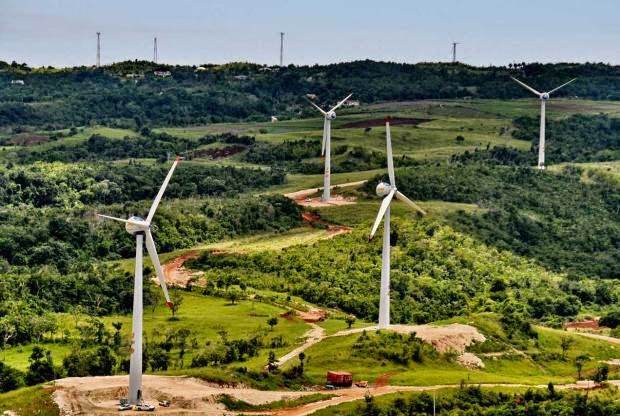
Renewable energy investment could create an energy revolution nation-wide, a distinct new revenue source and a reboot of the economy, unparalleled in the region.
Approximately one half of the tourism budget – less incentives – would create a new industry, new entrepreneurs, new skills and training and labor market efficiency to achieve sustainable energy self sufficiency, driven by policy and legislation mandating new homes, hotels and future developments to be self sufficient in renewable energy.
And in the process, create savings in foreign currency demands, less expensive electricity for households and businesses, make agriculture and manufacturing competitive, promote the use of electric cars and the manufacture of components, and lead the way in solar and other renewable energy expansion in Caribbean.
India has announced that within the next century all vehicles sold must be powered by electricity. Components for those electric vehicles will have to be manufactured somewhere, why not in St. Lucia for domestic and regional supply?
But making solar generation in particular cost-competitive with fossil fuels is key to expanding manufacturing industries for domestic consumption and export expansion.
China has the world’s largest floating solar power farm in terms of capacity, at 40 megawatts, providing enough electricity to power 15,000 homes.
The Caribbean Development Bank (CDB) has signed an agreement with the Export-Import (EXIM) Bank of China to explore the prospects for co-financing projects in infrastructure; human resource development; agriculture; and renewable energy and energy efficiency.
If St. Lucia can attract Chinese investment in a new horse-powered development, and bring in hundreds of new citizens from China through the citizenship by investment program, it makes sense to work with China in renewable energy development also.
St. Lucia-based Melanius Alphonse is a management and development consultant. His areas of focus include political, economic and global security developments. The original version of this article was published in Caribbean News Now.