Editorial
Reflecting on the Kenya Presidential Election
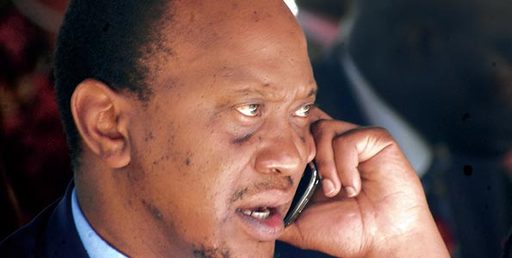
Uhuru Kenyatta, Potential President-elect, 2013
Between late 2007 and early 2008, when President Mwai Kibaki was declared winner of a much contested presidential election, supporters of the Orange Democratic Movement – Raila Odinga’s party – claimed that there had been widespread skullduggery in the process.
In 2013, Raila Odinga, now Kenya’s Prime Minister contested the presidency again after five years of reparations, retributive and reconstructive justice. A new constitution later; a new electoral commission today and lots of angst amongst the Kenyan people, it seems that, albeit the ‘few’ incidences in Mombasa and disruptive individuals across the country, Kenya may yet emerge from this particular democratic process a little more solid.
Unfortunately, the Odinga imprecation – where he follows in his father’s footsteps to never lead his beloved country – may still come to pass. Raila Odinga is trailing his main opponent, Uhuru Kenyatta, – the very son of the Jomo Kenyatta who trounced Jaramogi Odinga in earlier presidential contests. Should Uhuru be declared winner of the popularity contest, much will depend on Odinga’s people. They may feel like they have been ripped off since Kenya’s post independence leadership has been shared by the Kikuyu and the Kalenjin – but not by the Luo, a major tribe from Western Kenya.
During the very well executed and televised presidential debates, Kenya was given a taste of what a post-tribal Kenya would look like. The contestants spoke English, their first addresses – although somewhat stumbling – spoke to what they would do about tribalism if they were elected leader. They all deferred to the constitution. But it was obvious, tribalism was still bubbling under the surface.
That is why Kenya’s electoral process is very important to sub Saharan Africa. As the most economically successful nation in East Africa, a peaceful process in Kenya may hold significance for Uganda, its neighbor to the West, for Burundi to the South West and for Rwanda – supposedly Eastern Africa’s information technology hub. And it seems as though they Kenyan people know what is riding on this ‘thing.’ Many are calling for peace. They shared the shame with their own country and leadership. Instead of celebrating the success of one of their sons – Obama’s father was from Odinga’s tribe – they were forced to hide their faces since these were besmirched with electoral violence. Thus, they are being careful and holding their breath.
But we must also say that electoral violence can come from very small things. Even if Uhuru Kenyatta did not physically or practically encourage violence in 2007 – 2008, he must have said something or done something that ‘encouraged’ his followers to commit random acts of violence. He must have – or the International Criminal Court (ICC) would not have indicted him. If he gets elected, Mr. Kenyatta will be one of the few African impresarios walking around with the ICC hex on his head.
And thus, we come to Kenya’s Independent Electoral and Boundaries Commission (IEBC). It is meant to preserve, maintain and promote the rich, diverse cultural values of various ethnic groups, and in this post-voting period, it is also playing the role of handling the vote counting. It is important to note that one of the reasons violence erupted in 2007 is because this very process was ‘bungled’ by the now disbanded Electoral Commission of Kenya. But this time around, the IEBC is being careful. It’s constantly updating things, telling people what is happening. However, the fact that these results are not known in the 48 hours they predicted, tension could ensure.
Is there a chance that violence could erupt if Odinga were given the presidency? Yes – the rumors are that Kenyatta is leading him by more than 7 percent of the voting population, and that the former has enough votes to prevent an unfortunate run-off scenario.
We are collectively crossing our fingers. Kenya deserves a president. People need to be led; even if their potential leaders are tainted by scandal or malfeasance. Kenyans seem to embrace the fact that their new leader will get his people from where they are to where they have not been. If Kenyatta is such a person, may it be soon, and soon.
The Editorial Board,
The Habari Network
March 5 – March 10, 2013