Owusu on Africa
Recognition of Somaliland by Israel: Why Now?


By Fidel Amakye Owusu
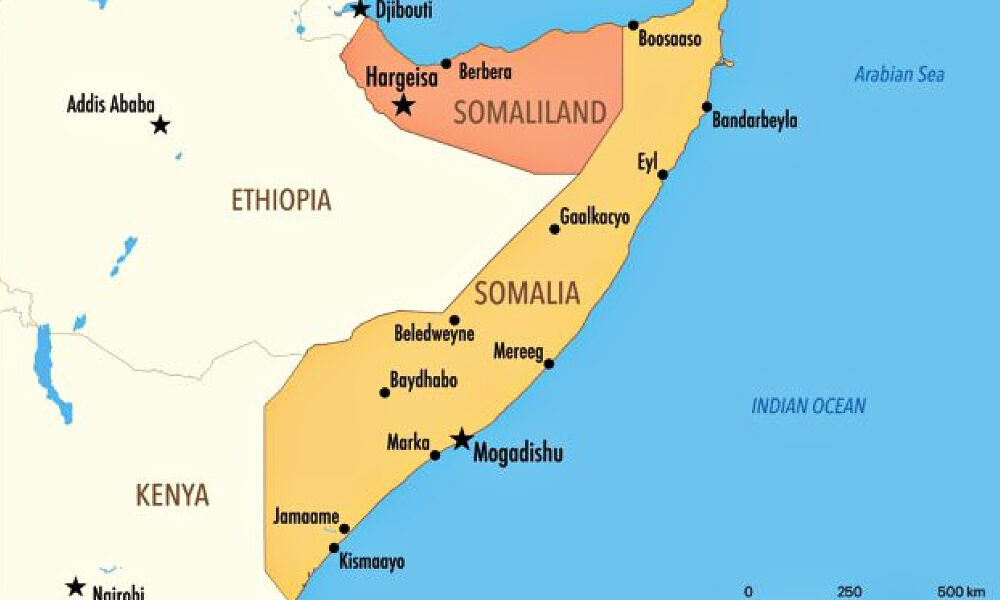
When Israel formally recognized Somaliland earlier this week, the international community responded with predictable outrage. The African Union (AU) condemned the move.
The United States distanced itself. Somalia recalled its ambassador. Yet amid the diplomatic fallout, a crucial question remains largely unexamined: Why would Israel risk international censure to recognize a breakaway territory that no other nation has acknowledged in over three decades?
The answer lies not in Mogadishu, but in Ankara.
The Turkish Factor
Israel’s decision to recognize Somalia’s semi-autonomous region represents a calculated response to Türkiye’s expanding influence in the Horn of Africa – a development that has significant implications for Israeli security planning.
In recent years, Türkiye has emerged as Somalia’s preeminent security partner, a relationship that extends far beyond conventional military cooperation and has been strengthened by the personal rapport between Turkish President Recep Tayyip Erdoğan and Somali President Hassan Sheikh Mohamud.
This deepening alliance should concern Israeli strategists. Türkiye possesses military capabilities that dwarf those of Iran, yet Ankara has demonstrated increasing hostility toward Israeli interests.
The prospect of Türkiye operating from two fronts – its own territory to Israel’s north and Somalia to its south – presents a strategic nightmare for Jerusalem’s defense establishment, however remote such a scenario might currently appear.
Lessons from the Gaza Conflict
Israel’s vulnerability to multi-front threats is not merely theoretical. During the height of the Gaza war, Houthi forces in Yemen demonstrated the potency of southern threats, launching missiles and drones that forced Israel to defend its Red Sea approaches.
The episode exposed a critical gap in Israel’s defensive architecture and underscored the strategic importance of the Horn of Africa, which sits directly across the Red Sea from Israeli territory.
This geographic proximity explains much about the timing of Israel’s recognition. Following June’s missile exchanges with Iran – during which Tehran demonstrated alarming precision in striking Israeli targets – Jerusalem has recalibrated its threat assessment of the broader Middle East region.
The Horn of Africa is no longer a peripheral concern but an integral component of Israel’s security calculus.
Strategic Symmetry
By extending diplomatic recognition to Somaliland, Israel has effectively created a legal framework for establishing the kind of security relationship Türkiye currently maintains with Somalia. This move grants Jerusalem potential access to a strategically positioned territory that could serve as a counterweight to Turkish influence in the region.
Whether Israel seeks a formal military presence or merely the option of one remains unclear, but the recognition provides diplomatic cover for either eventuality.
The parallels to Türkiye’s Somalia partnership are striking – and almost certainly intentional. Just as Ankara has leveraged its relationship with Mogadishu to project power across the Horn of Africa, Israel now claims similar prerogatives in Somaliland.
It is strategic symmetry by design, a bid to neutralize Turkish advantages before they can be exploited in any future confrontation.
Diplomatic Isolation and Covert Operations
The international response to Israel’s move has been uniformly negative. The United States, typically Jerusalem’s closest ally, has explicitly stated it will not follow Israel’s lead in recognizing Somaliland.
The AU has issued stern condemnations. Even nations sympathetic to Israeli security concerns have maintained conspicuous silence.
This diplomatic isolation, however, may matter less than it appears. Israel has long demonstrated a willingness to operate outside international consensus when it perceives existential security interests at stake.
A formal diplomatic relationship may prove unsustainable under international pressure, but a covert security presence requires no such public validation. History suggests Israel excels at precisely this kind of arrangement.
The Path Forward
The current trajectory risks transforming the Horn of Africa into yet another arena for great power competition, with Somalia and Somaliland serving as proxies for larger geopolitical struggles. Such an outcome serves no one’s long-term interests – least of all the people of Somalia, who have endured decades of conflict and instability.
A more productive approach would involve substantive dialogue among the key regional powers: Ethiopia, Egypt, Türkiye, and Israel. These nations share overlapping interests in Red Sea security, counterterrorism cooperation, and regional stability.
Acknowledgment of these shared concerns, rather than zero-sum competition for influence, could defuse the volatile diplomatic and security situation before it escalates further.
Whether such dialogue materializes remains doubtful. The immediate future more likely holds continued jockeying for position, with Somaliland serving as an unlikely pawn in a much larger game.
Israel’s recognition may have been presented as a matter of principle, but it is, in reality, a hardheaded calculation about Turkish power projection and the shifting geometry of Middle Eastern security threats.
In this light, the question is not whether Israel’s move was justified, but whether it will prove effective. The answer to that question lies in Ankara – and in the corridors of power throughout a region where alliances shift as rapidly as the desert sands.
Fidel Amakye Owusu is an International Relations and Security Analyst. He is an Associate at the Conflict Research Consortium for Africa and has previously hosted an International Affairs program with the Ghana Broadcasting Corporation (GBC). He is passionate about Diplomacy and realizing Africa’s global potential and how the continent should be viewed as part of the global collective.