Opinion
Rails and Fields: How East Africa’s Twin Engines Could Remake the Continent
Kenya’s new rail plan and Africa’s fallow farmland point to the same conclusion: the continent’s next chapter will be written in infrastructure and investment, not charity.


By Ratnakar Wagh
Africa has a habit of being described in superlatives that never quite translate into results. It holds the youngest population on Earth, the fastest-urbanizing cities, and – less celebrated but arguably more consequential – the largest share of the planet’s uncultivated arable land. For decades, these facts have been recited as promise rather than performance. Two developments this year suggest that gap may finally be closing: Kenya’s decision to extend its Standard Gauge Railway (SGR) toward Ethiopia and South Sudan, and a fresh reckoning with just how badly the continent is squandering its farmland.
Treated separately, these look like a transport story and an agriculture story. Treated together, they describe the same problem from two angles: Africa does not lack potential. It lacks the connective tissue – rail lines, irrigation, credit, cold storage – needed to turn potential into output.
The Railway as Economic Argument
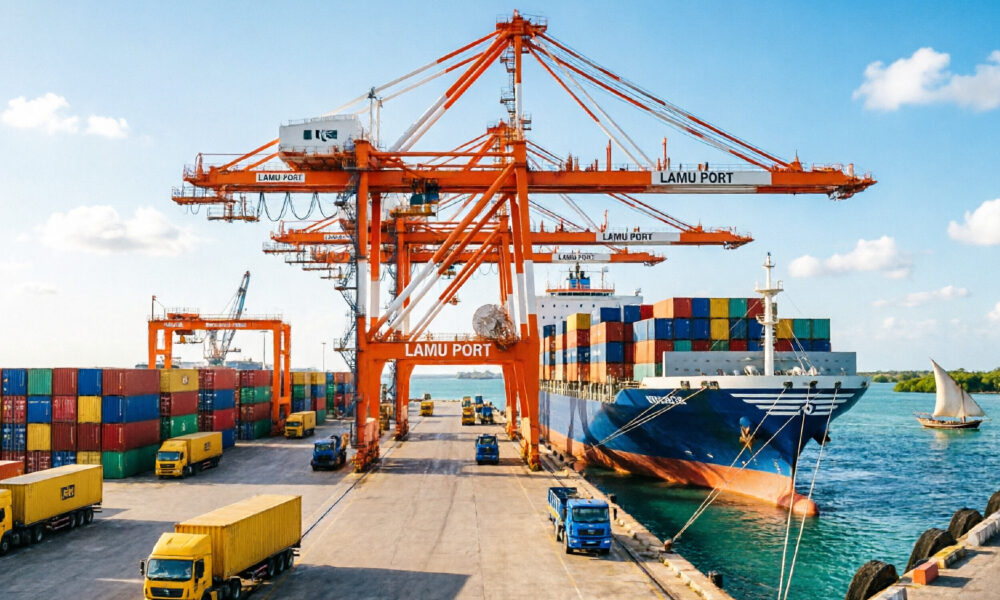
Kenya’s plan to extend the SGR from the port of Lamu to Ethiopia, with a further link to South Sudan, is the flagship piece of the LAPSSET Corridor – the Lamu Port–South Sudan–Ethiopia Transport Corridor first sketched out more than a decade ago and now, finally, gaining real momentum. The scale is hard to overstate: a network stretching roughly 2,900 kilometers (1,800 miles), serving a combined market of 50 million to 60 million people, and giving two landlocked neighbors direct access to a deep-water port for the first time.
The economic logic is straightforward even if the engineering is not. Ethiopia and South Sudan currently move goods over longer, costlier, more congested routes. A direct rail link to Lamu shortens transit times, lowers freight costs, and – crucially – reduces the region’s dependence on a single corridor, a vulnerability that has been exposed repeatedly by conflict, congestion, and diplomatic friction elsewhere in the region. Kenyan planners estimate the broader corridor could add two to three percentage points to GDP, largely by unlocking the country’s underdeveloped north and coast, regions that have historically watched investment flow past them toward Nairobi and Mombasa.
There is also a quieter, more structural rationale. The African Continental Free Trade Area (AfCFTA) promises a single market of 1.3 billion people, but a free-trade agreement is only as useful as the roads and rails that carry goods across it. Tariff reduction without transport infrastructure is a bit like deregulating a market with no roads to the shops. LAPSSET is, in that sense, less a Kenyan infrastructure project than a down payment on AfCFTA actually working.
The Bigger Prize Still Sitting in the Ground
If rail is the connective tissue, agriculture is the organ it needs to serve. Africa holds an estimated 65 percent of the world’s remaining uncultivated arable land and accounts for roughly 45 percent of global land suitable for sustainable agricultural expansion. In a world increasingly anxious about climate volatility and food security, that is not a statistic; it is a strategic asset most countries would kill for.
And yet Africa remains a net food importer, a paradox that ought to embarrass policymakers far more than it currently does. Cereal yields across the continent average just 41 percent of the global standard, a shortfall driven largely by underinvestment rather than poor soil or bad luck: some 95 percent of farming in sub-Saharan Africa is still rain-fed, with less than 5 percent of land under any form of modern irrigation. The result is a food import bill for sub-Saharan Africa alone projected to hit US$65 billion in 2025, swollen by rapid urbanization and a middle class whose diet is shifting toward wheat, rice, and processed goods the region does not efficiently produce.
Capital, unsurprisingly, has not filled the gap. Bank credit to agriculture makes up less than 4 percent of total lending in many African markets – a startling figure given that agriculture still employs the majority of the continent’s workforce. Financiers have long treated African farming as high-risk and low-return, a perception that becomes self-fulfilling when the roads, storage, and irrigation needed to make farming bankable simply are not there.
Two Stories, One Thesis
This is where the railway and the farmland converge. A cereal surplus in northern Kenya is worthless without a cold chain and a route to market. An irrigation scheme in the Rift Valley matters little if the nearest port is a week away by truck. Infrastructure and agriculture are not parallel opportunities; they are sequential ones. Rail, ports, and roads are what convert agricultural potential into agricultural output – and output into exports, jobs, and tax revenue.
The temptation, familiar from decades of development discourse, is to frame all of this as a call for more aid. It shouldn’t be. What Africa’s fallow fields and half-built transport corridors actually need is de-risked private capital: blended-finance structures that let development banks absorb early risk while institutional investors provide the scale that grants and concessional loans never can. LAPSSET itself is instructive here – it has advanced largely through a mix of Kenyan public investment and external financing, not aid dependency, and its business case rests on freight volumes and GDP contribution, not charitable goodwill.
None of this guarantees success. Megaprojects on this scale have a well-documented tendency to run over budget, behind schedule, and short of their promised traffic – LAPSSET’s own history of delay is proof enough of that. Currency risk, political instability in South Sudan, and Ethiopia’s own economic turbulence are all real threats to the corridor’s completion. Agricultural transformation carries its own hazards, from land-tenure disputes to the environmental cost of poorly managed irrigation expansion.
But the direction of travel matters. For years, the conversation about Africa’s economic future has been dominated by what the continent lacks. The more useful conversation – the one Kenya’s railway ambitions and the continent’s agricultural numbers both point toward – is about what Africa already has: land, labor, location, and now, increasingly, the infrastructure to connect them. The next decade will show whether the continent can finally turn that combination into growth, rather than merely into another decade of promise deferred.
Ratnakar Wagh is an entrepreneur, management professional, and CEO of Tanzania-based Kinglion Investment Company, an investment firm driving industrial development across Africa through initiatives in manufacturing, renewable energy, and logistics infrastructure. He specializes in organizational transformation, sustainability, and leadership, with a strong focus on building high-performing teams and creating long-term value across emerging markets.