Alorh’s eye on the Motherland
Political Instability and Electoral Violence in Africa: Lessons from Ivory Coast
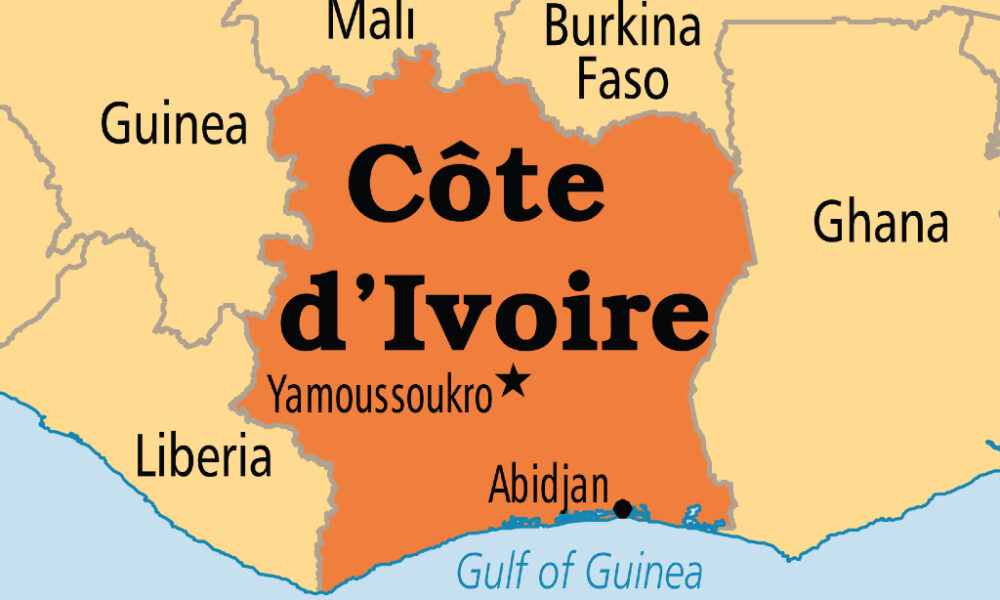


By Mary Alorh
Since the 1960s, interstate wars in Africa have been rare. Instead, internal conflicts and civil wars have dominated, often fueled by clashes between rebel groups and government forces.
The 1998 Ethiopia-Eritrea war prompted the African Union (AU) to establish norms aimed at preventing interstate interference, curbing cross-border conflicts, and promoting regional stability. However, the persistence of weak states with limited economic opportunities has created environments where those in power benefit disproportionately, leaving others vying for control.
This struggle for power often leads to factionalism, with political parties frequently formed along ethnic lines to secure access to state resources. History has shown that such power grabs can give rise to oppressive regimes, as witnessed in Uganda under Idi Amin and Ethiopia under the Derg.
Between the 1960s and 1980s, Africa experienced 70 coups and 13 assassinations, with factionalized militaries igniting devastating bloodshed and civil wars. More recently, Côte d’Ivoire (Ivory Coast) has been a focal point of political violence.
Ivory Coast’s 2020 Election Crisis: A Repeat of History?
After the 2011 post-electoral crisis, the country once again faced election-related turmoil in 2020. President Alassane Ouattara’s controversial decision to seek a third term – despite constitutional limits – sparked widespread unrest, leaving at least 83 people dead and 633 injured.
The disqualification of 40 out of 44 candidates by the constitutional council, along with electoral irregularities, provoked outrage among opposition parties, leading to an election boycott.
The COVID-19 state of emergency further deepened tensions, as the government amended electoral laws unilaterally and banned public gatherings, granting police sweeping powers to disperse opposition protests. By November 2020, the UNHCR reported that over 3,000 people had fled the country in fear for their lives.
Ivory Coast’s third-term crisis underscores the power struggles between President Ouattara and opposition leaders Henri Konan Bédié and Pascal Affi N’Guessan. Unresolved grievances from the civil war (2002–2011) and the 2011 post-election crisis continue to divide local communities, exacerbating political instability.
The Path to Stability: What Must Be Done?
For lasting peace, it is essential to address long-standing disputes over electoral rules and the composition of the Independent Electoral Commission. Establishing consensus on these issues is crucial to preventing future violence.
Despite these tensions, President Ouattara has expressed interest in contesting a fourth term, a move that risks plunging the country into further unrest. It is imperative for the Economic Community of West African States (ECOWAS), the AU, and the UN to intervene, urging him to uphold constitutional principles and prevent another cycle of political violence.
ECOWAS, in particular, must take a firm and proactive stance in ensuring Ivory Coast’s democratic integrity is preserved.
Mary Alorh is Director of Administration at DefSEC Analytics Africa Ltd., and is an expert in Gender, Youth, and Peace & Security initiatives in West Africa.