Opinion
Paving the Road to Free Trade: Why the AfCFTA Demands Border Reform
To unlock the full power of the AfCFTA, Africa must move past grand treaties and invest in physical, digital, and administrative border infrastructure.


By Ziad Hamoui
“You need to build the road before you buy the car.”
That line, from Inocent Moyo of the University of Zululand, opened the inaugural virtual forum of the SARChI Research Chair on Borders and the AfCFTA. It was meant as a warning, and it is one Africa’s policymakers would do well to heed. The continent has spent the better part of a decade constructing an ambitious trade architecture. What it has not yet built, in most places, is the machinery to make that architecture work.
The forum’s subject, “The AfCFTA and the Challenge of African Border Governance,” could hardly be more timely. The African Continental Free Trade Area is often described as the most consequential trade agreement of its kind anywhere in the world – a single unified $3.4 trillion market spanning 54 countries and more than a billion people. Yet a trade agreement is only as good as the borders it crosses. And on that score, the gap between ambition and execution remains wide.
Five Gaps, One Root Cause
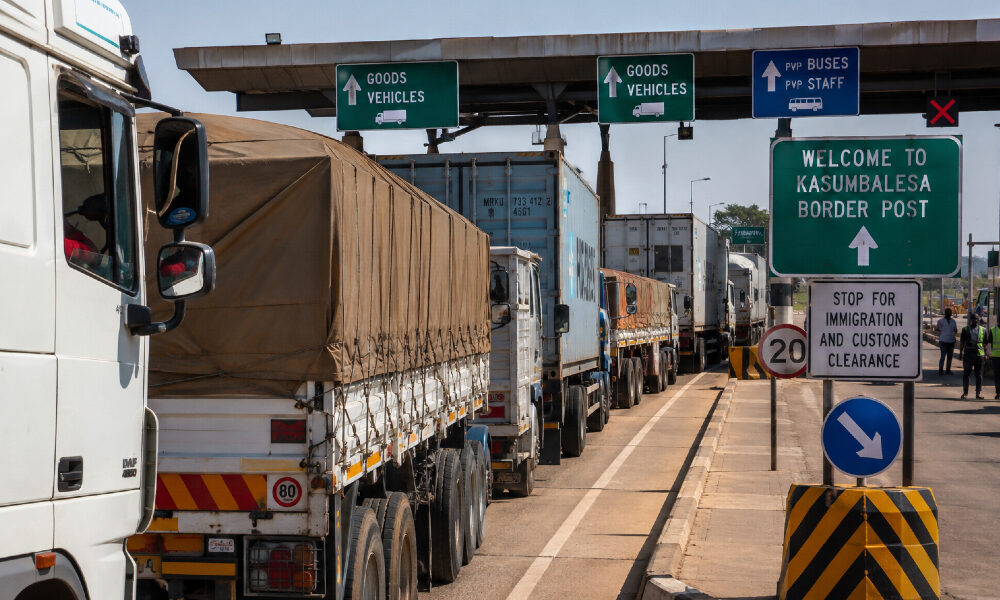
Observations from West Africa’s key trade corridors point to five operational failures choking cross-border enterprise:
- Deficient physical infrastructure: Outdated customs stations create massive supply chain delays.
- Gender-based discrimination: Female merchants – who make up the majority of small-scale cross-border traders – face disproportionate harassment and bureaucratic extortion.
- Information asymmetry: Opaque trade regulations leave small businesses vulnerable to arbitrary fines.
- Weak dispute resolution: Lack of accessible mechanisms leaves traders with no recourse when goods are wrongfully impounded.
- Rigid administrative design: Standard customs protocols cater strictly to large enterprise, actively penalizing small and micro-scale commerce.
What Better Governance Actually Looks Like
The answer is not another policy layer stacked atop the ones already in place. Africa does not lack frameworks; it lacks implementation.
What is needed instead is better border governance in practice: functioning Border Information Centres that give traders reliable, real-time guidance; procedures calibrated for small-scale and informal traders rather than designed exclusively around large importers; stronger, faster mechanisms for resolving the non-tariff barriers that quietly strangle cross-border commerce; and the universal rollout of interoperable payment infrastructure such as the Pan-African Payment and Settlement System, which could finally let African businesses transact in African currencies without routing through a third currency.
Alongside all of this, the AfCFTA Secretariat and the continent’s Regional Economic Communities need measurable, trackable implementation targets – commitments with deadlines, not just communiqués.
The conversation should not stop at the land border post, either. Short-sea shipping along Africa’s coastlines, regional cabotage rights, and full implementation of the Single African Air Transport Market all belong in the same discussion. Making movement across Africa easier and more predictable is a multimodal challenge, not a customs-post problem alone.
The Road Comes First
The metaphor Professor Moyo offered is worth sitting with. The AfCFTA is the car: sleek, ambitious, built for speed. But borders, transport corridors, and digital payment rails are the road. A powerful engine means little on a route full of potholes, missing bridges, and tollbooths that don’t know how to process the traffic arriving at their gates.
If African leaders are serious about accelerating continental trade, the priority is clear. Build the road. Then let the car run.
Ziad Hamoui is the Co-Founder and Past President of the Borderless Alliance, a leading private-sector advocacy group promoting economic integration and removing trade and transport barriers in West Africa. With extensive experience in Ghana’s road transport, logistics, and shipping sectors, he currently serves as Executive Director of Tarzan Enterprise Ltd., a long-established family business. He is a former Co-Chair of the Africa Food Trade Coalition, Co-Founder of the Trade Facilitation Coalition for Ghana, and serves on multiple high-level advisory committees on trade, transport, agriculture, and security. A Chartered Fellow of the Chartered Institute of Logistics and Transport (CILT) Ghana, he is also a former member of its Governing Council.