Featured
Part Three of A Universal Africa
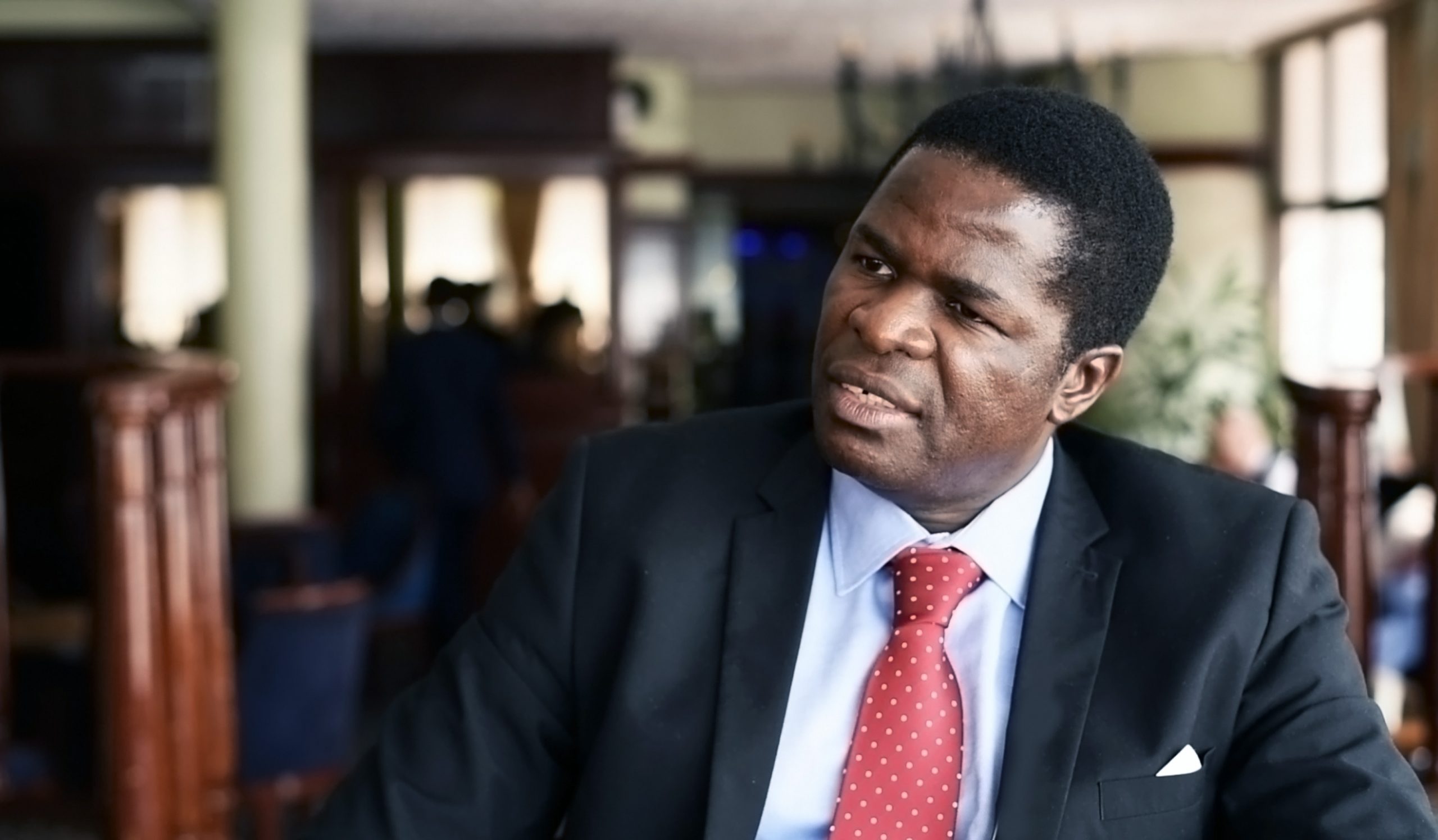
By Francis Mangeni
In this third of a four-part article, I focus on the typology of Africa’s regional integration.
Typology of African Regional Integration
The ultimate goal of economic integration in Africa is a monetary union in the year 2028, following a 34-year process that started in 1994, as codified in the Treaty Establishing the African Economic Community, also called the Abuja Treaty. The continent is to become successively a customs union, a common market, and an economic and monetary union.
Although the 2019 timeline for forming the customs union has passed, it might be pragmatic to skip this stage because of its revenue and sovereignty related sensitivities. This phase would, simply, constitute an interesting but pragmatic innovation. The continental customs union was to be formed through an amalgamation of regional customs unions formed in the five regions of Africa, which didn’t happen, for by 2019 only Eastern, Southern and Western Africa had functional customs unions, namely, EAC, SACU and ECOWAS.
By forming and launching the African Continental Free Trade Area on July 7, 2019 in Niger, a first solid step has, however, been taken along the regional integration trajectory. After a three-and-a-half-year negotiation and preparatory period, the AfCFTA means that Africa can garner a common market with free movement of goods and services, a common investment area, common rules and cooperation in the areas of intellectual property rights and competition, and coordination of policy in various sectors such as innovation, gender, health, education, transport, energy, information and communication technology, digitisation and digitalisation, manufacturing, agriculture and environment. African achieved this in spite of its 14 main regional integration arrangements. Note that the Treaty Establishing the African Economic Community envisaged five regional economic communities, one for each region of Africa, namely, North, East, West, South and Central. In this case, it matters less that only eight of the 14 have been recognised, and more that a moratorium not to form any more was agreed upon.
Linear explanatory typology sets out a progression from preferential trade arrangements to federations as follows. In preferential trade arrangements, the participating customs territories reduce customs duties on a number of products and may make other regulations of commerce less restrictive. The Preferential Trade Area of Eastern and Southern Africa of 1982 to 1994 was an example of such an arrangement, where customs duties were reduced on a group of listed commodities. This level of regional integration is no longer expected in Africa as the overall process has moved deeper.
A slightly higher step is the Free Trade Area, where customs duties on goods are to be eliminated on substantially all trade, that is on at least 90 percent of trade though this is still an adjustable threshold, as well as other restrictive regulations of commerce on trade among the members. In Africa, COMESA, EAC, ECOWAS and SADC have achieved this stage. Active programs for addressing non-tariff barriers are designed to keep the FTAs functioning as well as possible.
The next stage is the Customs Union, so far achieved by EAC and ECOWAS; as well as SACU which though is not among the recognised regional economic communities. In addition to internal free movement of goods among the members, they adopt a common external tariff and common regulations of commerce against the rest of the world.
The eight regional economic communities were expected to achieve this depth of economic integration, and the regional customs unions to merge and form the African customs union, by 2019. It should be noted though, that the requirement and possibility to form the Continental Customs Union, as stipulated in the Abuja Treaty, equally covers internal free movement of goods, which means the Continental Free Trade Area, now formed.
The next stage is the common market, where the famous four freedoms exist: free movement of goods, services, labour and capital; and the right of establishment is recognised. As pointed out, the African Continental Free Trade Area is to have these common market elements. It is in effect to be a Single African Common Market. The European Union Single Market or Internal Market is an exemplar of this depth of economic integration.
After the Common Market, the Economic Union covers cooperation and harmonisation across the sectors. A deep sectoral harmonisation also enables the deeper stage of a monetary union. In federations, the member countries unite to form a new country with a single Government. The EAC became a common market in 2010, and in 2013 adopted a roadmap to become a monetary union in 2024. Exploratory work on a confederation and federation is underway. The Economic and Monetary Community of Central Africa (CEMAC) and the West African Economic and Monetary Community (UEMOA) which are not recognized regional economic communities, have been using a French-backed common currency, the CFA.
The Oughts of Regional Integration in Africa
Africa exists in the world and is intrinsically tied to the fate of planet earth, obviously. A key strategic orientation is to imagine and operate as a universal Africa. This means an internally strong Africa, that has effective diplomatic agency throughout the world. It means also that global priorities must contain Africa’s priorities and the solutions must be adequate for Africa. It means as well that Africa must contribute solutions to global challenges and threats to human civilisation and existence.
While Africa’s suite of problems may require global solutions, quite a number can and have been addressed internally within Africa. But the problems of the world are eventually also Africa’s problems, due to globalisation and human physiological similarities across the world. To be internally strong, African regional organisations, as stewards of regional integration, ought to be well-managed, well-resourced and fit for purpose.
It’s estimated that, in their statutory meetings, African regional integrations can spend up to 90 percent of the time addressing audit-related issues. Distrust, tension and outright animosity can develop between the Secretariat and the member Governments, and with development partners.
Regional organisations are notoriously under-funded. Arrears from member states tend to be significant, with contributions from development partners primarily sustaining the programs and the organisation at large. Without the required financial resources, regional organisations lack the wherewithal to effectively function. They tend also to be under-staffed, arising also from limited financial resources.
Mismanaged and under-resourced, regional organisations can hardly be expected to be fit for purpose. There is also the more fundamental matter of a mismatch between the actual current priorities of member states and regional programs. Without a proper interface, Governments will not, in pursuing their day to day priorities, find much relevance for regional organisations. The arising lack of interest can render the organisations dormant relics.
Furthermore, to be internally strong, African regional organisations ought to fully and whole-heartedly implement all of the 15 flagship projects under Agenda 2063, for the Africa We Want. These projects set out key transformational interventions.
The 15 projects cover the following areas:
i. Trade & Investment: African Continental Free Trade Area, African Passport and Free Movement of People, and the African Commodities Strategy;
ii. Infrastructure: Integrated High Speed Train, Grand Inga Dam, and the Single African Air Transport Market;
iii. The Knowledge Economy: Annual African Economic Forum, Pan-African e-Network, African Virtual and e-University, and Cyber Security;
iv. The African Cultural Renaissance: Great African Museum and Encyclopedia Africana;
v. Peace & Security: Silencing the Guns by 2020 – 2021;
vi. Resource Mobilization & Macroeconomic Stability through African Financial Institutions; and;
vii. Outer Space Strategy.
In addition to being internally strong, Africa ought to be actively present in international organisations, in which it should be fully heard. And to be heard, Africa must have something to say, and actively contribute to outcomes so they fully take into account and carry its priorities.
International organisations have been a platform for setting the global agenda and shaping the direction of human advancement. These include the United Nations and its agencies, the Bretton Woods institutions (GATT/ World Trade Organisation, World Bank Group and the International Monetary Fund), and a plethora of clubs such as NATO and G7, as well as G20 and BRICS (Brazil, Russia, India, China and South Africa).
Africa actively participated in designing the UN Agenda 2030 and the Sustainable Development Goals, adopted in 2015, through rigorous preparatory work and common positions. Africa drew on its Agenda 2063 adopted in 2013, and on technical expertise from institutions and individuals around the world. Organised as a group, Africa struck alliances with other groups and countries, in advancing and defending robust positions and text that shaped the final outcomes. Such diplomatic agency ought to be carried into all relevant organisations that impinge on human advancement.
There are present threats to human civilisation and to survival of our planet. Annihilation in atomic explosions, in accidental or deliberate acts of State or non-state operators or criminals, remain a possibility, especially when international cooperation regimes are torn up. Dangerous skirmishes in the Arab peninsula, South China Sea, and Eastern Europe, point to worrisome possibilities of miscalculation that could spark wars involving nuclear and biochemical powers.
The rise of new powers, particularly China, and the re-emergence of Russia, have evoked Graham Allison’s so-called Thucydidian Trap: If not managed well, war with the old power becomes a real possibility. Of the 16 instances of emergence of new powers in the last 500 years, four have resulted in war. With civilization-ending weapons in stock, such wars threaten humankind.
– Though an imminent reality, climate change is still denied by some global actors. The US act of withdrawing from the Paris Climate Change Agreement on June 1, 2017 represents a shocking laissez-faire over the safety of the planet, the only current home of humankind.
– Cyber-attacks around the world, and the possibility of rogue artificial intelligence, pose emerging threats to human civilisation. It’s already possible to remotely crash entire economies and cities.
– Pandemics that can wipe out human life are not a remote possibility. Zoonotic spill-overs as humans invade animal habitats, laboratory experiments gone awry, and biochemical weaponization, all constitute flash points, especially in a globalised world with ease of travel, mega-cities, and air-borne vectors.
– Racial tensions, inequality of incomes and opportunities, extremism and nationalism, localised wars and conflicts, have proven to be hot spots with far-reaching unexpected mayhem. There isn’t a shortage of leaders stoking such havoc. Africa has particularly been at the receiving end of racism and social injustice. It has been vulnerable to conflicts and displacement of peoples.
– Theoretical physicists, Lord Martin Rees for instance, estimate that planet earth still has another 4.5 billion years of existence before being burnt up by the sun, which represent potential and time to explore and populate other habitats in the galaxy and the universe at large. This is because extinctions are not unthinkable. There have been five extinctions so far on earth, and a sixth is underway. Africa ought to be wary of going extinct or being left behind in space exploration.
In these threats to civilisation and planet earth, Africa has a stake and ought to fully engage in creating and maintaining a peaceful, humane, and just global order. Africa ought to be a foremost defender of the health of a vibrant and sustainable green planet teeming with biodiversity. In space exploration, Africa ought to have a meaningful role and to seek due accommodation. History shows that marginalisation out of knowledge centres, can be catastrophic. Japan and China understood this only too well, and from the 1960s to 80s rapidly caught up with the best advancements in the arts and sciences available to humankind through clear and deliberate policy interventions such as building of sound technological bases. Having been marginalised out of the industrial revolutions, Africa cannot afford, going forward, to be isolated and left behind. Africa ought to harness and deploy all available global knowledge, through cooperation, education, science diplomacy and a domestic sound technological base. A universal Africa is an existential priority.
Continues in Part 4