Business
Pan-African Payment Systems: Africa’s Quiet Financial Revolution Amid Dollar Dependence


By Mark-Anthony Johnson
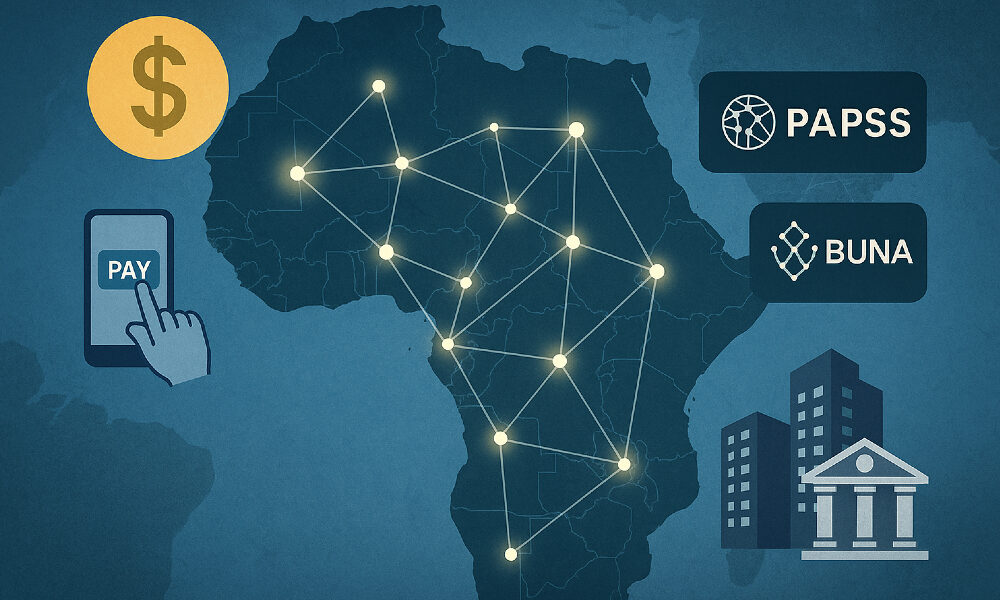
Amid growing global uncertainty and under the looming shadow of U.S. economic policy, Africa is quietly reshaping its financial future. As the continent strives to reduce its reliance on the U.S. dollar and modernize cross-border transactions, innovative payment systems like the Pan-African Payment and Settlement System (PAPSS) and the Arab Regional Payment System (BUNA) are emerging as vital tools for economic sovereignty, cost reduction, and regional integration.
For investors and global stakeholders, these developments signal a unique opportunity to support – and benefit from – a transformative shift in one of the world’s most dynamic regions, where GDP is projected to reach US$4 trillion in the coming years.
The Geopolitical Case for Moving Beyond the Dollar
The U.S. dollar has long dominated global trade, but for African economies, it often brings more risk than reward. Countries like Nigeria, Kenya, and South Africa regularly grapple with currency volatility, high transaction fees (ranging from 0.5 percent to 10 percent), and the ever-present threat of U.S. sanctions that can freeze access to international reserves.
Africa’s push toward local-currency payment systems is not just about economics – it’s also a strategic response to geopolitical instability. With the U.S. increasingly using the dollar as a tool of foreign policy – as seen in sanctions against countries like Russia and Iran – African nations are seeking ways to insulate themselves from external financial pressure.
PAPSS, now live in 15 countries and linked to over 150 banks, allows businesses and individuals to transact directly in local currencies, bypassing the dollar entirely. This innovation is already saving the continent an estimated US$5 billion annually in foreign exchange conversion costs.
More importantly, it strengthens Africa’s ability to conduct trade independently, reducing exposure to global political turbulence.
Cost Efficiency: A Game-Changer for African Commerce
Beyond the geopolitical benefits, the economic rationale for these new systems is compelling. Traditional cross-border payment methods – primarily through SWIFT – can take days to settle and incur fees as high as 10 percent.
In contrast, PAPSS and BUNA offer near-instant settlements at a fraction of the cost.
Consider the following real-world examples:
- Nigeria-Kenya corridor via PAPSS: A US$1 million business-to-business (B2B) transaction now costs only US$2,150 in fees – capped by Nigerian regulators – compared to over US$100,000 under legacy systems.
- Egypt-UAE corridor via BUNA : Real-time transfers in Egyptian pounds or UAE dirhams allow businesses to save up to 80 percent on intermediary currency conversion fees.
These efficiencies aren’t just numbers – they represent real returns for companies, banks, and governments, unlocking capital that can be reinvested into growth, infrastructure, and innovation.
Looking Ahead: A Continent on the Cusp of Financial Transformation
Africa’s move toward regional, non-dollar payment systems marks a pivotal moment in its economic development. By embracing financial self-reliance and technological innovation, the continent is building a more resilient, efficient, and inclusive financial ecosystem – one that reflects its growing influence on the global stage.
For forward-thinking investors, the message is clear: the future of African finance is being written in local currencies, and the time to engage is now.
Mark-Anthony Johnson is the founder and CEO of JIC Holdings, a global asset and investment management firm founded in 2009. With over 30 years of experience and strong ties to Africa, his investments span mining, infrastructure, power, shipping, commodities, agriculture, and fisheries. He is currently focused on developing farms across Africa, aiming to position the continent as the world’s breadbasket.