Opinion
Owusu on Africa: Why is Egypts’s el-Sisi pursuing rapprochement with Iran?


By Fidel Amakye Owusu
In the 1950s and 60s Egypt represented the revolutionary elements in the Islamic world, especially the Middle East. The charismatic Gamal Abdel Nasser led the charge.
For some years, Egypt and Syria had created a political union to the displeasure of the Gulf monarchies, especially Saudi Arabia. At the time, Egypt relied on the Eastern bloc for arms and diplomatic support.
After the death of Nasser and the Camp David Accords between Egypt and Israel, the Pan-Arab revolutionary fervour in Egypt subsided. Cairo had become closer to Washington – the broker and host of the Accords.
The Iranian revolution of 1979 meant that Tehran had replaced Cairo as the centre of revolutionary inspiration in the region. Almost immediately, the mullahs were on a collision course with the US. The monarchies in the region were spooked by what was happening across the gulf.
News that the Egyptian president has had a telephone conversation with his Iranian counterpart brings to the fore several dynamics that are currently shaping the region. With Egypt being a major ally to many of the Gulf monarchies, what seems to be a rapprochement between Cairo and Tehran needs some demystification.
What are these?
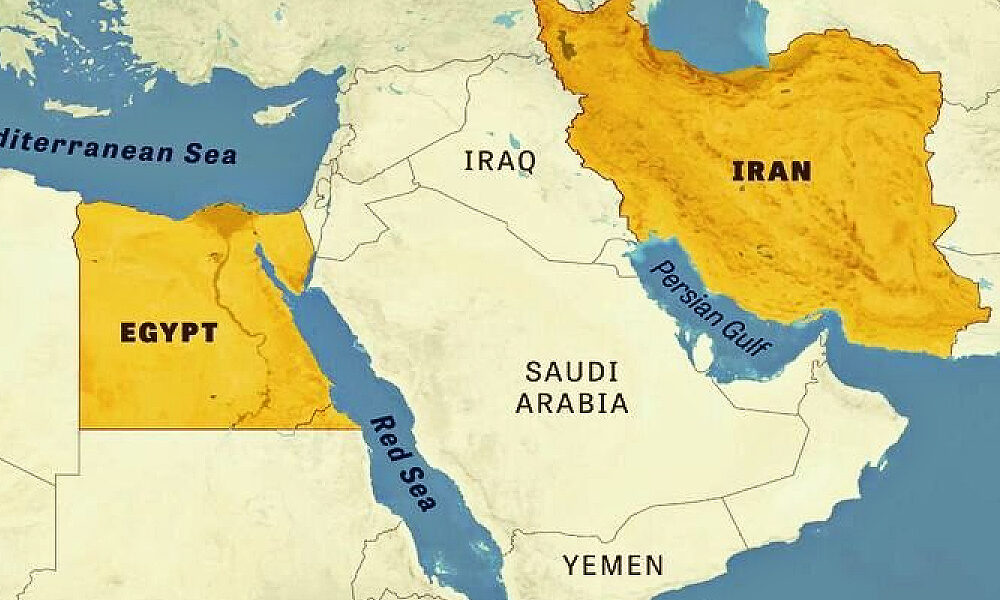
Firstly, the activities of Houthi fighters in the Red Sea in recent weeks have Cairo sitting on tenterhooks. With fighters attacking ships on the important international trade route, Egypt happens to be a major victim of such attacks. While the Houthis claim to target Israel-bound ships, their actions have affected many actors, especially Egypt.
The Suez Canal which belongs to Egypt, links the Mediterranean to the Red Sea and onwards to the larger Indian Ocean. More importantly, Egypt makes significant revenues from the facility that was constructed in the 19th century and has seen a major expansion in recent times. With Cairo dealing with economic challenges, any loss of revenue will not be welcome.
Cairo, therefore, believes that with the influence Iran has over the Houthis, better relations with Tehran could ease tensions in the Red Sea.
Even though, tensions between Saudi Arabia and Iran have seen some thawing recently, differences over the Israel-Hamas conflict and its concomitant humanitarian issues in the latest summit in the Kingdom show that all is not well between the two countries. President el-Sisi could, therefore, be seeking a more consequential relationship with Tehran.
This could enhance Cairo’s standing in the region and on matters relating to current conflicts. With elections held and the mandate of el-Sisi renewed without any chaos, the Egyptian strongman seems to leverage his political capital to pursue more independent foreign policy.
With many shipping companies making efforts to avoid the Red Sea, Egypt is likely to put its interstate above anything else.
Fidel Amakye Owusu is an International Relations and Security Analyst. He is an Associate at the Conflict Research Consortium for Africa and has previously hosted an International Affairs program with the Ghana Broadcasting Corporation (GBC). He is passionate about Diplomacy and realizing Africa’s global potential and how the continent should be viewed as part of the global collective.