Opinion
Owusu on Africa: Pastoral activities and the horizontal movement of illicit arms in Africa


By Fidel Amakye Owusu
Months after 9/11 attacks against the United States, Masai pastoralists in Kenya had not heard about the tragedy. When they did, they mourned and donated 14 of the most precious properties a Masai could give to the United States – cows.
For centuries Africa has had pastoralists roam the vast grasslands that transverse the continent. From the West Coast of Senegal through the Sahel up to South Sudan, Central African Republic (CAR), Northern Uganda and Kenya, and Somalia on the east coast, there seems to be an unbreakable pastoral zone. This territory is filled with different pastoral groups some of whom cut across borders.
For centuries and even millennia, nomadic life has been a major part of the economic lives of the people of Africa.
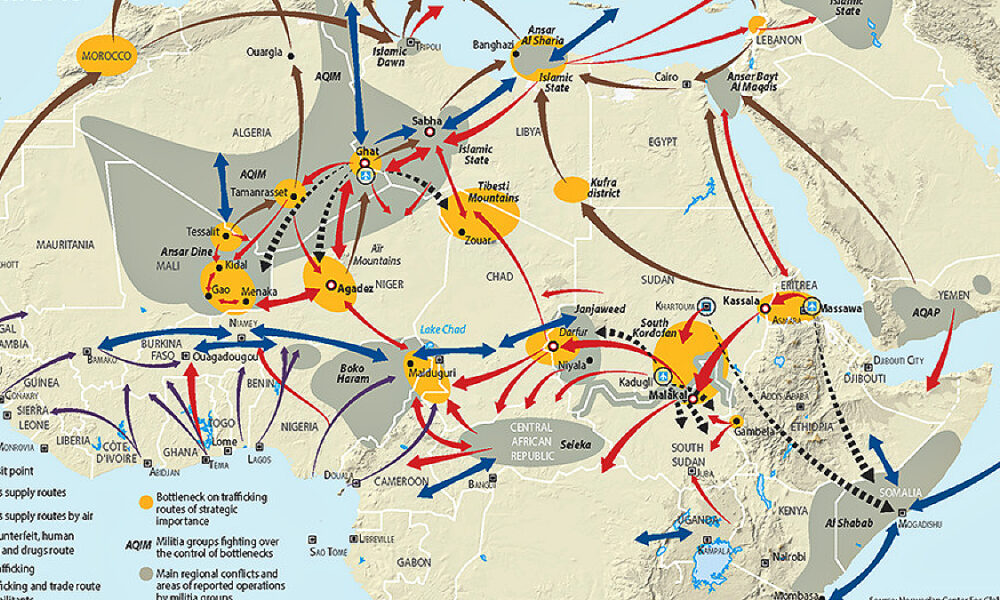
The relatively free movement of pastoralists across this zone and issues that have recently bedeviled their mobility have created room for illicit arms traders to use the pastoral belt as a robust smuggling zone. There are other [vertical] routes but this one is very active.
From East to West Africa, small arms find easy transportation across the continent. The proliferation of these arms through this corridor is a major security challenge to the continent.
How is it happening?
Traditionally, pastoralists faced little or no restrictions in respect of their movement across the different parts of Africa. Not even colonial demarcation of territories could radically limit the movement of nomads in Africa.
Even after independence, and the emergence of territory-conscious governments, nomadic life across borders is still common. The Economic Community of West African States (ECOWAS) has developed protocols that grant freedom of passage to herders across the region. East Africa has similar arrangements. This means that there is relative porosity of borders in the Sahel and Savannah zones of the continent.
There is nothing more precious to arms traffickers than porous borders that give them fewer restrictions. The zone which covers more than a dozen countries is awash in arms.
While illicit arms traders have been usually people outside the nomadic communities, recent insecurities faced by these communities may have led to significant collaboration. With climate change, desertification and clashes with sedentary farmers, nomads are increasingly arming themselves.
Bad.
Somalia, CAR, Chad, northern Cameroon, northern Nigeria, and the greater Sahel are major transit zones and routes for the trade.
Without collaboration between states and regional blocs and the involvement of the leadership of pastoral communities, it would be extremely difficult to tackle this major threat to Africa.
It is already fueling jihadi extremism and more.
Fidel Amakye Owusu is an International Relations and Security Analyst. He is an Associate at the Conflict Research Consortium for Africa and has previously hosted an International Affairs program with the Ghana Broadcasting Corporation (GBC). He is passionate about Diplomacy and realizing Africa’s global potential and how the continent should be viewed as part of the global collective.