Opinion
Owusu on Africa: A federation or union that succeeds is owned by the people and not necessarily adversarial


By Fidel Amakye Owusu
Not long after independence, three West African countries decided to form a closer bond. The Ghana-Guinea-Mali Union resulted.
After a few years, its foremost proponent, President Kwame Nkrumah of Ghana, believed that it was better to disband the union and pursue a greater one with the rest of Africa.
As an ardent Pan-Africanist, he believed that having a union within a union was counter-productive.
Later in the 1980s, Senegal and The Gambia, two countries that are geographically ‘fused’, formed a political union that came to be known as Senegambia. Despite an initial integration, subsequent dissatisfaction led to its dissolution.
Over the decades, therefore, African states have sought closer ties than they currently have in the African Union and other regional organizations.
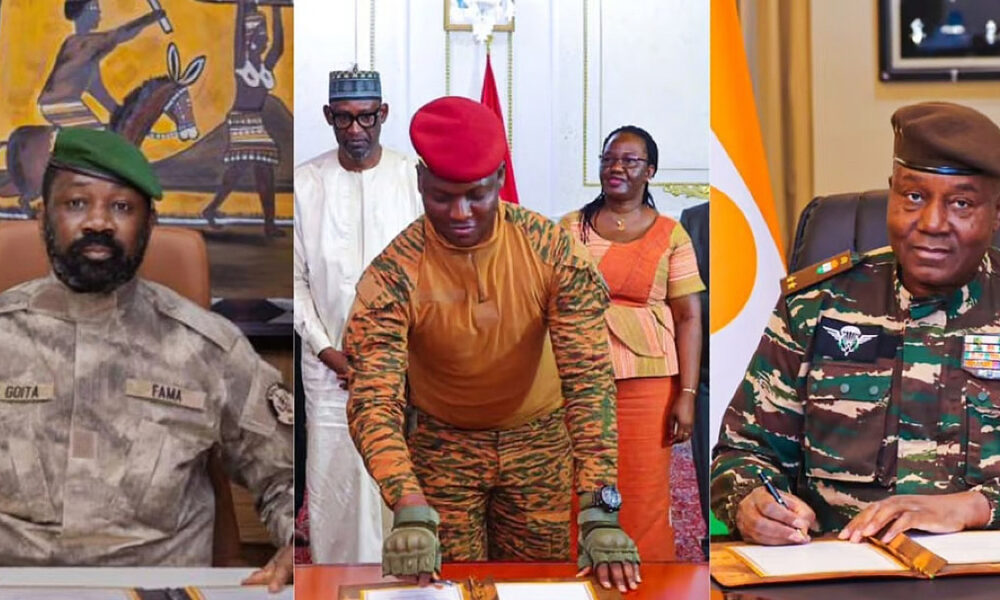
Last week, it was reported that the foreign ministers of Burkina Faso, Mali, and Niger met to lay grounds work for a confederation that will have the three landlocked countries unite politically. In principle, many Pan-Africanists are enthused about this. In reality, however, some factors raise questions about the genuineness and future of this move.
Firstly, for any union to be successful, it must be owned and generally supported by the people. Currently, the juntas that lead the three countries objectively lack the support of stakeholders within their borders. In Mali, opposition elements condemned the junta when it announced that the February 2023 elections could not come off. They want a civilian-led government.
In Niger some minority groups and pro-democracy groups are vehemently opposed to the continued stay of the military. Burkina Faso is not different. Any agreement between the three countries is in fact, an agreement between military rulers and not necessarily the people.
Again, it appears that the union is a way for the military governments to protect themselves rather than to seek the interest of the people. A couple of days after the meeting, a senior official of the Russian ministry was in Niger to sign a military pact. Similar moves have been made by Moscow in Burkina Faso.
It is becoming increasingly clear that the union is a way to allow Russia access to the vast geography more conveniently. With a confederation, Moscow will have unlimited diplomatic and logistical hurdles in dealing with these states.
Furthermore, the adversarial posturing of the juntas in their effort to create a political union could undermine its survival. Nkrumah had abandoned the Ghana-Mali-Guinea union to avoid a collision of organizations. Currently, the juntas have proven to be antagonistic towards the Economic Community of West African States—an organization their states belong to.
Note: Guinea is not part of the “proposed” union.
Fidel Amakye Owusu is an International Relations and Security Analyst. He is an Associate at the Conflict Research Consortium for Africa and has previously hosted an International Affairs program with the Ghana Broadcasting Corporation (GBC). He is passionate about Diplomacy and realizing Africa’s global potential and how the continent should be viewed as part of the global collective.