Politics
Outspoken Macron aide Sibeth Ndiaye named new face of French government
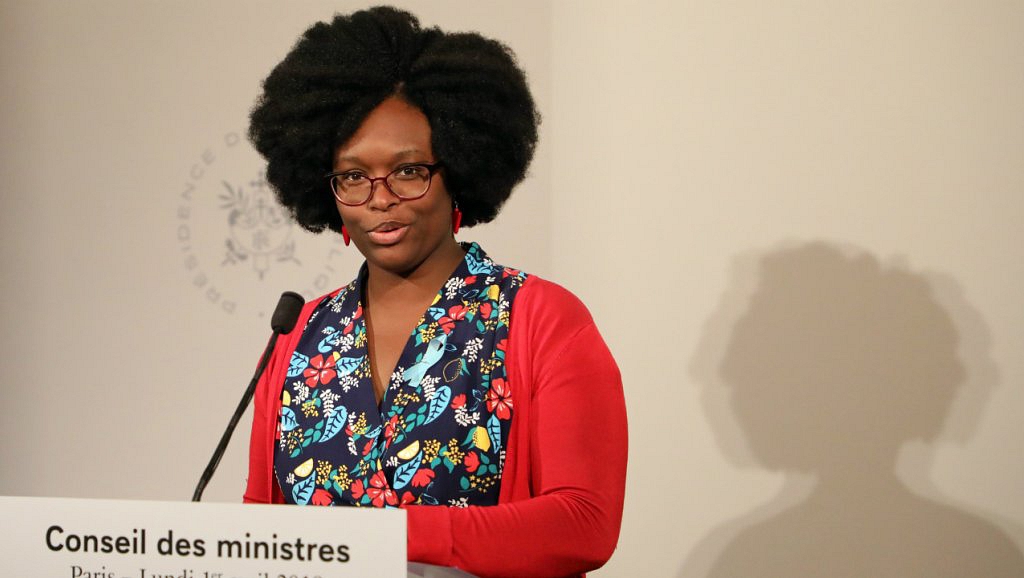
AFP | New French minister and government spokeswoman Sibeth Ndiaye has spent almost 5 years at Emmanuel Macron’s side as his media adviser, earning a reputation for blunt speech and a willingness to put the press in its place.
The Senegal-born Ndiaye was named to the post on Sunday night in a mini-cabinet shuffle, just hours before her first press briefing at the Élysée Palace lectern on Monday. She replaces Benjamin Griveaux – another close Macron associate – who stepped down last week to mount a bid for Paris mayor.
“France has given me a lot. Today, it is my turn to give something back,” she said at Monday’s handover ceremony, where Griveaux passed her the proverbial torch shortly before the government’s weekly cabinet meeting.
?? Newly appointed French Junior Minister and Government's spokesperson Sibeth Ndiaye (L) speaks next to her predecessor Benjamin Griveaux during a hand over ceremony at the ministry in Paris. #AFP pic.twitter.com/wTmdfI43dc
— AFP Photo (@AFPphoto) April 1, 2019
Ndiaye’s new post is a promotion from the shadows to the spotlight. Once the president’s media adviser, she is now the public face of the French government.
Indeed, Ndiaye’s association with Macron dates back to 2014, when he was first foisted into the public eye himself, named economy minister under Socialist president François Hollande after serving as a Hollande adviser at the Élysée.
A sharp and lively Socialist, Ndiaye had also been media adviser at the economy ministry for Macron’s provocative predecessor, Arnaud Montebourg. When Montebourg left the cabinet after critiquing Hollande’s policies, Ndiaye reprised the role for rookie minister Macron.
And the rest is history. She would go on to help Macron, who had never held elected office, make good on his longshot centrist bid for the presidency in 2017, handling media for his meteoric campaign.
Battle-hardened
The 39-year-old mother of 3, whose given name means “has won many battles” in Jola, is no stranger to politics. Born in the Senegalese capital in 1979, the 3rd of 4 girls, Ndiaye’s childhood home was imbued with it. Her father, Fara, held the No. 2 role in Abdoulaye Wade’s Senegalese Democratic Party (PDS) before leaving to join then president Abdou Diouf’s team in 1986, Le Monde reported. But the family nevertheless kept close ties with Wade, the French daily explained. After Wade won the country’s presidency in 2000, he named Ndiaye’s Togolese-German mother, Mireille – the 2nd woman to serve as a judge in Senegal – to preside over the nation’s Constitutional Council, a post she would hold for 8 years.
The young Sibeth left Dakar after middle school for Paris, where she attended the Lycée Montaigne across from the Luxembourg Gardens, living in a dormitory. She became a left-wing student activist and joined the Socialist Party in 2002 after far-right National Front leader Jean-Marie Le Pen shocked the country by winning a place in the French presidential run-off that year. She earned a Master’s degree in healthcare economics before being named the Socialist Party’s national secretary for early childhood issues in 2009 even as she ran press relations for the Socialist president of Seine-Saint-Denis, the administrative department that comprises Paris’s northern suburbs (banlieues).
As a member of Macron’s largely white, largely male, inner circle throughout his rise to power, the charismatic Ndiaye has not kept a low profile.
She first caught the public’s eye in a behind-the-scenes TV documentary of Macron’s 2017 campaign, aired shortly after his victory. Disputing the press coverage of her candidate, Ndiaye didn’t mince her words. The film shows her on the phone, telling the offending media outlet: “That’s not the work of a journalist, that’s the work of a slob.”
Since then there has been no love lost between Ndiaye and the media.
The latest promotions to the cabinet make the current government France’s youngest since 1962. They also bring it back to gender parity, with 18 women serving alongside 18 men. That such a reshuffle, with a cast now fronted by a Senegalese-born spokeswoman, may be deemed insular might say more about Macron’s lingering unpopularity than it does about how far France has come.