Opinion
Out of Sight, Out of Port: The Hidden Cost of Being Landlocked in Africa


By Dishant Shah
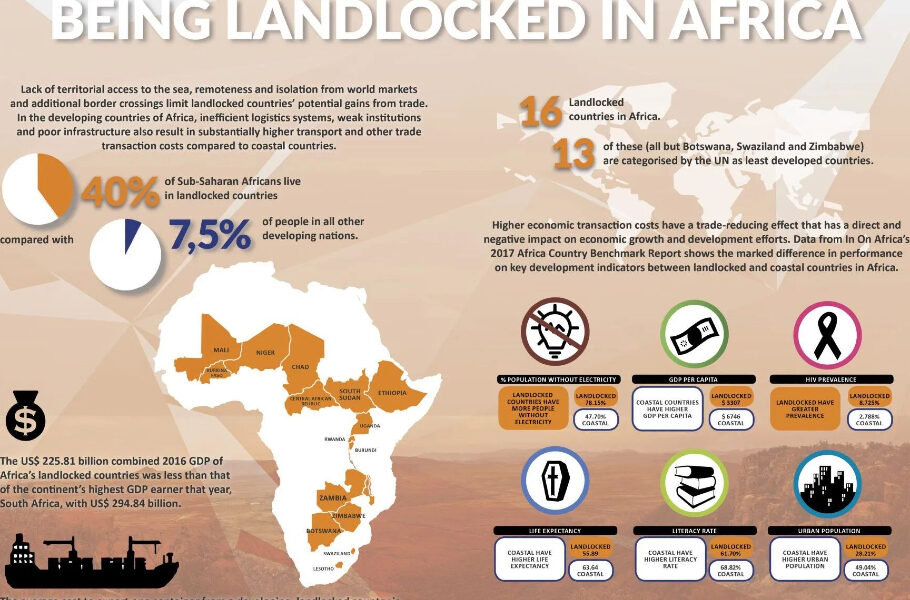
Picture a map of Africa speckled with 16 landlocked countries – stretching from Mali and Niger in the west to Uganda and Ethiopia in the east, and down through Zambia and Botswana in the south. These nations share a common geographic challenge: no direct access to the sea.
Being landlocked means no territorial coastline, no immediate port access, and fewer trade routes. Goods must cross multiple borders before reaching international waters, slowing down logistics and driving up costs.
This physical isolation translates into economic constraints. Transport costs for landlocked countries are significantly higher, stifling trade and ultimately slowing economic growth.
In Sub-Saharan Africa, about 40 percent of the population lives in landlocked countries – nearly half the region’s people – compared to just 7.5 percent across all other developing regions. For these millions, the barriers to global trade are not just logistical – they are deeply personal.
The Price of Isolation: Trade Costs and Economic Impact
The numbers tell a stark story.
Shipping a single container from a developing landlocked country can cost around US$3,400, while importing one costs approximately US$4,300. In contrast, transit countries – those with coastal access that serve as trade corridors – pay just US$1,300 to export and US$1,500 to import.
That’s thousands of dollars in added expenses for every shipment.
These inflated costs ripple through economies, raising prices for consumers, squeezing business margins, and limiting competitiveness on the global stage.
Beyond Economics: The Human Toll of Being Landlocked
But the impact goes beyond economics – it touches lives.
In landlocked African countries, nearly 78 percent of the population lacks access to electricity, compared to just 48 percent in coastal nations. Per capita GDP averages only US$3,307, less than half the US$6,746 seen in coastal regions.
Health and education indicators also lag behind:
- Life expectancy is 55.9 years, compared to 63.6 years in coastal areas.
- Literacy rates stand at 61.7 percent, versus 68.8 percent along the coast.
- Urbanization levels are at 28.2 percent, far below the 49 percent seen in maritime nations.
Yet geography need not be destiny.
Countries like Ethiopia and Uganda have taken bold steps to defy their inland fate. Investments in regional infrastructure – such as cross-border rail and road upgrades – alongside participation in regional trade agreements and alternative port corridors have helped reduce both time and transportation costs.
Multilateral efforts led by the African Union and supported by development banks aim to further bridge the gap, focusing on modernizing infrastructure and simplifying customs procedures. These initiatives hold the promise of transforming landlocked nations from isolated hinterlands into integrated nodes in global supply chains.
The path forward is clear: targeted investment, regional cooperation, and smarter logistics can unlock global market access for landlocked economies.
So here’s a compelling question to consider: What would change if every landlocked country could halve its transport costs?
Dishant Shah is a partner at Legion Exim, a company specializing in facilitating the export of high-quality engineering products directly sourced from manufacturers in India to Africa. His areas of expertise include new business development and business management.