News
The now Category 5 Hurricane Maria batters Dominica, PM Roosevelt Skerrit says home damaged
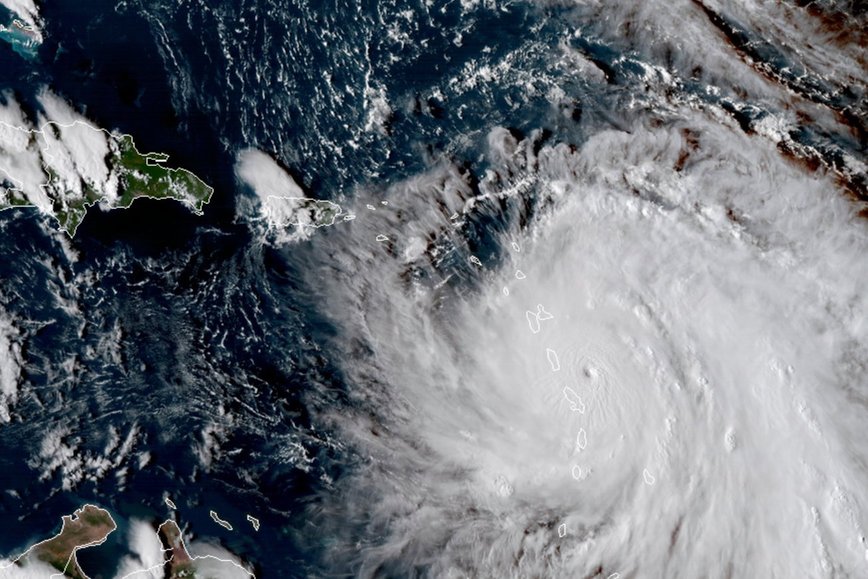
AP | Hurricane Maria intensified into a dangerous Category 5 storm and pounded the island-nation of Dominica as it surged into the eastern Caribbean on Monday night, and forecasters warned it might become even stronger.
The storm was following a path that could take it on Tuesday near many of the islands recently devastated by Hurricane Irma.
Fierce winds and driving rain lashed Dominica for hours, causing flooding and tearing roofs from homes.
A series of Facebook posts by the country’s Prime Minister, Roosevelt Skerrit captured the fury of the storm as it made landfall.
“The winds are merciless! We shall survive by the grace of God,” Skerrit wrote at the start of a series of increasingly harrowing posts.
A few minutes later, he messaged he could hear the sound of galvanized steel roofs tearing off houses.
He then wrote that he thought his home had been damaged. And three words: “Rough! Rough! Rough!”
A half hour later, he said: “My roof is gone. I am at the complete mercy of the hurricane. House is flooding.” Seven minutes later he posted that he had been rescued.
Late Monday, a police official, Inspector Pellam Jno Baptiste, said there were no immediate reports of casualties but it was still too dangerous for officers to do a full assessment as the storm raged outside.
“Where we are, we can’t move,” he said in a brief phone interview.
Dominica authorities had closed schools and government offices and urged people to move from dangerous areas to shelters.
“We should treat the approaching hurricane very, very seriously,” the prime minister warned as the storm approached. “This much water in Dominica is dangerous.”
In August 2015, Tropical Storm Erika unleashed flooding and landslides that killed 31 people and destroyed more than 370 homes.
Officials on nearby Guadeloupe said the island would experience extremely heavy flooding and warned that many communities could be submerged overnight.
In Martinique, authorities ordered people to remain indoors and said they should prepare for cuts to power and water. Schools and non-essential public services were closed.
The U.S. National Hurricane Center said Maria had maximum sustained winds of 260 km/h (160 mph) late Monday. The eye was atop Dominica and about 435 kilometers (270 miles) southeast of St. Croix in the U.S. Virgin Islands. It heading west-northwest at 15 km/h (9 mph). Earlier in the day, the center had warned: “Maria is developing the dreaded pinhole eye.”
That’s a sign of an extremely strong hurricane likely to get even mightier, said University of Miami hurricane researcher Brian McNoldy. Just like when a spinning ice skater brings in their arms and rotates faster, a smaller, tighter eye shows the same physics, he said.
Maria’s eye shrank to a narrow 16 kilometers (10 miles) across.
Hurricane warnings were posted for the U.S. and British Virgin Islands, Puerto Rico, Guadeloupe, Dominica, St. Kitts & Nevis and Montserrat.
A tropical storm warning was issued for Antigua & Barbuda, Saba, St. Eustatius, St. Maarten, St. Lucia, Martinique and Anguilla.
The storm’s hurricane-force winds extended about 45 kilometers (30 miles) from the eye, and tropical storm-force winds as far as 205 kilometers (125 miles).
Forecasters said storm surge could raise water levels by 1.8 to 2.7 meters (6 to 9 feet) near Maria’s center. The storm was predicted to bring 25 to 38 centimeters (10 to 15 inches) of rain for some islands, with the possibility of higher amounts in isolated spots.