Opinion
No Permission Required: Powering the Continent’s Energy Future
Africa needs more than $200 billion a year in energy investment, yet 600 million Africans still lack electricity. The new Africa Energy Bank is a bid for economic sovereignty.


By NJ Ayuk
In 2019, I called for a financial fortress: an African institution capable of financing Africa’s own energy future. Critics dismissed the idea as fantasy. We kept working anyway.
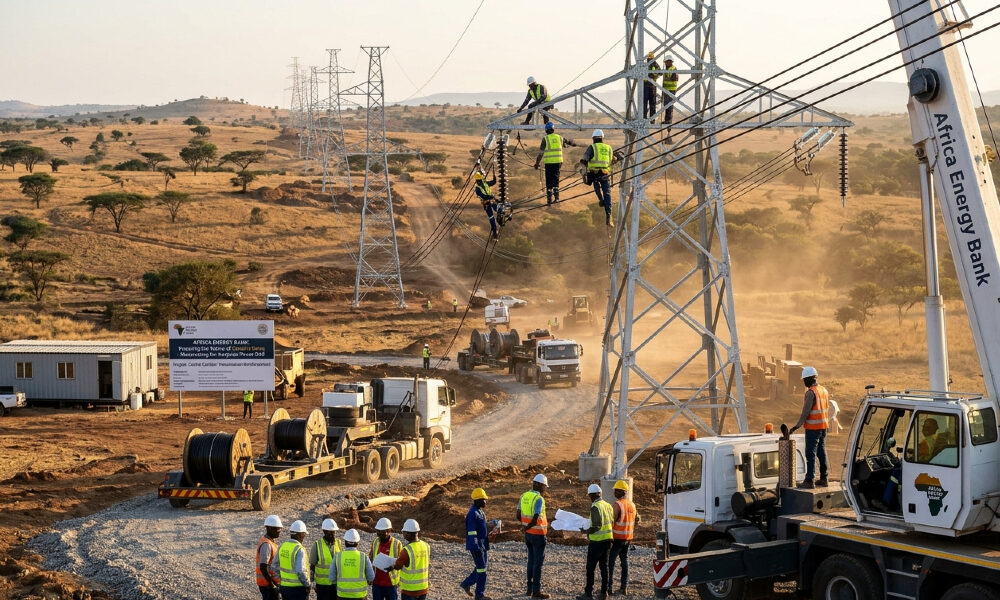
Today, the Africa Energy Bank is real. Established by the African Export-Import Bank (Afreximbank) and the African Petroleum Producers’ Organization, it opens with US$5 billion in authorized capital and a mandate that spans the entire energy value chain: exploration and production, refining, distribution, power generation, infrastructure, and industrial development. Helmy Ghazi, CFA, has been appointed its president.
It would be easy to file this under “new development bank launched.” That would miss the point. This is a statement of economic sovereignty.
The Arithmetic of Darkness
Consider the numbers. The International Energy Agency (IEA) estimates that Africa needs more than US$200 billion in annual energy investment through 2030. In 2024, only about US$110 billion was expected to materialize, and nearly US$70 billion of that was destined for fossil-fuel supply and power. The shortfall is US$90 billion a year or more.
Behind that gap are roughly 600 million Africans without electricity and about 1 billion without clean cooking. Financing for energy access falls well short of the roughly US$25 billion a year needed to meet 2030 objectives.
Energy poverty is not an academic abstraction. It is darkness in homes and diesel bills that sink small businesses. It is lost production, smoke-filled kitchens, hospitals that cannot refrigerate vaccines or power an operating theater, and young people with ambition and nowhere to employ it.
Industrialization is Not Built on Slogans
No country has industrialized on good intentions. Factories need reliable baseload power. Fertilizer plants need natural gas. Ports, pipelines, refineries, transmission lines, and storage need capital measured in billions, not pledges measured in press releases.
Africa will need everything: natural gas, oil, hydropower, renewables, and coal where appropriate. The sensible question is not which sources are fashionable but which combination gets power to people fastest and at a price an economy can bear.
Here the uncomfortable truth must be said plainly. A global energy policy that demands African development while withholding capital from African hydrocarbons is not climate realism. It is economic exclusion. Nations that built their prosperity on abundant energy are poorly placed to lecture those still trying to switch the lights on.
None of this is an argument for recklessness. Africa must develop its resources responsibly, transparently, and in the interests of its people. But the decision about how belongs to Africans. No foreign institution should dictate that African nations leave their natural wealth underground while their citizens go without dependable electricity and modern industry.
Ambition Must Now Meet Discipline
Let me be candid about what the Africa Energy Bank cannot do. It will not close the financing gap on its own. Its reported initial program includes 10 flagship projects, with Nigeria, Angola, and Libya among the proposed markets, and financing is targeted to begin in 2027.
Success will hinge on unglamorous virtues. It will require strong governance, commercially disciplined lending, transparent procurement, and the mobilization of domestic capital. It will also require serious participation from global investors, who should see a credible, well-run institution as a partner, not a threat. An African bank that finances African priorities must be held to a higher standard, because its failure would be used to argue that the continent cannot manage its own affairs.
A Witness, not a Hero
I claim no personal credit for this achievement. I am a witness, a brother in the struggle, and a servant of one conviction: Africa must build an independent, resilient energy sector capable of supporting broad-based prosperity.
So build. Build the power plants, pipelines, refineries, terminals, grids, and industries our people need. Finance African priorities with African institutions. Use every responsible energy source available. Expand access, create jobs, and defeat energy poverty.
The future of African energy should be financed by African determination and African enterprise. For the first time in a long while, the vehicle to make that happen exists. The task now is to drive it well.
NJ Ayuk is the Executive Chairman of the African Energy Chamber.