Opinion
No intra-African trade without roads: what Africa expects from China?
By Danilo Desiderio
A Chinese proverb states, “To get rich, build roads first.” While China has embraced this philosophy, Africa has chosen a different path, focusing on creating a comprehensive continental framework to drive future economic growth, rather than immediately prioritizing infrastructure development.
Despite this focus, many experts argue that high-quality infrastructure is essential for achieving the main goal of the African Continental Free Trade Area (AfCFTA), which is to increase intra-African trade. Interestingly, the AfCFTA Agreement does not explicitly mention infrastructure development as one of its objectives.
However, a recent article highlights the importance of transport infrastructure in linking the continent’s regions, emphasizing that roads are crucial for connecting Africa’s diverse economies.
There are ongoing efforts at national, regional, and continental levels to address Africa’s infrastructure deficit, with significant support from various international donors. Among these donors, China stands out for its substantial investments in African transport infrastructure, which have greatly improved the continent’s connectivity.
African debt sustainability
However, China’s involvement has also been met with criticism due to the rapid increase in Chinese lending to Africa. Since the establishment of the Forum on China-Africa Cooperation (FOCAC) in 2000, Chinese lending to Africa has increased fivefold by 2020. Chinese lenders now account for 12 percent of Africa’s public and private debt, positioning China as a key player in discussions about African debt sustainability and responsible borrowing.
FOCAC, established in 2000, has become a cornerstone of China-Africa relations. It regularly hosts ministerial meetings and summits, alternating between China and African countries, to set the agenda for collaboration. The most recent FOCAC Summit took place in November 2021 in Dakar, Senegal, and the next summit is scheduled for September 4-6, 2024, in Beijing.
According to a white paper published in November 2021 titled “China and Africa in the New Era: A Partnership of Equals,” Chinese companies have, over the past 25 years, helped African countries build or upgrade over 10,000 kilometers (6,214 miles) of railways, about 100,000 kilometers (62,140 miles) of highways, nearly 1,000 bridges and 100 ports, and 66,000 kilometers (41,010 miles) of power transmission and distribution lines.
They have also assisted Africa in increasing its power-generating capacity by 120 million kilowatts and expanding its communications network to nearly 700 million user terminals.
Import substitution strategies
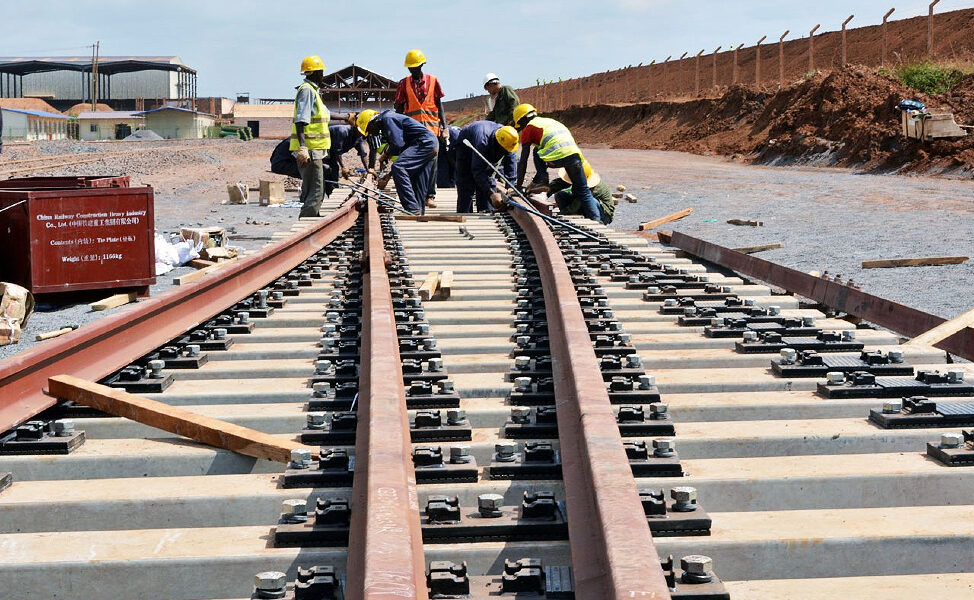
In Kenya, China funded the construction of the Mombasa-Nairobi Standard Gauge Railway (SGR), while in Nigeria, a Chinese company built the Abuja light rail, which began operating in May 2024. Beyond transport infrastructure, China has also played a significant role in developing clean energy projects in Africa.
For example, the De Aar Wind Farm in South Africa produces 760 million kilowatt-hours of clean electricity annually, supplying power to 300,000 households and helping to alleviate the country’s ongoing electricity shortage. In Kenya, China financed the Garissa Solar Power Plant, a 55-megawatt facility that generates over 76 million kilowatt-hours annually, reducing carbon dioxide emissions by about 64,000 tons per year.
Chinese companies have also established various industrial zones and parks across Africa, such as the Sino-Uganda Mbale Industrial Park in Uganda, the Diamniadio International Industrial Platform in Senegal, the Lekki Free Trade Zone in Nigeria, and the China-Egypt TEDA Suez Economic and Trade Cooperation Zone in Egypt.
These industrial parks have helped African countries better integrate into the global production chain and promote the internationalization of local brands. They also support import substitution strategies by hosting businesses that manufacture goods locally, reducing dependence on imports.
Much anticipation
Modern port cooperation between China and Africa is also progressing rapidly. For example, the Kribi Deep Sea Port in Cameroon has boosted the country’s economy and is becoming a regional hub on Africa’s Atlantic coast. In 2023, Tanzania’s first modern fishing harbor, Kilwa Harbor, built by a Chinese company, was launched as part of the Tanzanian government’s third five-year plan, positioning it as a driver of economic growth.
In 2021, China and Africa jointly formulated the China-Africa Cooperation Vision 2035 to outline the directions and objectives for their mid- and long-term cooperation. This document underscores the essential connection between the implementation of the AfCFTA and infrastructure development, reaffirming China’s commitment to enhancing Africa’s connectivity.
So far, Sino-African cooperation has been a dynamic process of adaptation, guided by regular adjustments based on the evolving needs of both parties. FOCAC has served as a primary platform for these adjustments.
As the next FOCAC Summit approaches, there is much anticipation about the future of Sino-African relations and whether China will shift its focus away from infrastructure development, despite its continued importance for boosting intra-African trade. All eyes are on the September FOCAC Summit in Beijing.
Danilo Desiderio serves as the CEO of Desiderio Consultants Ltd in Nairobi, Kenya specializing in African customs, trade, and transport policies.