Owusu on Africa
Niger’s removal of migration law: hitting Europe where it hurts?


By Fidel Amakye Owusu
In 2011, amid the Arab Spring uprisings and the fall of Libyan leader Muammar Gaddafi, one of the issues he reportedly raised was the potential for a migration crisis in Europe if his regime were overthrown. At the time, Gaddafi had been pursuing rapprochement with Europe, including a controversial address to the French National Assembly.
His warning to European nations, which were supporting the Libyan rebels, was a veiled threat highlighting the geopolitical consequences of his removal.
Following Gaddafi’s four decades in power, Libya’s political polarization has contributed significantly to Europe’s current migration challenges. This issue has become a major source of division within the European Union (EU), underscoring the complexity of the migration crisis and its implications for security and social stability across the bloc.
Niger’s Migration Law Repeal: A Strategic Shift
In 2015, Niger enacted a law criminalizing migrant smuggling and the use of its territory as a transit route for migrants seeking passage to Europe. This legislation, introduced during a period of close security cooperation with the EU, imposed strict penalties on smugglers and confined migrants within Nigerien borders.
The law was part of a broader partnership between the EU and the government of President Mohamed Bazoum, which aimed to bolster counterterrorism efforts in the Sahel region.
The political landscape shifted dramatically in July 2023 with the coup that ousted Bazoum’s administration. In response, the EU swiftly imposed sanctions on the junta-led government and supported similar actions by the Economic Community of West African States (ECOWAS).
Despite mounting international pressure for a return to civilian rule, Niger’s military junta has entrenched its position, adopting a series of retaliatory measures against external pressure.
Among these measures is the repeal of the 2015 migration law, a move that seems calculated to challenge Europe’s interests directly. By lifting restrictions on trans-Saharan migration, the junta is signaling its willingness to exploit migration routes as leverage against European powers.
Geopolitical and Humanitarian Implications
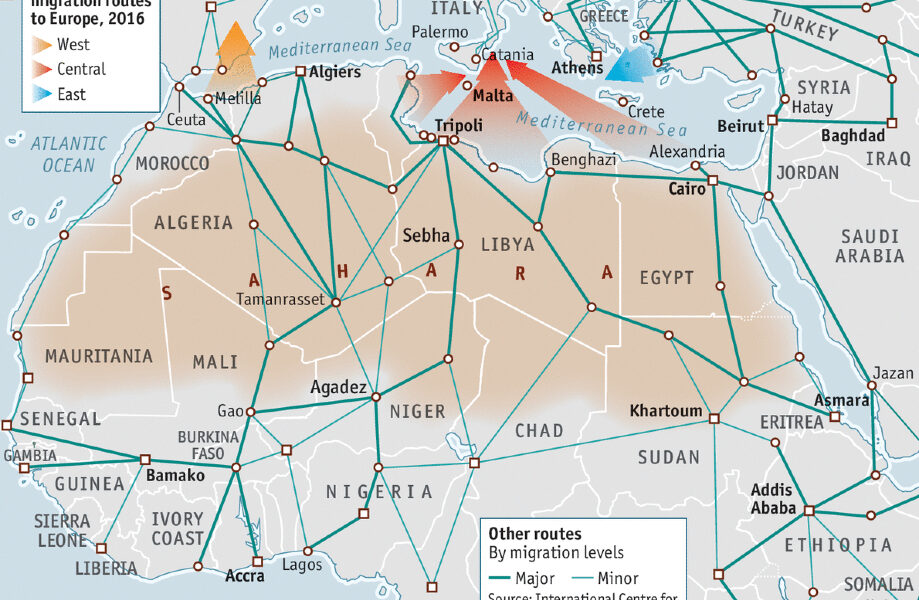
The Agadez corridor in Niger was, prior to the 2015 law, a critical pathway for migrants attempting to reach Europe via the Mediterranean. In its absence, migrants have turned to more perilous routes.
With the law now repealed, the corridor could see a resurgence in activity, exacerbating Europe’s already pressing migration challenges.
The decision reflects broader geopolitical tensions between Niger and the EU, particularly in the wake of sanctions and ECOWAS military intervention threats. It also aligns Niger with Mali and Burkina Faso in a newly established security pact that pledges mutual support against external aggression.
A Worsening Crisis for Europe?
The repeal of Niger’s migration law is poised to escalate the migration issue for Europe. The opening of Nigerien routes to trans-Saharan migration could lead to an increase in arrivals, further straining Europe’s capacity to manage the crisis.
The move underscores the interplay between local governance, international relations, and humanitarian challenges in a region marked by political instability and shifting alliances.
As Europe grapples with these developments, the need for a coordinated, long-term strategy to address the root causes of migration becomes ever more urgent.
Fidel Amakye Owusu is an International Relations and Security Analyst. He is an Associate at the Conflict Research Consortium for Africa and has previously hosted an International Affairs program with the Ghana Broadcasting Corporation (GBC). He is passionate about Diplomacy and realizing Africa’s global potential and how the continent should be viewed as part of the global collective.