Zina’s Youth View on Africa
Nigeria’s Security Landscape: Jihadist and Bandit Convergence


By Godfred Zina
In recent years, Nigeria’s security landscape has undergone a dangerous transformation. What were once largely localized insurgencies and criminal banditry have now converged into a complex, hybrid threat that challenges the very foundation of state authority.
Despite more than a decade of counterinsurgency operations, jihadist violence and organized banditry continue to escalate – undermining public trust, destabilizing communities, and threatening regional stability.
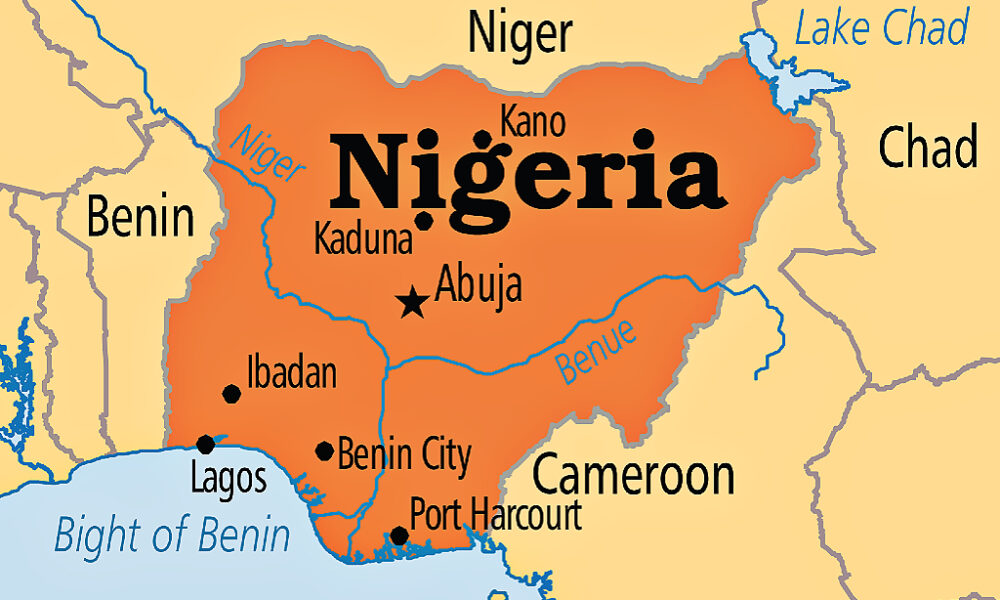
In a recent operation, Nigerian forces conducted targeted airstrikes near the northeastern border with Cameroon, reportedly killing 35 suspected jihadists. While such military actions demonstrate tactical capability, they offer only temporary relief in a conflict that demands long-term, strategic solutions.
The persistent cycle of attacks and retaliation underscores a deeper problem: Nigeria is no longer facing isolated threats, but a rapidly evolving alliance between ideologically driven insurgents and profit-motivated criminal networks.
The Rise of the Hybrid Threat
Estimates suggest that as many as 30,000 armed bandits now operate across northern Nigeria, particularly in the northwestern states of Zamfara, Kaduna, and Katsina. What began as local disputes over land and resources has evolved into a sophisticated criminal enterprise.
These groups are now heavily armed, capable of mass abductions, village raids, and extortion on an industrial scale.
Even more alarming is the growing convergence between these criminal bandits and jihadist organizations such as Boko Haram’s splinter factions – Jama’atu Ansarul Muslimina fi Biladis Sudan (JAS), the Islamic State West Africa Province (ISWAP), and the re-emergent Ansaru. These groups are increasingly forming tactical alliances, sharing resources, intelligence, and even ideological narratives to expand their influence into Nigeria’s northwest – a region once considered insulated from jihadist ideology.
This fusion of criminality and extremism has created a hybrid threat that is far more resilient and adaptable than either group alone. Bandits gain legitimacy and ideological cover from jihadists, while insurgents benefit from the bandits’ local networks, mobility, and access to illicit financing.
Illicit Economies and Border Vulnerabilities
A key enabler of this convergence is Nigeria’s booming illicit economy. Armed groups are exploiting illegal mining operations in gold, copper, and increasingly, lithium – critical minerals in high global demand.
These activities not only fund weapons and logistics but also erode Nigeria’s formal mining sector and deprive the state of vital revenue.
Weak border governance further exacerbates the crisis. Porous frontiers with Niger and Cameroon serve as conduits for weapons, ammunition, and fighters. Militants leverage well-established Sahelian smuggling networks to move freely across borders, coordinate attacks, and resupply.
This transnational dimension increases the risk of larger, more sophisticated operations that could destabilize the entire West African region.
Border communities bear the brunt of this insecurity – displaced from their homes, cut off from trade, and often coerced into supporting or financing armed groups. These conditions fuel resentment, weaken social cohesion, and provide fertile ground for recruitment.
Regional Implications and the Cost of Inaction
The implications extend far beyond Nigeria’s borders. The Sahel is already grappling with coups, insurgencies, and declining governance.
Nigeria’s instability threatens to spill over, undermining regional trade, weakening the Economic Community of West African States (ECOWAS), and potentially inviting external military intervention.
Moreover, as jihadist ideologies gain footholds in new territories, the risk of Nigeria becoming a hub for transnational terrorism grows. The international community can no longer afford to view Nigeria’s crisis as merely a domestic security issue – it is a regional and global security concern.
Call for Strategic Reform
So, what must be done?
First, Nigeria must strengthen intelligence-sharing and operational coordination with neighboring countries. Joint task forces, real-time data exchange, and unified command structures are essential to disrupt cross-border networks.
Second, the government must invest deliberately in border governance. This includes deploying surveillance technology, establishing permanent border outposts, and formalizing cross-border trade routes to reduce reliance on smuggling economies.
Third, addressing root causes is non-negotiable. High youth unemployment, lack of education, land disputes, and weak community policing have created a vacuum that armed groups exploit.
Sustainable peace will require investment in economic opportunities, community-led security initiatives, and inclusive governance in marginalized regions.
Finally, local peacebuilding efforts must be prioritized. Traditional conflict resolution mechanisms, when properly resourced and integrated with national strategies, can de-escalate tensions between communities and reduce bandit recruitment.
Conclusion
Nigeria stands at a critical juncture. Military force alone cannot dismantle a threat that is as much economic and political as it is security-related.
Without a comprehensive strategy that combines regional cooperation, economic reform, and community engagement, the cycle of violence will persist.
The convergence of jihadists and bandits is not just a Nigerian problem – it is a warning sign for the entire Sahel. The time for reactive measures has passed. What is needed now is bold, coordinated action before the crisis becomes irreversible.
Godfred Zina is a freelance journalist and an associate at DefSEC Analytics Africa, a consultancy specializing in data and risk assessments on security, politics, investment, and trade across Africa. He also serves as a contributing analyst for Riley Risk, which supports international commercial and humanitarian operations in high-risk environments. He is based in Accra, Ghana.