Business
Nigeria’s business scorecard
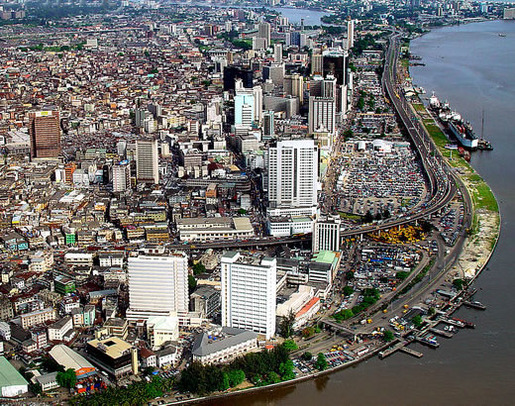
Nigeria now has the largest economy in Africa, the government announced on 6 April. With a gross domestic product of $500.9 billion, Nigeria should attract more international investment, say officials in Abuja. This has raised debate about what the statistics mean and the performance of President Goodluck Jonathan’s team since he was elected in April 2011.
After leading an election campaign on promises to transform Nigeria’s economy, President Jonathan has often found himself a soft target for criticism. Local and international businesspeople and investors can often be heard quietly cursing dysfunctional infrastructure and an obstructive bureaucracy.
But they are just as vocal in their endorsement of the opportunities that Nigeria has to offer, and Jonathan’s supporters point to unprecedented gains. In 2013, Jonathan oversaw the privatization of Nigeria’s dysfunctional state power company. This may yet be his enduring legacy.
Electricity provision is by far the most serious obstacle to growth in Nigeria. With 10 new gas-fired power stations up for sale, Nigeria perhaps stands its best chance for decades of ending the chronic power shortages that have weakened the manufacturing base and left tens of millions of people in the dark.
Africa’s giant has proven reserves of 180 trillion cubic feet of natural gas, but it flares more gas than any other country bar Russia. Government officials said in September 2013 that flaring is down 20 percent over the past two years. Furthermore, Agricultural reforms have helped clean up the sector, boosting farmers, whose activities make up about 40 percent of gross domestic product. Although it may be some time before they bear full fruit, a fertilizer rollout has proved a success in its pilot phase.
The creation of new fertilizer factories linked to the gas sector will reduce prices. The rice plantation schemes, from companies such as Olam in Nasarawa State, will chip away at Nigeria’s import bill. Economic growth has continued to power ahead at an average of 7 percent and, thanks to an aggressive monetary policy from the central bank, inflation is in single digits for the first time in years.
Finance minister Ngozi Okonjo-Iweala has managed to keep national budgets tight, for now resisting pressure to spend more ahead of 2015 elections. There has also been progress on rebuilding Nigeria’s industrial base, with new car manufacturing schemes and factories opening in the agribusiness and light manufacturing sectors.
The government has sought to oil the slowly turning wheels with a planned specialized bank due to begin offering loans with low interest rates from next year. In collaboration with the World Bank and African Development Bank, the 10 to 15-year loans would bolster the manufacturing sector.
Low appetite for risk
But while companies wait for finance, swift industrial growth will remain elusive. “There is limited incentive to create risky assets, although we are seeing some increased appetite to lend to the power and oil and gas sectors,” says Samir Gadio, an emerging markets strategist at Standard Bank.
He went on to say, “Addressing these short-comings will require structural reforms, including the emergence of a credible credit bureau and a corporate bond market, and continued macroeconomic stability.” Kola Jamodu, the head of the Manufacturers Association of Nigeria, says capacity utilization jumped to 55 percent from 44 percent in 2013, while local raw materials usage reached 51 percent, up from 47 percent the previous year.
Jamodu also stated, “We have seen government initiatives to improve the sector, and these will help Nigeria maximize its key strategic position within ECOWAS (the Economic Community of West African States).” There has been serious back-tracking too. A spate of massive corruption scandals surrounding the management of Nigeria’s oil revenue, which the government depends on almost entirely to run the country, have dogged the government.
In the most recent one, $20 billion appears to be unaccounted for at the opaque state oil firm, the Nigerian National Petroleum Corporation. The government’s response was to sack central bank governor Lamido Sanusi, the country’s most respected economic official, who broke the scandal and called for a massive clean-up. Banking reforms were one of the success stories in Jonathan’s early years, but the environment is now becoming unsteady.
Easy come, easy go
Investors continue to seek a slice of Africa’s most dynamic economy, but many Nigerian governments have misspent their windfalls from the oil industry. Flush with around $11.5 billion at the end of 2012, the Excess Crude Account currently stands at some $3.5 billion. In March, two credit rating agencies put Nigeria on watch for a possible downgrade.
Other key reforms, such as those targeting the gas sector, which urgently needs to be sorted out to fight power shortages, are stuck in the mud. International oil majors are reducing their exposure to Nigeria’s onshore Niger Delta region as profits are eroded by oil theft, and regulatory uncertainty discourages further investment. Royal Dutch Shell announced in March that it lost nearly $1 billion through theft and pipeline disruptions at its Nigerian operations in 2013.
President Jonathan has earmarked $1 billion for an anti-theft campaign, but few are convinced this money will go to solving the problem. “The Niger Delta-dominated federal government will be unlikely to seriously crack down on bunkering and risk upsetting the regional patronage system,” says analyst Josh Holland at IHS Global Insight.
What follow are assessments of the progress so far, sector by sector, presented as The Africa Report’s government scorecard. It is an irreverent approximation of the administration’s progress, based on conversations with businesspeople and politicians, analysts and investors. These are their aggregated opinions.