Politics
Nigerian Court Dismisses Sanusi Lamido’s Case
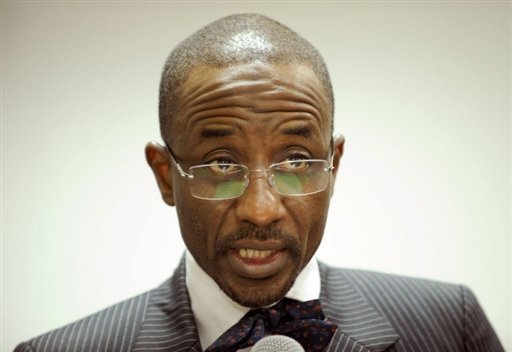
The Nigerian High Court has dismissed central bank governor, Sanusi Lamido’s challenge over his dismissal by President Goodluck Jonathan. Sanusi had filed a law suit challenging the powers of President Jonathan for suspending him from office. Fabian Ajogwu, Jonathan’s counsel stated that the suspended governor had options of accepting the ruling of the court or appealing the decision.
Ajogwu said, “What is important is that the Federal High Court has essentially put the position in law that Sanusi is indeed a government employee and matters of this nature should be heard in an industrial court.” He then continued, “The suspension was actually done to pave way for issues that came prior before whistle blowing involving the misappropriation of funds and expenditure of 163 billion naira when authorized expenditure of the central bank is 100 billion naira.”
He questioned if it was possible for an entity to spend 63 percent in excess of an approved budget in alleged corporate social responsibility. Ajogwu said it was important for occupants in important institutions not only in Nigeria but in Africa as a whole to respect the mandate given to institutions.
Furthermore Ajogwu stated, “The central bank is an independent institution and should not be interchanged by an occupier. What Africa needs are strong institutions not necessarily strong men, the suspension of Sanusi demonstrates that nobody is above the law.”
He continued, “I do not know what the justification for spending such an amount on social responsibility that’s why a fair hearing is essential. The central bank’s responsibility is among others dealing with monetary policy and nothing to do with building auditorium, kitchen facilities in universities and centers of excellence.”
Sansui’s term was due to end in June and prior to his suspension, he threatened to present evidence to the country’s national assembly showing that the state oil company had failed to remit around 20 billion US dollars it owed to the federal government.
Source: CNBC Africa