Opinion
Nigeria: Sustaining Economic Growth under a Buhari administration
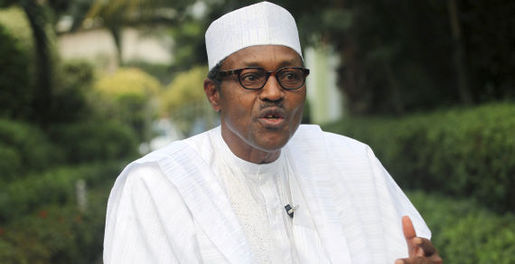
By Obinna Chima
The incoming administration must ensure that its economic policies are geared towards elevating the living conditions of Nigerians as well sustaining the country’s economic growth.
Despite the hurdles and obstacles that continue to hinder the Nigerian economy from realizing its full potential, the country, has been on the right path of growth since 1999 when its current democratic journey started.
Nigeria, clearly, is a different place now from what it was when it began the journey towards democratic governance 16 years ago. The country has grown to be the largest economy in Africa, with key reforms in various sectors of the economy opening doors for the influx of both local and foreign direct investments in critical sectors of the economy.
Of course, Nigeria’s democratic credentials were further consolidated with the recent peaceful outcome of the presidential election that saw the emergence of Major General (retired) Muhammadu Buhari as the president-elect. He defeated the incumbent, president Goodluck Jonathan.
Buhari satisfied the constitutional requirement of polling the majority votes of 15.4 million, compared to president Jonathan’s 12.9 million total votes, while also winning at least 25 percent of the votes cast in 28 states.
Prior to the electoral contest, they were the two contending words – Change vs Transformation.
As a result of the uncertainties prior to the elections, the Nigerian economy suffered certain setbacks against the backdrop of weakening macroeconomic variables including: the weakening exchange rate, the drop in global oil prices, inflation and massive outflow of foreign portfolio investments. These rubbed off on the financial market as investors became overtly cautious to jettison fundamentals for fear of the unknown. Investments were on a halt while investible funds stayed on the sideline. Therefore, with the successful completion of the election, experts have stressed the need for the incoming administration to focus on policies that would engender sustainable development of the country.
Awaiting the ‘Change’
Analysts at Afrinvest West Africa Limited stated that the victory and emergence of Buhari points to the dawn of a new era in Africa’s largest economy.
“When the President-elect assumes office on the May 29, 2015, the Nigerian masses will look up to him for “Change” in the country that has seen 16 years of unbroken reign of the ruling Peoples Democractic Party (PDP). Hence, the question in the mind of many is, how soon will this ‘Change’ come?”
While advising the president-elect on how to improve national security, Afrinvest stressed the need to urgently address the poor security situation in the country via a well-trained, adequately equipped and goals driven serious crime squad to combat terrorism, ethno-religious and communal clashes nationwide.
On job ceation, they advised the incoming administration to “make our economy one of the fastest growing emerging economies in the world with a real gross domestic product (GDP) growth averaging 10 percent annually; to be driven by technology (ICT), manufacturing, agriculture and entertainment. This is to thrive under a sound macro-economic policy environment, run by an federal efficient government which preserves the independence of the central bank, and modernize agricultural sector hinged on a change from self-subsistence farming to medium/commercial scale farming.”
They also called for the formulation of a private sector-led industrial base for the economy; entrepreneurship promotion; economic diversification and heavy investment in research and development to boost industrial development, even as they called for a speedy passage of the much-delayed Petroleum Industry Bill and ensure that local content issues are fully addressed to grow the oil and gas sector.
In terms of infrastructure, they added: “There is need to generate, transmit and distribute power from current 5,000 – 6,000 MW to at least 20,000 MW of electricity within 4 years and increasing to 50,000 MW with a view to achieving 24/7 uninterrupted power supply within 10 years, whilst simultaneously ensuring development of sustainable/renewable energy; Construction of 3,000 kilometers (1864 miles) more of super highways including service trunks and building of up to 4,800 kilometers (2982 miles) more of modern railway lines – one third to be completed by 2019 via a public private partnership arrangement.”
Although the current structure of Nigeria’s GDP shows that the country has achieved significant diversification in terms of local production and consumption, there is need for Nigeria to be competitive in the area of non-oil exports of goods and services by the private sector like in the case of of South Africa, whose export revenue is driven largely by private sector firms such as MTN ,DSTV, the Dangote Dangote Group and South African Breweries, among others.
The challenge for the Nigerian economy will be for the incoming administration to create policies and incentives that will allow the private sector to become exporters.
If our export revenue was earned by thousands of Nigerian companies exporting their services, we would not collapse anytime the price of oil falls. We also need to start refining our oil domestically and exporting it. We should be one of the biggest exporters of refined petroleum products in the world.