Business
Nigeria planning huge overhaul of oil and gas industry
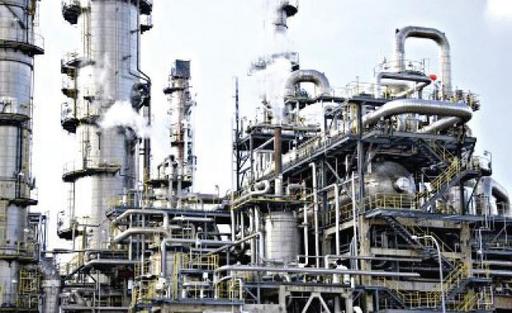
Oil Refinery in Port Harcourt, Nigeria. PHOTO/File
It is hoped that the new reforms will increase oil revenues for Nigeria, drastically reduce on corruption in the petroleum industry and improve on the quality of life of Nigerians.
Nigeria has launched a renewed bid to implement reforms that will overhaul and drastically improve the oil and gas industry. There is optimism that this time it may be successful, though various obstacles could derail the process.
Nigeria President Goodluck Jonathan last month sent a fresh version of sweeping legislation to parliament that would set out new fiscal terms for the industry and restructure the state oil company, among other measures.
The implications of the 223-page bill are immense in the OPEC (Organization of the Petroleum Exporting Countries) member country that relies on the industry for some 80 percent of government revenue and where major firms like Shell, Exxon and Total pump crude for export.
“I think something’s going to get passed before the end of the year,” said Mr Kayode Akindele of 46 Parallels investment firm.
“That’s really out of necessity … because we just can’t have the situation we’ve had the last four or five years.”
But a number of battles must still play out.
Major firms argue that the fiscal terms are too harsh, there are concerns over powers granted to the oil minister, and a political tussle is expected over a fund for oil-producing communities.
Unrest in the oil-producing Niger Delta region has been sharply reduced following a 2009 amnesty deal, allowing output to return to more than two million barrels per day.
Yet Nigerians fed up with oil pollution and the resulting corruption have long pushed for a fairer shake from the petroleum industry.
The new version of the bill grew partly out of protests in January that were ostensibly over gasoline prices, but which allowed the tens of thousands who took to the streets to vent their anger over a range of issues.
(More: Nigeria: Protests over removal of fuel subsidy)
Amid the anger, the federal government of Nigeria pledged to move on the long-stalled reforms.
But activists say the current bill does not do nearly enough to address oil spills and a lack of transparency in the industry.
“We have to ensure that there is independent oversight of the oil and gas industry beyond what we have now,” said Auwal Ibrahim Musa Rafsanjani, head of the Civil Society Legislative Advocacy Centre, Transparency International’s local partner.
Parliament is expected to hold hearings in the coming months.
One international oil executive argued that if it were to be passed as written, new investment could not occur because taxes and royalties would be too high.
“From what has been shared with us, this bill is not achieving (its stated objective of) unlocking investment in the country and increasing production and increasing government revenue,” he said.
“It’s going to achieve quite the opposite.”
The executive, who spoke on condition of anonymity, said that currently the industry hands over on average 86 percent of net revenue to the government — a number that is quite difficult to verify independently.
According to him, there were too many variables to calculate a reliable percentage of what the government take would be under the new proposals, but he said it would amount to an increase.
Oil Minister Diezani Alison-Madueke said recently that the bill “comes closest to what we consider a win-win situation for the government of Nigeria, the Nigerian economy and people as well as other stakeholders and potential investors in the oil and gas industry.”
Under the bill the state oil company Nigerian National Petroleum Corporation (NNPC), widely viewed as corruption-riddled, would be unbundled.
(More: Nigeria: President Jonathan accepts resignations of execs of state oil NNPC)
A National Petroleum Assets Management Company would include interests in joint ventures between the NNPC and international oil firms.
Separately, a National Oil Company and National Gas Company would include plans to divest minority shares for offer on the Nigerian stock exchange.
Taxes on profits would be 25 percent for offshore production and 50 percent for onshore, in addition to Nigeria’s 30 percent corporate income tax.
By comparison, the current rates are a flat 50 percent for offshore and 85 percent for onshore.
Beyond that, there are royalty payments. The new royalty rates are not in the bill, which could give the oil minister the option of altering them, but are to be based on production levels and oil prices.
Firms are also to pay 10 percent of net profit into a fund intended to benefit communities where production occurs.
Oil companies say the fiscal burden would be too onerous for them.
Few people in Nigeria will shed tears for petroleum firms. Still, the government faces the balancing act of ensuring investment will flow while collecting its share.
Akindele, the 46 Parallels analyst, said time was running out.
“Ten, 15 years ago, Nigeria could afford a delay because it was the only game in town,” he said, mentioning new production in a number of African nations. “Something needs to be passed because people need certainty of investment.” – (AFP)