Business
Nigeria-Morocco $25 Billion Gas Pipeline Gains Momentum: A Strategic Lifeline for Africa and Europe
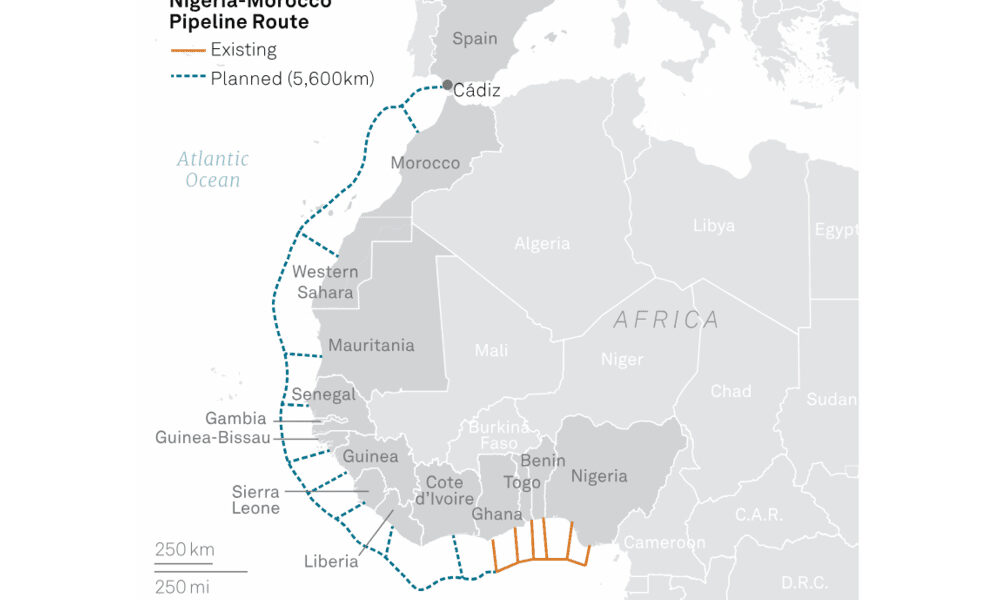
As global energy markets undergo a seismic shift, a bold new infrastructure project is poised to reshape the African and European energy landscapes: the Nigeria-Morocco Gas Pipeline (AAGP), also known as the African-Atlantic Gas Pipeline. Valued at an estimated US$25 billion, this 5,660-kilometer (3,517-mile) undersea and overland pipeline represents more than just a conduit for natural gas – it’s a transformative vision for regional integration, energy security, and Africa’s growing role in the global energy economy.
With construction expected to begin in the coming years and first gas targeted for 2029, the AAGP is rapidly advancing toward a final investment decision. Here’s what policymakers, investors, and energy stakeholders need to know.
Project Snapshot: Bridging Continents, Fueling Economies
- Total Length: 5,660-kilometer subsea pipeline, part of a broader 7,000-kilometer transcontinental network
- Capacity: 30 billion cubic meters (BCM) of natural gas per year – enough to power millions of homes
- Estimated Cost: US$25 billion
- Timeline: Targeting commercial operations by 2029
- Lead Developers: Nigeria’s NNPC Limited and Morocco’s Office National des Hydrocarbures et des Mines (ONHYM)
- Geographic Reach: 13 West African nations, from Lagos to Rabat, with onward delivery to European markets
A Strategic Vision: Energy Security Meets Regional Integration
At its core, the AAGP aims to unlock Nigeria’s vast natural gas reserves – Africa’s largest – by creating a direct, secure export corridor to Europe, while simultaneously electrifying underserved West African economies.
Unlike existing pipelines that traverse North Africa via Algeria, the AAGP charts a new Atlantic route, circumventing geopolitical hotspots and enhancing supply resilience. This strategic diversification comes at a critical time, as Europe seeks to reduce dependence on Russian gas and bolster energy partnerships with stable African producers.
For West Africa, the benefits are equally transformative. The pipeline will deliver clean-burning natural gas to power plants, industries, and households across ECOWAS (Economic Community of West African States) member states, potentially reducing reliance on diesel generators and improving air quality.
By connecting national grids and fostering cross-border energy trade, the AAGP could become a cornerstone of regional economic integration.
Morocco’s Atlantic Initiative: A Gateway Between Africa and Europe
The project is a flagship component of Morocco’s Atlantic Initiative, a forward-looking strategy to position the kingdom as a continental energy hub. By linking Nigeria’s gas fields to Moroccan liquefaction terminals and European interconnectors, Rabat is cementing its role as a critical bridge between African resources and European demand.
This ambition is already bearing fruit. Morocco has expanded its gas storage and regasification capacity, including the Maghreb-Europe Gas Pipeline upgrades and the development of the Gazoduc Interconnection Maroc-Espagne (GIME).
The AAGP would amplify this infrastructure, enabling Morocco to act not just as a transit country, but as a strategic energy partner.
Economic Catalyst: Jobs, Industry, and Investment
Beyond energy, the AAGP promises sweeping socioeconomic benefits. The construction phase alone is expected to generate tens of thousands of jobs, while long-term operations will spur industrial growth, from petrochemicals to power generation.
According to preliminary assessments, the pipeline could unlock $15–20 billion in downstream investments across West Africa, catalyzing the development of gas-fired power plants, fertilizer factories, and manufacturing zones. For countries with chronic energy deficits – such as Benin, Togo, and The Gambia – access to affordable, reliable gas could be a game-changer.
Funding and Partnerships: Building a Coalition of Support
The scale of the AAGP demands international collaboration – and early signs are promising. While Nigeria and Morocco are leading the charge, the project has attracted interest from major financial institutions, including:
- OPEC Fund for International Development
- United Arab Emirates-based investors
- Islamic Development Bank (IsDB)
- European Investment Bank (EIB)
These institutions recognize the AAGP not just as an energy project, but as a strategic infrastructure asset with long-term geopolitical and climate implications.
Additionally, national oil companies across West Africa have signaled participation, reinforcing the project’s regional legitimacy. The upcoming ECOWAS Heads of State Summit is expected to provide formal endorsement – a crucial step toward final investment approval.
Challenges Ahead: Financing, Environment, and Execution
Despite momentum, hurdles remain. Securing the full US$25 billion remains a top priority, particularly as global capital markets tighten.
Environmental concerns – especially around deep-sea drilling and coastal ecosystems – must be addressed through rigorous impact assessments and transparent stakeholder engagement.
Moreover, the project will require unprecedented coordination among 13 countries, each with distinct regulatory frameworks and political dynamics. Security along the coastal and terrestrial segments, particularly in the Gulf of Guinea, will also demand robust risk mitigation strategies.
AfCFTA Synergy: A Model for Pan-African Trade
Notably, both Nigeria and Morocco are signatories to the African Continental Free Trade Area (AfCFTA). The AAGP exemplifies the treaty’s promise: leveraging continental resources for mutual growth.
If executed effectively, the pipeline could become the first truly AfCFTA-enabled energy corridor, setting a precedent for future cross-border infrastructure.
The Road to 2029: What’s Next?
The project is now in its final pre-investment phase, with technical studies, route optimization, and financial modeling nearing completion. With NNPC and ONHYM driving coordination, the focus is shifting toward securing binding commitments from co-investors and finalizing engineering designs.
If timelines hold, construction could begin as early as 2025, paving the way for first gas by 2029 – a deadline that aligns with Europe’s evolving decarbonization roadmap and Africa’s urgent need for energy access.
More Than a Pipeline – A Vision for Africa’s Energy Future
The Nigeria-Morocco Gas Pipeline is not merely a piece of infrastructure. It is a bold statement of African agency in the global energy system – a testament to what’s possible when nations collaborate across geography, politics, and economic interest.
As the world transitions toward cleaner energy, natural gas remains a critical bridge fuel. The AAGP offers a chance to harness Africa’s resources responsibly, power its economies, and strengthen transcontinental partnerships.
For Europe, it presents a secure, alternative supply route. For West Africa, it promises development and dignity through energy access. And for Morocco and Nigeria, it cements their status as continental leaders.
The pipeline may run beneath the Atlantic, but its impact will ripple across continents.