News
Nigeria: Campaigning comes to a close as Nigerians vote Saturday for a new President
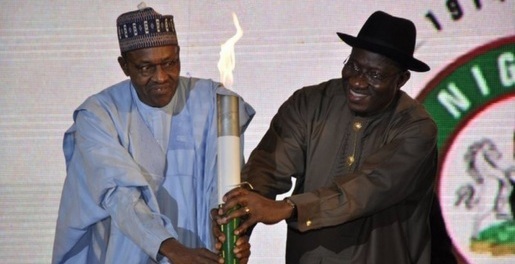
Campaigning has wound to a close in Nigeria’s presidential elections, with the two leading candidates delivering their final messages to supporters before Saturday’s vote.
This year’s presidential elections are being seen as the closest race in the country’s history, with incumbent President Goodluck Jonathan facing a strong challenge from former military ruler Muhammadu Buhari.
The country’s land and sea borders were shut at midnight on Wednesday (7:00 pm EDT) as part of stringent security measures that also include an 8-hour restriction on movement when polling stations are open.
Nigeria has had a history of election-related unrest and both candidates appeared keen to prevent a repeat of 2011, when clashes erupted after the results were announced.
This time round, fears of al-Qaeda-linked Boko Haram suicide attacks and bombings at vulnerable targets, including polling stations, have seen unprecedented calls for vigilance from the security services.
Jonathan and Buhari signed a pledge of non-violence in January and on Thursday repeated their commitment to peaceful elections, with the campaigns formally ending at midnight.
“Now that the campaigns have come to an end, we meet to renew our pledge for peaceful elections,” read a document signed by the two men at a hotel in Abuja and made available to reporters.
“We therefore call on all fellow citizens of our dear country and our party supporters to refrain from violence or any acts that may in any way jeopardize our collective vision of a free, fair and credible election.”
The country is almost evenly split between a Muslim-majority north and largely Christian south, with Buhari and Jonathan traditionally pulling support from their respective regions.
Acceptance of the result is seen as key to preventing violence and the Independent National Electoral Commission (INEC) said it had been working with the parties to tone down often violent rhetoric.
“All this will add up when the elections are through and the results are announced and we see that they conduct themselves in accordance with the pledges and promises that have been made,” electoral commission spokesman Kayode Idowu told reporters.
Jonathan published a “thank you” message to Nigerians on the front page of many national newspapers, with a 40-page color pull-out detailing his claimed achievements.
But the president recognized the challenge from Buhari and his All Progressives Congress (APC) which could see his ruling party defeated for the first time since the end of military rule in 1999.
“Right now there are only a few more hours to the elections. I cannot recall elections more important than this in the history of our nation and I need your support,” the 57-year-old wrote.
“I need you to vote for me in this election, not just because of me, but so that we consolidate on the progress we have made.”
Jonathan is campaigning for continuity and has vowed to complete the work he has started in his first 4 years in office.
Buhari, 72, who headed a military government in the 1980s and describes himself as a “converted democrat”, has for his part pushed an agenda of “change”.
He criticized “insecurity, broken infrastructure and growing inequality”, vowing action against Boko Haram and corruption, which he said had made Nigeria “a laughing stock of the world”.
“Rebuilding the army and other security agencies will be a top priority of my government. I will ensure that never again will terrorists find a safe haven in Nigeria,” he added.
He said he would also reunite the more than 200 schoolgirls kidnapped by the group in April last year with their families.
The electoral commission charged with organizing the election in Africa’s most populous nation meanwhile said it was on track for a smooth operation.
Some 68.8 million voters out of a total population of some 173 million are registered to vote in Nigeria, which is also Africa’s leading economy and top oil producer.
Ballot papers and election materials, including for the first time handheld readers to scan biometric voter identity cards, had been sent to the country’s 36 states and capital territory.
The electoral commission has in the past come under scrutiny for its preparedness, even after the initial February 14 vote was postponed because of military operations against Boko Haram in the northeast.
Jonathan’s People Democratic Party (PDP) voiced concern about the distribution of voter cards and the card-reading technology. But electoral commission spokesman Kayode Idowu, said the election “will be as flawless as humanly possible”, and that results would be announced within 48 hours of polls closing on Saturday.
In an interview with reporters, Buhari said he did not think the election could be tampered with but warned of “consequences” if there is foul play.
Source: AFP